Friday, June 30, 2006

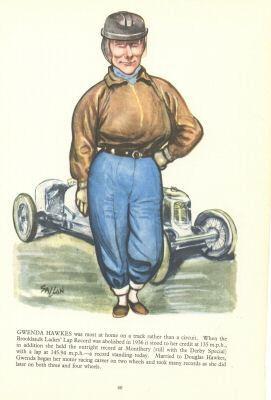
That Gallant Little Lady, Gwenda Hawkes, 1894-1990

Gwenda Glubb's motoring exploits are well known - she raced variously as Janson, Stewart and perhaps most famously as Gwenda Hawkes in the pre-war period, a time when women competed against men at the highest levels of the sport.

The daughter of a general, the much decorated Sir Frederick Manley Glubb, her brother John, still remembered as Glubb Pasha the commanding general of Jordan's Arab Legion.

Better known as a record breaker than as a racer Gwenda was the fastest woman at Brooklands, 135.95 mph and the outright record holder at Montlhery, ( she lived in Paris for many years ) with a lap of 145.94 mph in husband Douglas Hawkes' Derby Special.

Adventure was in her genes and Gwenda's motoring skills had been honed in the First World War where she served as an ambulance driver with the Scottish Women's Hopsitals on the Russian front and the Balkans.

What the motoring historians seem to have missed is the central part played by Miss Glubb in what has been described as Britain's Dreyfus case, the public inquiry set up in 1919 by Churchill into the dismissal of, and perhaps also to publically discredit Violet Douglas-Pennant, head of the Women's Royal Air Force. Miss Douglas-Pennant had taken over a service of 14000 young women supervised by only 75 officers scattered over 500 camps. Correctly diagnosing that the training of a new officer corps was a priority, Douglas-Pennant was frustrated at every turn by what she perceived as an alliance of lesbian female and chauvinistic male subordinates. Despite bringing some order to the chaos and training-up 450 new officers, Miss Douglas-Pennant was sacked in 1918 because of her unpopularity with the service. The enemies of the Liberal Government saw that an inquiry would be an opportunity for trouble-making, while the Government realised that such an inquiry could be turned to its own advantage by destroying Douglas-Pennant's reputation. Enter Miss Glubb.

Miss Douglas-Pennant had made various allegations in a private letter to Churchill which he immediately published in the form of a White Paper. It was alleged for example that there was a good deal of sexual immorality at Hurst Park Camp involving the Camp Commander and a young air woman, Miss Gwenda Glubb. The 14 day inquiry - the salacious details were published in a Government Blue paper and lapped up by the press - found that there had been no impropriety between the officer and Miss Glubb, medical evidence was presented that showed that the "gallant little lady" was virgo intacta. Miss Douglas-Pennant was clearly a snob, a prim and vindictive primadonna.

The affair dragged on for 20 years being periodically raised in the courts and in Parliament by friends of Miss Douglas-Pennant who, it was said, had been driven somewhat mad by the whole business. As for Gwenda Glubb, she was indeed briefly married to the commanding officer accused of seducing her, Sam Janson.

A Radnorshire connection? A government report into the living conditions of girls in camps had been written by Lady Rhondda whose mother came from Pen Ithon, Llanbadarn Fynydd. Her evidence to the inquiry was not favourable to Miss Douglas-Pennant.

Saturday, June 24, 2006

Radnorshire Bardic Poems, 17

No 147 A Request for Cattle to Annes Aubrey and Isbel vz Rhys

Two women more kindly bred
Than any two alive, as God is a surety.
Annes Aubrey, without flattery,
Daughter of Morgan, the vineyard of our nation;
The noble blood of Isbel, daughter of Rhys Fychan
From Is-Mynydd, Good day!

You are good, two Llywys for the land,
And good, too, your two fathers.
In terms of bloodline, you excel,
You are higher than the high woodland.
Your nobility grows Annes
From Aubrey, as pure as mead,
From Gwallter Sais and Rhosier Hen,
From the deer herd of Moreiddig Warwyn.
Isbel, your descent has been high,
Its place at the summit of pedigrees,
The descent of Ifor, supreme,
From Y Tanwr, no lesser man.
Two lands, your ancient tribe’s inheritance,
These are the two lands of your two tribes:
The two banks of the Wye as far as Monmouth,
The two well-cultivated lands of Elfael.
And your two husbands are placed
In the front rank as far as the land of Emlyn:
Fluent Hywel of the race of Rhydderch,
Brought to the affection of Siôn ap Phelpod.
Neither of your two husbands would begrudge
Your honouring a bard or a musician.

I do not demand from anyone good,
But only for your two faces.
Two barrels of white ferment,
As dark as Weobley ale;
Not the nation’s wooden barrels,
But barrels that refill.
I shall ordain for the two
A house of straw and two torques.
Behold, two vineyards of Hirddywel,
Their liquor is like honey,
If the new Gascon wine is white,
Then their wine will be pure white.
And there were great portents
Upon them, like upon the cattle of Anglesey;
Bent like drinking horns
And marked on their foreheads.
Eight feet of the same age
Running with medicine from eight faucets.
It has the property to restore a hundred fellows
Who’ve been on the beer.
It does not cause an untimely mass,
Nor mess up my clothes or my head;
It does not make me tipsy, a sozzled weakling,
Nor drunk, nor deaf.
When I go on a journey
It saves me from giddiness.
It improves my muse,
And is the point that keeps my mind in time.

You both could, were my request greater,
Reward me twice over from your store of cattle.
You shall have while a vine grows
my wine from a green shoot.
I shall have, Isbel and Annes,
Your wine and more of your profit.
To you two, and to your two husbands
A life twice as long as an oak in water.
To me your good cattle without condition,
To you the blessings of your bard.

Sunday, June 18, 2006

The Lewis Formula One Car

Welsh constructor Cyril Kieft's Formula One car could have been a world championship challenger in the 1950s. The project came to a halt when Coventry-Climax took fright at the power outputs claimed by its Continental rivals and ceased develpment of the FPE V-8 engine. We now know that the bhp figures claimed by the European manufacturers were fictitious, the Kieft project has been completed and the car is running with great success in present-day historic races.

Another "Welsh" car that never made it to the track was built for Jack Lewis's H&L Motors team. In 1960/61Ted Jeffs, the Lewis team mechanic built a straight-tube chassis designed for Formula One, reaching the stage where it stood on its wheels in the Lewis team's Stroud workshop. The project was then abandoned and the chassis sold on for completion as a hill climb special.

Saturday, June 17, 2006

Right Stuff?

I guess everyone knows that Max Mosley, president of FIA, is the son of Sir Oswald Mosley, leader of the pre-war British Union of Fascists and National Socialists, that's National Socialists as in Nazis by the way. This isn't the only link between the party and the world of motor sport.

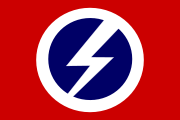
The BUF had a number of prominent motor racers in its ranks. It's said - on what evidence I know not - that the Brooklands car park was packed with vehicles bearing the flash and circle symbol of the party (see picture). Certainly Sir Malcolm Campbell, best known for his land speed record breaking, is still celebrated on Mosleyite web sites as being a prominent member of the BUF and again with the claim that the flash and circle adorned his famous Bluebird cars.

At least four individuals with motor racing connections were amongst the thousand or so British fascists imprisoned under regulation 18b. Welshman Captain Douglas Marendaz was a leading Brooklands racer and constructor of the Marendaz Specials, cars which were driven amongst others by Stirling Moss's father Alfred. The Irishwoman Fay Taylour was amongst the most famous of the pre-war lady drivers, originally a speedway rider she turned to motor racing when the speedway authorities banned women riders for safety reasons, in reality because Fabulous Fay was winning too often. An out and out fascist, Fay's wartime file has recently been released by MI5. Here is an extract from the autobiography of Mosley's secretary Hamm which confirms Miss Taylour's continued allegiance to the cause, he is describing the old fascist leader's 80th birthday party in 1976:

“I had placed Lady Mosley on his right, and beside her two 'old girls' of her Holloway Prison days, class of 1940. One was my old friend Fay Taylour, former star of speedway and motor racing. (In the early, pre-war days of speedway women had been allowed to compete, and Fay had beaten all the leading male riders, breaking a number of track records). When I last saw her she was still a very attractive woman. She told me that a journalist once asked why such a beautiful girl had never married, but had taken up such a rough sport as speedway. She replied: "I was engaged once, but he broke off the engagement and asked me if I wanted to buy his motorbike!"

During 'The Battle of Ridley Road' Fay used to drive me home after the meetings in a rather magnificent Jaguar car.“I never experienced the slightest fear at these meetings, however many bricks were flying, but I used to be terrified by Fay's driving, and would clutch the seat with both hands, as she took every corner on two wheels. Years later (when she had returned from selling sports cars to film stars in Hollywood) I was talking to her about this magnificent car, and I was surprised to learn that it had not been hers. She told me that in Holloway she had met among the prisoners a rather high-class call-girl, and when they were released she had given her friend driving lessons in return for the occasional use of her Jaguar. “The Special Branch must have been quietly amused when they first noted its number and checked on its owner”.

Incidently the "Battle of Ridley Road" were a series of fascist street fights in 1946 and 1947. It's remarkable how quickly the fascists reorganized in England so soon after the war.

The last two detainees were W. G. Barlow, who raced Bentleys in the 1920s, and Dorothea Duff of whom I know nothing.

Friday, June 16, 2006

Innes with his Replica Testarossa, 1991

Old News


The County Times failed to recognize a former Grand Prix driver and Radnorshire resident in this story from the back end of 2004.

Thursday, June 15, 2006

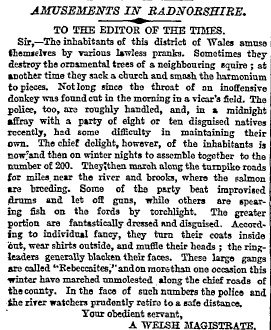
Radnorshire Amusements


A Letter to the Times dated 16th January 1878

Saturday, June 10, 2006

Radnorshire Bardic Poems, 16

This a praise poem by Lewis Glyn Cothi addressed to Bedo Chwith of Bryn Pennardd, Cregrina. You can see the site of Bryn Pennardd in the photograph on the left. All over Wales you can find these old halls of the uchelwyr, the English historians and their followers think they are motte and bailey castles.

No. 150 Praise to Bedo Chwith and Gwenllian vz Gwilym

This man whose home is above the fair meadow,
And the quiet, excellent wife:
Bedo Chwith, there his six fold payment
Will be given to me;
Next there is Gwilym’s daughter
Wearing the gold of the south upon two dresses,
Good natured Gwenllian
From Caio, from the line of a fair knight.
From Gwilym and from Meilyr,
A beautiful vine and earth’s increase.
God and the Church have rolled
Two names into one under their protection:
The strong, dark man of Glasgwm,
The sun of Cil y Cwm.

Being daily found wandering on the van
From yonder Roman town;
Bryn Pennardd is so beautiful,
The dinner that awaits us.
It seems to me that the Edw
Flows with Weobley ale and
That the Tywi pours with mead,
They placed it there on the river gorge;
As if the gold of the Bishop of Durham
Was in this court above the church,
And the silver of ancient Cyrys
Was placed there in Rhys’s grandson’s house;
As if the wheat of the Golden Vale or more
Were there in the house of fair Elfael,
Repaired to in one night,
Then spent the second night.
Let the lad out of love of drinking mead
Go along to Llwyn Hoeddliw and its dwelling.
There I’ll climb the bank,
Climbing to the home of an angel,
To Rhiw, to the house of Hywel’s grandson,
To the spot where honey is brought.

The world swarms about his head,
He and the moon of Mallaen.
A river grows bigger as it goes to the sea
And then is no more;I go, like a river,
To their house upon the breast of the hill.
There are children, good blessings,
To the round margin of Cregrina;
To Bedo they come in pairs,
From the fair woman they spring.
Come Powys and the South
As far as Gwent, to the house of these two.
Good Gwenllian invites them,
Her husband hands them gifts,
Her husband tunes the bards
With gold each day, the lord of Pennardd.
Great the seas about Anglesey,
More are the talents of my people.
Great is the seed of Britain,
More is the rent of these Welsh folk.
Mary, guard them on the shore of the Edw,
Amen! For as long as they wish.

The Mysterious Mr O'Brien

Considering that he was the first statesider to compete in a World Championship Grand Prix (Belgium 1952) precious little seems to be known about Robert O'Brien. Lacking the barest biographical detail or even a photograph most encyclopedias ignore him. Theories abound, he was a more famous American racing under an assumed name or, as some claim, a CIA agent taking time off from the day job of crossing into East Germany.

There certainly appears to have been an American racer called Robert O'Brien who appeared briefly in SCCA events in 1951 and 1952 racing his own Jaguar XK120. Bob hired a Ferrari 166MM to take 4th place in the first Sebring 12 Hour race and also drove a Connaught at Bridgehampton where he was photographed, a picture that confirms that the gentleman (shown left) observing Bira at the 1952 Spa race is indeed the mysterious Mr O'Brien.

It's strange that more is not known about O'Brien. He seems to have been a run of the mill SCCA racer and one would have thought that there would be many people from that era who would remember the man. There is also some confusion with Bill O'Brien, a Frazer-Nash owner, who entered but did not compete in the 1952 Targa.

A final mystery, on the last day of August 1952, O'Brien competed in the Grenzlandringrennen F2 race in a Simca-Gordini entered by the Viscomtesse de Walckiers, a lady who does not seem to exist except on motoring web-sites.

Tuesday, June 06, 2006

Brynfan Tyddyn

Brynfan Tyddyn, great 1950s road racing circuit, lot of big names raced there.

Like who?

Carroll Shelby, Phil Hill

So it was an old airfield track?

No, a proper road racing circuit, three and a half miles long, Hill called it a mini-Nurburgring. It was on an estate owned by a local politician, big breeder of trotting ponies, name of State Senator Woods.

State Senator? This track wasn't in Cardiganshire then?

Brynfan Tyddyn? No, it was near Wilkes-Barre, Pennsylvania

Saturday, June 03, 2006

Llanidloes, a typical Welsh town?

DNA, archaeogenetics - all exciting stuff for those of us with an interest in Welsh history - a chance to discover lost origins and population movements from the information locked within our own genes. It would help though if the scientists conducting the research had a little more understanding of old fashioned document based history when designing their tests.

Take studies in Welsh DNA, much of it based on three market towns tested for the BBC's Viking project, Llangefni, Llanidloes and Haverfordwest. Leaving aside Haverfordwest, which being in South Pembrokeshire is hardly typical of Welsh Wales, what about Llanidloes? Llani, as the locals call it, is slap bang in the middle of the ancient Welsh cantref of Arwystli, and in the sixteenth century this area was the scene of an Ulster style plantation organised by Robert Dudley, Earl of Leicester. Large numbers of tenants from Derbyshire and Lancashire were settled in the area at the expense of the local Welsh population.

Now as it happens, and mainly because both locals and incomers shared a common religious faith, this English plantation became integrated into the local population, indeed became thoroughly Welsh in speech and sentiment. The only trace left today of this is in common local surnames such as Ashton, Woosnam, Wigley, Jarman, Hamer, Breeze, Chapman, Cleaton, Bumford etc.

I wonder if the scientists were aware of this unique genetic background when they picked Llanidloes as one of their centres to test? More likely they just looked at the map and found what they assumed was a typical market town in the middle of Wales.

Friday, June 02, 2006

Another Mid Wales Road Racing Circuit

At the back end of 1968 the Royal Welsh Agricultural Society submitted plans to the local authority for the provision of a road racing circuit on the Llanelwedd showground site. Approval was also sought from the RAC and the ACU, the plans including a mile long spectator gallery. This was all reported in the December 30th 1968 edition of the Times newspaper. Great idea, what a shame it came to nought.

Wednesday, May 31, 2006

Violette Morris


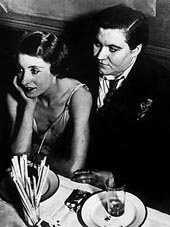
How many people realise that the young lady with the necktie in Brassai's famous picture "Lesbian Couple at Le Monocle" is the French racing driver Violette Morris. A sporting all-rounder: world shot put and discus record holder, soccer and water-polo international, champion weightlifter, boxer, racing cyclist, feminist icon, German spy and Gestapo torturer.

This winner, in 1927, of the 24 Hour Bol d'Or race was assassinated by the Resistance in 1944.

Tuesday, May 30, 2006

Major Rupert Robinson

A reader enquires who was Major Rupert Robinson who helped Innes Ireland purchase his first Lotus XI at the tail end of the 1956 season?

Innes's brother Allan was at that time a captain in the Royal Artillery. I've read a contemporary report in Autosport, which gives the Major's initials as R. C. Robinson. If that is the case then this was probably Major Rupert Chater Robinson R. A., an Old Marlburian, something of a sportsman - Squash and Cricket. I'm not aware that he had any motor sport connections other than his friendship with the Irelands?

In his Autosport profile of 21/10/1960 Innes has this to say about Major Robinson, who is described as being in the "Airborne Artillery":

One day he offered to buy me a car and run it for me. I just couldn't believe it. He finally convinced me that he meant what he had said and bought me a Series I Mk II Lotus. I had my first race in it in September (1956) at Goodwood where I came fourth in one event and second in another. The next week we went to Aintree, where I gained two seconds and broke the club lap record.

"This, of course, was a tremendous break for me and I just cannot find the words to express my gratitude to Major Robinson. However at the time I promised him that should the day ever come when I found myself making money out of racing, I would repay every penny he spent in giving me that golden opportunity. Now I am reaching the position where I can fulfil that promise."

Radnorshire Bardic Poems, 15

This Wedding Ode was composed for the marriage of Robert Whitney of the tiny Marcher lordship of Whitney, now just across the English border in Herefordshire, and Elis, the daughter of Tomas Fychan and Elen Gethin of Hergest, Kington. The neithior, wedding feast held before the marriage was an important element in the bardic tradition, for it was here that the apprentice bard graduated. This long and perhaps, for the casual reader, tedious awdl is full of historical interest.

123. Wedding Ode to Robert Whitney and Elis vz Tomas Fychan

Oh God, who on the Wye bank has wit?
Master Robert of Whitney,
Staunch eagles from the houses of the cross,
From the line of Trussell, with no lesser blood.

The line of marriage causes no more worry,
The daughter of Tomas ap Rhosier,
Mistress Elis, is chosen,
It is like choosing a sun from a company of stars.

Every courser of their court is a star
Food and drink fill the table,
I feel a chill when I see his ward,
Strange to be without Robert’s tower.

In his father’s tower, Robert
Is surrounded by money, more than in Newgate,
By stallions and spearmen in the embrace of battle,
More numerous than parishes, in their plate armour.

In her curtained tower, Mistress Elis
Has money and treasure, jewels and dresses;
On Monday she’ll wear clothes of damask silk,
Matching chamlet and velvet,
With a train of gold over her head and cheek,
She’ll wear garlands and scarlet,
And pray to Jesus for a fruitful life,
Nine lives she’ll bring to estate.

Generous Master Robert calls Elfael his country,
A master who shares his wealth freely with me.
Here he is a fair and equitable magistrate,
He sits on many councils of escheat,
No treachery may be proved against him,
None ever will be, no case would stand,
While there is a boat or a ship anchored at sea,
While the sky has colour, while the moon exists.

In the lord’s court everyone has their place,
Henchmen and yeomen are not refused,
Golden coursers whinnying,
Trumpets, bowmen, stags bleating,
The greyhounds of Whitney, a hundred hunting dogs,
A host of huntsmen in uniform,
The Epiphany kitchen busy with cooks, butler, cellar men, chattering carpenters,
And outside the court laughing peasants,
And outside the tower a minstrel without an invitation;
And from the bride, progeny and a supreme lineage,
And from the groom issue and lineage and seed.

Amen! Seed and lineage as she would desire
From the Lord of Whitney;
In their court a place of Alsace wine,
In their white towers and their houses.

The contracted court of my lady,
The courts of my lord like sunshine,
Her saintly tower is a sanctuary.

The tower of Master Robert, an ash,
A better tower than the White Tower,
A brilliant-white square storybook tower.

What house is that in the shape of five dice
Yonder, like Sandwich?
Is it not Elis’s court upon a headland?

A citadel on the Wye bank,
With her it is greater than
The tower of Joshua, than Caesar’s tower.

Set on a beach it is no less,
This Nudd’s house in fair Whitney,
Than the houses of charity that Lazarus built.

These two are no less,
With their wine for me,
Than the flowers of the south through all the earth.

More free the gifts
From his hand, as hers,
Than the flow of a river, to a guileless scholar.

Fair the gifting
Of gold given to Mary,
Like snow for Jesus from Balthasar.

From their mine of gold and their mead,
From their goods in like manner,
From their feats, the two friends would not refuse me.

The rents of their lands
I’d have and gowns,
Various vegetables, food on a spit.

A variety of sea food,
The wealth of vale and mountain,
More spirits, various birds.

An Arthur will not refuse me,
As tall as an ash tree,
And she, too, is Gwenhwyfar.

Ugh! To the Saxon up
From their stronghold which he hates,
A cold life to him who loves not the Welshman.

Deiniol, St Denis,
Cedwyn has protected them,
Dewi, Non, Elis, Dwynwen, Ilar.

To them the life of Moses,
As long as Old Noah,
Two lives of two trees, an oak tree and an oak wood.

A start in good health
Mary, grant them,
Long their conquest and a distant parting.

Let their parting be distant, let their lifetime
Be longer than the oldest unto Monmouth,
To scatter gold upon the Arrow,
To fill the banks of the Wye with wine!

Saturday, May 27, 2006

Jack Lewis in Formula Three

After a couple of lessons with the Cooper Racing Drivers' School, 21 year-old Jack bought the ex-Ivor Bueb Formula 3, Cooper-Norton for the 1958 season. During the year he competed in 13 meetings:

18thMay, Brands Hatch, Junior F3 race, 2nd
24thMay, Full Sutton, F3 race, 1st
7thJune, Oulton Park, F3 race, 1st
5thJuly, Crystal Palace, F3 race, 8th
26thJuly, Oulton Park, F3 race, 1st
27thJuly, Snetterton, F3 race, ?5th
4thAug, Brands Hatch, World Sports Trophy, 2nd (won heat)
9thAug, Silverstone, Commander Yorke Trophy, 2nd
30thAug, Brands Hatch, Lewis-Evans Trophy, 4th
7thSept, Snetterton, F3 race, 3rd
20thSept, Oulton Park, F3 race, ?retired
5thOct, Brands Hatch, World Sports Trophy, ?


Highlights of the year included a 2nd place to established Grand Prix ace Stuart Lewis-Evans at the World Sports Trophy race at Brands and another 2nd in the 100 mile Commander Yorke Trophy at Silverstone, a race won by Trevor Taylor. Jack had some bad luck in this race as he had fitted an extra fuel tank, considering that the extra weight would be more than compensated for by not having to refuel. Unfortunately the tank split and the car was forced into the pits.

Any corrections or additions to the record welcomed.

Sunday, May 21, 2006

When they Burnt the Union Jack in Middleton Street


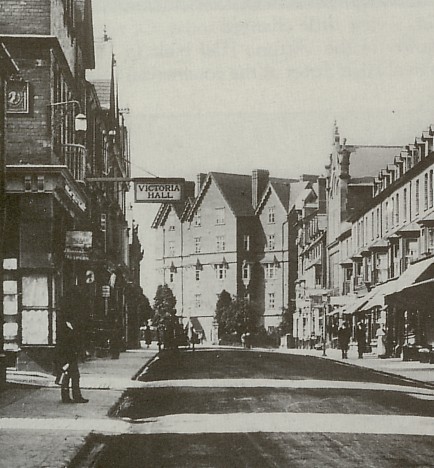
The small balcony where Sir Francis Edwards spoke can just be seen by the pole holding the Victoria Hall sign.


Here's a taste of life in Llandrindod at the start of the last century which seems a million miles from the somewhat staid gentility portrayed during the town's annual Victorian Festival. It comes from G. W. Gibson's memoir "Llandrindod in the 'Nineties" published in the 1945 RadnorshireSociety Transactions:

...political feelings ran high in Radnorshire in the late 'nineties and the early nineteen-hundreds, and practically everybody in Llandrindod was either a keen Tory or Radical. I well remember the Parliamentary Election of 1902, when Sir Francis Edwards was returned as Member for the county. He came to Llandrindod on the evening of the day after the election, and was met at the station by a crowd of his supporters with an open carriage, to which ropes were attached, and pulled up to the Victoria Hall. An equally big crowd of Conservatives was waiting in Middleton Street, and as soon as the carriage stopped it was assailed with a shower of eggs. Sir Francis, who was sitting inside the carriage, immediately hopped out and up the steps into the Victoria Arcade, but Alderman Evan Bufton, who was on the box-seat, could not get down so quickly, and he became the target for most of the eggs. It was said afterwards that when he got home to Brynteg he had to be soaked in the bath before he could get his shirt off.

As soon as the egg throwers had got rid of their missiles, Sir Francis tried to address the crowd from the little balcony that used to stick out in front of the Victoria Hall, but a group of Tories hoisted a Union Jack and started singing a patriotic song. Among them Mr Jack Lewis, the butcher, then living at Gordon House, one or two of the Swettenham boys, and a very tall man who was working in the town at the time. A party of Radicals, led by Mr. John Williams, then residing at "Craig-y-Nos," Craig Road, made a dash for the flag, and there was a fierce melee in which many blows were struck. Eventually, the flag-staff was broken, the flag hauled down and set on fire in the middle of the street. Next day, the Conservative newspapers of South Wales carried big headlines: "Radicals Burn the Union Jack at Llandrindod Wells."


Thanks to Domhnall Ó Murchadha for bringing this to my attention.

Thursday, May 18, 2006

Flying the Flag for Wales, Jack Lewis

After a race long struggle with Rodriguez in the works Ferrari Jack Lewis, at the wheel of his Ecurie Gallois BRM, settles for third place in the 1962 Pau Grand Prix. The red dragon is clearly visible by the car number (see photo)

Today Lewis is one of the forgotten men of Formula One, but in the early Sixties his driving of the privately entered Coopers marked him as one of the smoothest and most promising racers on the grid.

A fourth place in the 1961 Italian Grand Prix encouraged Lewis to purchase an ex-works BRM for the 1962 season. Disillusion set in as the car was suspiciously underpowered. At the Monaco Grand Prix young Jack equalled the practice time of the works BRM driver Ginther, only to be excluded from the race to make way for slower but better known competitors. The car was returned to BRM who reimbursed the £7000 selling price and Lewis had to compete for the rest of the season in his tired old 1960 Cooper.

At the end of the 1962 season Lewis retired from the sport to farm near Llandovery, he was still only 25 years old.

Jack Lewis's F1 and F2 record

1959
Lavant Cup, Cooper T45-Climax (F2), 11th
British Empire Trophy, Cooper T45-Climax (F2), 14th
Aintree 200, Cooper T45-Climax (F2), 7th
Prix de Paris, Cooper T45-Climax (F2), 1st
GP de Pau, Cooper T45-Climax (F2), 7th
Coupe de Vitesse, Cooper T45-Climax (F2), 10th
GP de Rouen, Cooper T45-Climax (F2), accident
Trophee d'Auvergne, Cooper T45-Climax (F2), 8th
Kentish 100, Cooper T45-Climax (F2), did not qualify
Coupe de Salon, Cooper T45-Climax (F2), 2nd

1960
Oulton Park Trophy, Cooper T45-Climax (F2), accident
GP de Bruxelles, Cooper T45-Climax (F2), 8th
GP de Pau, Cooper T45-Climax (F2), not classified
Aintree 200, Cooper T45-Climax (F2), 12th
Prix de Paris, Cooper T45-Climax (F2), 2nd
GP des Frontieres, Cooper T45-Climax (F2), 1st
Solituderennen, Cooper T45-Climax (F2), retired
German GP, Cooper T45-Climax (F2), disqualified
Vanwall Trophy, Cooper T45-Climax (F2), 2nd
Kentish 100, Cooper T45-Climax (F2), 7th
Lombank Trophy, Cooper T45-Climax (F2), 1st in class (6th overall)
Coupe de Salon, Cooper T45-Climax (F2), 1st
Lewis Evans Trophy, Cooper T45-Climax (F2), 2nd

1961
GP de Pau, Cooper T53-Climax (F1), 5th
GP de Bruxelles,Cooper T53-Climax (F1), excluded
Aintree 200, Cooper T53-Climax (F1), 8th
London Trophy, Cooper T53-Climax (F1), 7th
Silver City Trophy, Cooper T53-Climax (F1), retired
Belgian GP, Cooper T53-Climax (F1), 9th
French GP, Cooper T53-Climax (F1), retired
British GP, Cooper T53-Climax (F1), retired
German GP, Cooper T53-Climax (F1), 9th
Modena GP, Cooper T53-Climax (F1), did not qualify
Italian GP, Cooper T53-Climax (F1), 4th
Oulton Park Gold Cup, Cooper T53-Climax (F1), retired

1962
GP de Pau, BRM (F1), 3rd
International Trophy, BRM (F1), 9th
Dutch GP, Cooper T53-Climax (F1), 8th
Monaco GP, BRM (F1), excluded
GP de Reims, Cooper T53-Climax (F1), 10th
French GP, Cooper T53-Climax (F1), accident
British GP, Cooper T53-Climax (F1), 10th
German GP, Cooper T53-Climax (F1), 10th
Oulton Park Gold Cup, Cooper T53-Climax (F1), retired

Wednesday, May 17, 2006

Parry Thomas


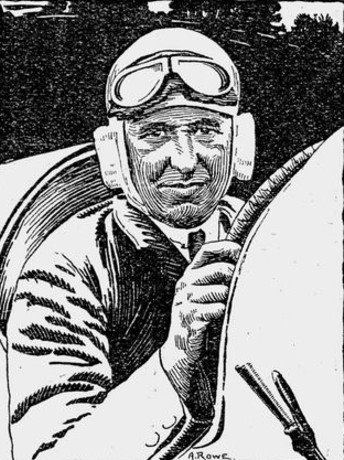
Parry Thomas, a sketch by Algernon Rowe