Monday, August 13, 2012

Olympic Legacy

By Jingo, the unionists and the agenda driven BBC think they've got Alex Salmond on the run.  I doubt it. Not much evidence, around here at least, of those flag-bedecked cars you see during the big rugby and soccer tournaments.  Does anyone really believe that political and national loyalties are influenced by how well TeamGB does in the Lightweight Double Sculls?

Your blogger did learn one useful thing during the two week, red white and blue extravaganza though, the natives of Flint are adamant we should say "off Flint" rather than "from Flint."  Why?

Meanwhile back in the real world ............

Tuesday, August 07, 2012

Sunday, July 29, 2012

Hurrah for the Daily Mail

A big thank-you to the Daily Mail and all those who've made the non-singing of  Duw gadwo'r Frenhines by Giggs and pals such a huge issue.  It's even been picked up in the foreign papers and, by highlighting our separate identities, has doubtless done something to diminish the threat posed by the Great Britain team to the continued existence of Welsh, Scottish and English international football.

We all know that Welsh soccer players rarely sing Hen Wlad Fy Nhadau.  It's never caused a fuss in easy-going, moderate Wales.  But when this tight-lipped tradition transfers to the more rabidly nationalistic acres east of Offa's Dyke all hell breaks loose.

It's a puzzle of course why folk who are quite happy to see their laws made in Brussels, their armies deployed in support of American foreign policy, their best companies sold off and jobs transferred abroad and their respected head of state reduced to acting in a spoof advertisement for the James Bond franchise, get quite so up-tight about soccer players maintaining a respectful silence during the playing of the pre-match anthems.

Thursday, July 26, 2012

Shades of Anni Goch

The Radnorshire village of Norton may have a war memorial (in the form of a horse trough) with an inscription commemorating "its faithful sons who fought and died for England" but it also has a place in the history of Welsh literature.

There was a time when some might have claimed that Anni Goch, the subject of four (or is it five?) poems by the bard Ieuan Dyfi, wasn't a real person but a type, a stock figure.  The researches of academic Llinos Beverley Smith in the early 16C records of the Leominster Consistory Court have shown that Anni was real enough. She was the wife of John Lippard of Norton and her adulterous affairs, together with accusations of rape and attempted murder were enough to have her bardic paramour whipped around Presteigne church, while hubby John received similar exercise at Presteigne, Noron and Byton.

It's said that some 160 bardic poems addressed to Radnorshire patrons have survived, to which should be added nearly 30 more for patrons living just across the border in what is now Herefordshire.  Hopefully these will one day be brought to wider Radnorian attention by someone qualified to do so.  In the meantime here's a rough translation of one of the poems to Anni Goch.  As Ieuan Dyfi's work found it's way into the manuscripts Anni's connection with Norton was forgotten and copyists substituted another placename that met the requirements of cynghanedd - Overton in Flintshire.  One manuscript did get it right though - Nortyn:

Cynydd ydwyf yn canu

I am a huntsman blowing the horn
That musters the host.
I'll hunt with my swift hounds,
Finding the scent is not easy,
It was a hind with a bright form,
That escaped me from a nearby forest .
Everywhere there are snares
I've set for my girl.
Ni wn ar hynt yn y rhwyd
Yn nydd antur na ddeintiwyd.*
She stirs like a hart stirs
Retreating and leaving the covert.
And I'm like a huntsman's pup
Pursuing her like a rampant stag.

From Norton, colour of hazy sunshine,
Out there she was lost.
I don't know what land or region
She makes for from my pursuit.
Maybe she heads down south to the two Gwents
To escape her confinement.
The symbol of the island and my chieftain,
Sir Water, allow me the field;
And if the doe comes from the south,
Then, Sir Rhys, allow me to yoke;
Not to a wild beast or a tame creature
But one who flies with your birds.
If to Builth between turf and wind,
Sir Wiliam, allow me to hunt.
If  Gwynedd's your intention,
Sir Tomos, allow me a prison.
If to Powys, I'd spy you
After the chase and settling the hounds,
Further thanks will be paid,
To tall Mr. Richard Herbert.
If to Hereford, perchance, the fair one
Flees, for fear of being mocked,
In that land there's a chief,
Mr. Owain Pwl, allow me a pure fist,
May Ovid not forsake me,
This is my complaint, she's hiding.
From following the banks of the Wye,
Nor a step above Monmouth,
If she escapes from this lawsuit,
Then to the Vaughans I'll present my case.
If to England she tries to flee,
I know judgement will come there:
the barons of my king,
The men of the guard who love wine,
Will find the slim, upright girl
In one of the winehouses of London.
Or failing that, there's a long task
To find the girl who I'm seeking,
If she's disappeared completely then Dyfi
will seek the girl throughout the world.

Before the time comes to sing
I lose the scent in the hazels.
I'm sorrowful like Uthur for Eigr
It nurses a pain.
Oh for the wizards of Merddin
To give me high magic for her!
Like Gwdion who they often kept
Working endlessly for Huan.
If she resists the sorcerers' enchantments
Is there a magic word she doesn't know?

Beware she doesn't come on a bier
To Edmund from the mount to the sea.
Was there in the tale of Taliesin
A girl from Greece of such great sorcery?
In daylight she rules
In purgatory her face will be!

* Maybe someone can come up with a translation of this couplet which makes sense.

Like It Was


I'm not sure who this is meant to annoy, fanboys of Jimmy Clark or Sebastian Vettel.

The thing is that qualifying just wasn't that important in the 1960s. Racing was important though and here we find that Innes and Jimmy raced together 23 times for Team Lotus in Formula One with Innes winning 4 races with 3 seconds and a third, while Jimmy managed a second place and two thirds.

And for those who argue that Jimmy was just getting quicker, well in their last seven races together, after Innes returned from his Monaco tunnel crash, Ireland took 3 wins against a best finish of fourth for Clark - this without any team orders.

Wednesday, July 25, 2012

TeamGB

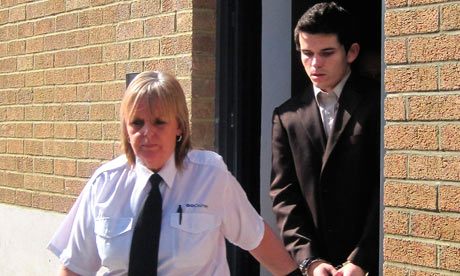
It seems that Gareth Bale - his uncle played for Rhayader Town - has been arrested for failing to turn out for the TeamGB soccer team, see picture here.

Of course that's really Bale lookalike and fellow Welshman Liam Stacey, who was recently imprisoned for 56 days for some ill-judged comments on Twitter.  I doubt if any of the current anti-Bale tweets, many of which involve the adjective Welsh teamed up with various parts of the human anatomy and/or the perceived failings of Welsh people in general will lead to a similar period of incarceration.

As one of the dwindling band of those who support free speech I've no argument with that, but there really should be a law against the use of this term Team GB.  According to my passport our little region of the EU has three names: United Kingdom of Great Britain and Northern Ireland; Teyrnas Gyfunol Prydain Fawr a Gogledd Iwerddon and Rìoghachd Aonaichte Bhreatainn is Èireann a Tuath.  What or where Team GB is, heaven alone knows - perhaps it's a registered trademark.

Against the Odds

Just as  modern day censuses tend to exaggerate the strength of the Welsh language in Radnorshire, those of the late 19C and early 20C probably exaggerate its weakness, especially in the west of the county.  The rapid process of language shift - 19C observers describe the language retreating 20 miles in a lifetime - can surely be best explained by a deliberate rejection on the part of the local community.  The situation in Radnorshire may well have echoed that described by a witness who lived through a similar period of rapid language shift in Limerick in Ireland:  "the growing public feeling that Irish was a dying language, a mark of a degraded people who were not 'decent' - all this combined to produce a new people who from youth were pledged to speak no Irish. And so in West Limerick you had many who persisted in trying to speak a broken English and never again uttered a word in the old tongue they knew so well."

Given such attitudes it comes as a welcome surprise to come across a local Crossgates/Penybont family who actually seem to have passed on a knowledge of Welsh in the late 19C, when all around them were denying any connection with the native tongue.

Edward Stephens, an agricultural labourer, and his wife Elizabeth were born in Nantmel parish in the 1790s - a time and a place where you would expect them to have a knowledge of both languages.  By the time of the 1841 Census they were living at the Cummey, a place in Llanddewi Ystradenni parish, but nearer to the Gwystre Inn than the Walsh Arms.  By 1851 Edward has died and Elizabeth and her sons have moved to the Breconshire iron town of Beaufort, where in 1864 the youngest son, Hugh, marries a local girl called Ann Williams.  Perhaps it is Ann who is responsible for the subsequent linguistic history of the family.

Hugh and Ann have returned to Radnorshire by 1871 with their children Thomas and Sarah - both born in Beaufort.  Two more children, Elizabeth and Hugh jnr would be born in Llanddewi and Penybont respectively.  At first Hugh snr is as an agricultural labourer, later working as a plumber and glazier.

The first language information is provided by the 1891 census. The Stephens family were then living in the part of Llandegley parish which fell under the Kington Union and did not bother itself with such details.  In 1901 Thomas and Sarah have married but Hugh, his wife and two younger children are all recorded as being able to speak Welsh.

Ann Stephens died in 1903, her husband in 1905, but the 1911 Census identifies all of their children, living in and around the Penybont area.  Thomas and Hugh have married English speaking wives but are still recorded as being able to speak Welsh themselves.  Elizabeth and Sarah, both dressmakers, are living together - Elizabeth's English-speaking husband, a coachman, was away, lodging in Garth Road, Builth.  Both Elizabeth and Sarah are recorded as being able to speak Welsh, as is Elizabeth's five year old son - the child of a Llanddewi born mother who has never lived outside the county.

If we look at this through modern-day eyes this example of language survival within a family must seem commonplace.  But in early 20C Penybont?  Without the benefit of Welsh medium education or S4C and in the face of an animus against the language which had seen it abandoned on hearths across the county.  No, this family's persistence is surely quite remarkable.

Monday, July 16, 2012

Bwgy Town


The previous vid could have done with some local accents but that's not a problem here.

Sunday, July 08, 2012

Radnor Pop

Thursday, July 05, 2012

Frontier Post

Although the road from Walton to Presteigne flits to and fro across the border, it's easy enough to tell where you are; the Herefordshire sections being in such a worse state of repair than those of Radnorshire.  Arriving in Presteigne it's reassuring to see Owain Glyndwr's standard flying in the High Street. Some might argue that the reality was that Owain's forces sacked the town, but that would be to forget Edmund Mortimer's call for the Welshmen of Presteigne to give their allegiance to Glyndwr.  Clearly some still do.

On a recent visit I took the opportunity to purchase Mr. Parker's excellent history of the town, it's a book I read when it first came out in 1997 but this was a fairly recently updated edition.

If I have a criticism of this deservedly much praised volume. it's that only about 10% of  the book concerns the medieval town.  Perhaps local historians could make more of Welsh sources.  The public chastisement of the bard Ieuan Dyfi, he was symbolically whipped eight times around Presteigne church in 1501 after admitting adultery with Anni Goch - the basis for the bardic dispute between Ieuan and the female poet Gwerful Mechain.  Then there are the poems by Lewis Glyn Cothi to the lord of Stapleton, Dafydd Goch.  He came from the Fron, near Crossgates.  Or what about Morgan Elfael, the bard from Diserth who lived in Presteigne for at least twenty years and whose burial is recorded in the parish register, now found in Hereford Record Office - As an aside I find it interesting that Morgan was known by his bardic name in the public records (here for example in the lay subsidy for Presteigne, nine lines from the top).  And of course Elen Gethin lived out her days in Nash.

Moving on to a more general point, historians seem to get a bit sniffy when they use Welsh genealogical and historical sources.  They'll qualify a source by mentioning their unreliability or the bard's proneness to exaggeration.  As far as I can see these Welsh sources are no less reliable than the English records.  Are English lawyers and landowners and churchmen always reliable?  I'd make a guess that they were just as much a parcel of rogues as our present day establishments.

Tuesday, July 03, 2012

A Sober Christian Gentleman

William Stephens, clerk of the peace for Radnorshire and a churchwarden at Presteigne, had obviously taken quite a dislike to the town's young Carmarthen born curate John Davies.  For in 1884 the reverend gentleman and Stephens' 34 year old daughter Agnes were forced to marry "surreptitiously" in London.

The 71 year old Mr Stephens, he was born in Kington of a Llananno family, was not prepared to take this lying down. He had complained to the Bishop of Hereford that Davies was a drunkard and a vulgarian and had brought great scandal upon the church.  In January 1885 the Bishop ordered an ecclesiastical inquiry, which was held, appropriately enough given the charges, in Presteigne's Radnorshire Arms.

Stephens' lawyer presented his case to the Chancellor of the Diocese and the five members of the Ecclesiastical Commission. Davies had fallen drunkenly into the street while alighting from a carriage - witnesses said the horse had lurched unexpectedly and the curate was sober. Davies had frequently been drunk in his lodgings - the proprietors of the lodging house said no such thing although they had been pressed by Stephens to say otherwise. Mr Booker, a former teacher and church organist, recalled an incident of profanity following the death of the vicar's wife. Davies had argued that a hymn was too lively a choice for her funeral service.  He'd even resorted to extemporising a verse to the tune "Brief life is here our portion, tee-tum, tee-tum, tee-tum, Mrs West, old girl is gone" - ah but the ex-schoolteacher had been helped financially by Mr Stephens and admitted under cross-examination that he couldn't swear that Davies was drunk.  All the points in favour of the curate being greeted with laughter and applause from the delighted audience.

With Stephens' case disintegrating amidst accusations that it was brought through malice, the remainder of the curate's 25 character witnesses were excused and Davies himself took the stand.  Under oath he denied all the charges against him and that was the end of the matter.  The happy couple being borne away in a carriage by their many supporters and an evening of "the greatest enthusiasm prevailed."

William Stephens died in 1890, who knows if he was ever reconciled to his daughter's new husband.  John and Agnes Davies, she died in 1932, are found in later censuses living in Northamptonshire and Dorset.  Sadly the 1901 census records that their only child had been "feeble-minded" since birth.

UPDATE:

There's a brief mention of this - names withheld - in Mr Parker's History of Presteigne, which also reminds us of an earlier incident involving the church organist who had played the Dead March when the happy couple returned from their London elopement.  This incensed the good folk of Presteigne who burnt an effigy of the organist to the accompaniment of the self same tune played by a band.

Inspector Maddox tells it best by relating the charges brought by the organist against nine men for: "unlawfully and maliciously making or having caused to be made, a certain effigy or figure intended to represent the complainant, with having carried or caused it to be carried through the street of Presteigne, and made or caused to be made a great noise or disturbance with a band of music, and having caused a large number of people to collect around the said effigy in a certain field in the township of Stapleton, and having burned same in the presence of about three hundred people, with having riotously and tumultuously caused certain music to be played and making a great noise and disturbance, thereby creating a breach of the peace."

The nine were bound over and the town's police sergeant, whose evidence was deemed too flippant by the powers that be, reduced to the rank of a second class constable.  The organist, perhaps wisely,  moved back to Oxfordshire.

Saturday, June 23, 2012

A Forgotten Radnorian


"What about motor racing pioneer Rosemary Jones from Newbridge on Wye," the blog comment asked.  "She raced in the Monte Carlo in a Mini in the early 60s?"

The truth is I'd never heard of this Rosemary Jones and a check of some of the old entry lists for the Monte didn't help either.  But then people I spoke to agreed, "Rosemary Jones? Oh she was a daughter for Tom Jones from the garage in Newbridge.  Took part in the Monte Carlo rally. you know"

Well, I didn't know but then someone mentioned the fact that Rosemary was a dog-breeder and a possibility dawned, did she actually race as Elizabeth Jones (AKA Liz Jones) and did she drive a Mini-Cooper with the registration number LIZ 1?

Now this Liz Jones wasn't a run-of-the-mill club driver, along with her rivals Christabel Carlisle and Anita Taylor, she was one of the fastest saloon car racers in the country in the early Sixties, and I don't mean one of the fastest female racers either.

The you tube clip below is well worth watching for some elegant drifting from Jim Clark, but around the 40 second mark we get to see Liz burning up the track:


Mainly a track racer Liz certainly did enter the Monte Carlo rally.  In the 1964 event she took the rather unusual option of starting from behind the Iron Curtain in the Belorussian city of Minsk.

Elizabeth was one of the top half-dozen or so graduates from the Cooper Driving School entitled to an occasional outing in the school's FJ car during the 1960 season, she also competed in an Austin Healey 3000.  From 1962 through to 1964 Ms Jones - actually by this time she was Mrs Degerdon - drove Mini-Coopers, first for the Downton Engineering and then the Alexander Engineering teams.  Anyone who is interested can check out her record in the British Saloon Car Championship for those years here.  Ms Jones also competed in the RAC Rally; the 1963 Tour de France and the 1964 24 hour race at Spa.  A career highlight must have come in the 1963 Brands Hatch 6 Hour race where she finished 2nd in class, Her co-pilot was one Timo Mäkinen but Liz was actually the lead driver in that race.

So it seems that Rosemary Jones - Forgotten Radnorian - was also the Liz Jones who had quite a motor-racing career before dropping out of the sport in the mid-Sixties.  In later life as Mrs Degerdon she became a well-known but, if the forums are anything to go by, very controversial breeder of dogs - with talk of deportation from the United States amidst charges of animal cruelty.

Elizabeth Rosemary Degerdon, born 1930, died in 2010, she is buried in Newbridge churchyard.  Wyesiders who think they are related might wish to check out this site.

UPDATE:  For those who are interested in genealogical matters Ms Jones's father Thomas Irfon Jones was a son for Daniel Jones of Penrhiwmoch, Llanafan and his wife Flora Thomas - she was born in the gold mining town of Ballarat, Australia and in the 1891 census was working as a schoolteacher in Abergwesyn. Ms Jones's mother was Annie Alice Jones, daughter of George W. Jones, a Newbridge butcher and wool dealer and his wife Elizabeth Lloyd.

Friday, June 22, 2012

Furious Driving

Now I'm a fan of the new stretch of the A470 between Newbridge and Builth.  Some letter writers to the local press call it "the motorway to nowhere" but truthfully it is part of a project which will hopefully provide a decent link between North and South Wales.  Something that any self-respecting country would set as a priority.  Others predict that this fast, straight road will lead to accidents, although I would have thought that slow, winding roads were more of a hazard.

The old road certainly proved fatal for 69 year old James Bow as he led a horse he had purchased at Newbridge fair on the evening of 17th October 1873.  Unknown to Mr Bow two young farmers, Danzey Jones and David Pritchard had entered into a discussion as to which of their two mounts was the fastest.  The matter would be settled by a race from Newbridge to the Builth gate.  Pritchard led the way and Jones, in his efforts to catch up, collided with Mr Bow.  The incident being witnessed by Moore and Kelly, two other travellers from the fair.  Mr Bow did not die immediately, indeed he lingered on for a month before finally succumbing.

Both Jones and Pritchard were charged with manslaughter and brought to trial at the Breconshire Spring Assizes in 1874, where they were soon found guilty.  The jury recommended mercy and the two defendants - described by the judge as "hitherto well-conducted men and respectably connected" -  were sentenced to terms of two weeks and one week imprisonment.  The judge specifying that these sentences would not involve hard labour since this would involve the defendants mixing with "common felons."

After Cilmeri


After admitting below that I don't read much fiction, it's hardly surprising that I'd never heard of the after-Cilmeri novels of American author Sarah Woodbury.  Here we find her mooching around Aberedw Castle and almost revealing the location of the snap at the top of this blog.

A Radnorshire History Month?

Unlike a modern caravan, a gypsy vardo took up hardly any room on a grass verge and the numerous brick encased standpipes found, in those days, around every village, provided plenty of clean water.

I remember, towards the end of the 1950s, one such vardo encamped on the chapel turn in our Radnorshire hamlet, I got quite friendly with their children but for some reason ended up in a bout of fisticuffs with one lad in the disused blacksmith's shop we called the pentis. It must have been a good scrap as some of the loafers from the village pub came out to watch, including our respective fathers. Eventually I was well-trounced, rsf, I guess in today's less robust climate such parental behaviour would have seen me whisked off into care.

Now these reminiscences are brought to mind by the current GRT History Month and in particular this article in last Saturday's Western Mail.  Should these three groups be lumped together?  The complaints in the article against the Fat Gypsy Wedding television programmes surely stem from the cultural differences between Romanis and Irish travellers. While discrimination against Gypsies is real enough, as this quote, reportedly from the 1954 edition of the Encyclopedia Britannica, illustrates:

“The mental age of the average adult Gypsy is thought to be about that of a child of ten. Gypsies have never accomplished anything of great significance in writing, painting, musical composition, science or social organisation. Quarrelsome, quick to anger or laughter, they are unthinkingly but not deliberately cruel. Loving bright colours, they are ostentatious and boastful, but lack bravery."

I do wonder if the eugenicist mentality at the root of such opinions, and which should have been buried along with Hitler, has merely taken on new and often politically correct forms. To such people minority histories can become another stick with which to beat the supposedly bigoted working class.

Back in the real world Radnorshire's gypsies have clearly made a contribution to the life of the county and not just in the preservation of the triple harp.  Incidentally the 1911 census finds the harp-playing family of young Fred Melenydd Roberts - I blogged about him here - living in a house called Melenydd Villa in Llandrindod's Tremont Road.  One wonders how the Roberts family felt when in August 1906 the "German" gypsies (I believe they could more accurately be described as Lovari) were escorted through the county under police guard, before being handed over to the Breconshire constabulary on Builth bridge?  The handover was watched by a crowd numbering in the hundreds before the group were allowed to camp off the Hay Road before being pushed on into Herefordshire the next morning, Today there are local businesses run by folk of gypsy origin, sometimes recognizable by the distinctive decoration on their vehicles.  Llandrindod natives may be interested in this reference to one such local family.

It seems that everyone has a history month nowadays: LGBT, Black, GRT, Irish, UK Disability,  - and that's just on the first page of Google.  So should Radnorshire join in the fun?  Not having a TV I can't be certain but I suspect that Welsh television has engaged more with Romani history than it has with that of Radnorshire.  After all I'm not entirely sure that the attitudes articulated by the following and rather typical Victorian comment have completely disappeared:
 
 "And if learning is greatest amongst English speakers in Wales, then we should of necessity look for it in Radnorshire. Instead, as everyone who knows Wales is aware, in this county just as much as the English parts of Wales, you will find the most uneducated, ill-informed, empty headed, immoral, uncivilized, and uncultured population of any part of the principality!"  (Translation)


Now it's quite understandable how comments like this arose.  When the haters of all things Welsh blamed the language for the ills of the country it was natural for patriotic voices to point to largely English speaking Radnorshire, which in some aspects - illegitimacy for example - had a "worse" record than its neighbours.

Although it would be amusing to hear television producers claiming their programmes were "an important way of redressing the many prejudices that have always existed against Radnorians" or to see the delightful Shân Cothi wandering the lanes of the border country, I don't really wish to see such a history month. It would be good though if Welsh historians and programme makers finally paid a little more attention to the history of East Central Wales.

Friday, June 15, 2012

Musical Interlude


This is a fascinating Welsh folk song since it was seemingly handed down in a single family from Cei Newydd in Ceredigion, with the warning that it should not be sung in public.  It's doubtful if such Marian verses could have been composed in Wales during the non-conformist period and therefore it's believed that the words date back at least as far as the Reformation.

It came to wider notice from schoolteacher Myra Evans 1883-1972 (born Jane Elmira Rees) who got it from her mother, who in turn learnt it from her grandfather David Williams.  Elmira Rees's father was a mariner, like many of the men in New Quay - you'll not find him in some of the census records since, presumably, he spent so much time at sea.  I wonder if the absence of husbands from the household accounted for the longevity of such an "old-fashioned" and matriarchal song.

There's a recording by Elen Manahan Thomas on youtube but this version is from Siwsann George.

Thursday, June 14, 2012

A Novel of Radnorshire Interest.

Now I'll be honest and admit that I don't read novels.  I might occasionally enjoy a page turner or read a book that gives an insight into a world I want to know more about, but that's it.  This novel, however, concerns two of the more interesting individuals who have lived in what later became Radnorshire, Gwenllian the daughter of Owain Glyndwr and her husband Philip ap Rhys of Cenarth in the parish of St Harmon. The novel, it says, was inspired by poems written by Lewis Glyn Cothi, Llawdden and Ieuan Gyfannedd.  Long-time readers of this blog will realise that this presses a lot of buttons for me, so it's a book that I had to buy.

After a couple of chapters I'm afraid I consigned it to the rather large box entitled books to be read later.  As I said I don't really like novels, I much prefer factual books.  Now obviously it is perfectly proper for an historical novel to make things up.  Not much is known about the lives of Gwenllian and Philip so the author is at liberty to imagine a great deal.  But why change the few facts that are known?  The book features a poet called Iolo, obviously Iolo Goch..  In reality it's doubtful if Iolo even lived to see Glyndwr take up arms.  The novel mentions Lewis Glyn Cothi's marvellous poem requesting a bed and sets it in 1402, Lewis was probably born in the 1420s. I found fact changes like this, and I could go on, annoying.  Obviously most readers wouldn't have the same problem.

I don't feel the book captures the spirit of the time and skimming through the unread chapters I found the plot a bit far-fetched. Gwenllian comes across as a worthy enough farmer's wife driving an ox-cart instead of a 4x4, rather than the aristocratic figure the bards describe.  She's a bit dim and, good heavens, wouldn't a married woman from St Harmon involved in secret assignations with a stranger in a Llanidloes tavern quickly find herself the talk of the town in 2012, never mind six hundred years earlier.

So is this book a good read and worth buying?  Judge for yourself, I'm afraid I'm the wrong person to ask.

Tuesday, June 12, 2012

Picture this

Last weekend's Sunday Times imagined what the Union Flag might be should Scotland vote for independence in the forthcoming referendum. Something like this:


A bit of a mess but actually a fair representation of a post-Scotland United Kingdom.  A flag and a state dominated by England with Northern Ireland gradually fading out of the picture and Wales tagged on as an out of place afterthought.

Radnorian wonders if this historic flag might be a better bet.

UPDATE:  And then there are the Olympic Games.  An event that interests me not a jot, except that the proposed opening ceremony promises to be a gloriously naff affair.  Following a "green and pleasant" theme it will feature ducks, geese, cricket, grazing sheep, artificial clouds, the Glastonbury festival and the Last Night of the Proms, oh and that ancient thorn tree that someone took a chainsaw to a few months ago.

Now I've no complaint that Wales is represented by a giant daffodil atop a maypole, but the ceremony seems a little light on "the dark satanic mills."  Of course it's the one thing that unites both the old and new British elites, their dislike of industry and, especially, the English working class.  For those of us who actually admire England's industrial genius, watching the arty crowd making an ass of themselves should be fun.

Sunday, June 10, 2012

Latest Score

Back at the end of July in 1936 Scotland beat Wales 7-3 in an international sporting fixture held in Llandrindod.

Anyone care to guess which sport?  Not Bowls or even Hedging.

Sunday, June 03, 2012

World's Most Expensive Car

So the ex-Innes Ireland Ferrari 250 GTO has sold for $35 million, which may well be more than the total true asset value of the Spanish banking sector.

This is the car, owned by the British Racing Partnership, in which Innes won the 1962 Tourist Trophy race at Goodwood. Throughout the summer of that year he used it as his road car in Radnorshire, indeed his wife of the time, Norma, would drive it into Kington to do her shopping.

In the current financial climate I'd say it was a pretty sound investment and heaven knows how much it would be worth if it was actually red rather than duck-pond green.

UPDATE:  I'm amazed at the number of journals and websites who believe this car's competition record was restricted to the 1962 Le Mans race.  It just goes to show how many "experts" just copy each other's articles.  It would have been easy enough for them to check out the facts, here for example.