Three lady members of the Llandrindod Golf Club were killed when the omnibus bringing them back from a match in Aberystwyth was in collision with a lorry between Rhayader and Llangurig. - June 25th 1936
The German contingent at the International Six Days Trial prize-giving ceremony at Llandrindod walked out when the German National Anthem was not played after the German Maico team collected their awards. The Czech and Dutch anthems had been played for their winners. - 25th September 1954
Judge Eifion Evans was banned for a year after being found guilty of driving while under the influence on the road between Llandrindod and Builth. - 14th November 1961
Schools in the neighbourhood were closed after a tiger, which escaped from a travelling menagerie about ten days previously, was spotted prowling the countryside between Builth and Llandrindod. The beast attacked a flock of sheep in the locality and also killed a number of sheepdogs. - 17th November 1900
Sunday, April 30, 2006

Tuesday, April 25, 2006
Radnorshire Bardic Poems, 13
No 142 To Seek the Support of St David for Elfael
The archbishop over every tribe,
Your three tongues are swift;
Holy Dewi, of unignoble birth,
You are a wizard…….
Son of Sant, no wrathful child,
And grandson of Ceredig.
You were descended from Cunedda Wledig,
Wise, wealthy and good.
Your miracles for your people began
Even before you were born:
When Gildas came, he was able
To preach in every language,
Although he did not speak or write a word,
With holy Non there in his presence.
From the corn you drove the birds
To a house of the night greatly tamed,
And the warm spring of the black brook
You crossed through the true Jesus.
You ate, you did not take offence,
Dry white bread and poison;
Despite the wickedness of the poison,
Holy Dewi, you were not ill.
For their treachery you struck dead
Boea and his wife for their pains.
After this you movedUp to Llandewi Brefi;
Under your feet the One God caused
A fair hill to grow for eternity;
So that they could hear your ready sermon
In a true place, in Enlli
You came, my generous royal prop,
To Colfa and to Elfael.
You built with lead, two palaces,
Angel of a bishop, in Glasgwm,
A bishop’s palace for Wales and for her men,
For God and for those who pray.
To our lives you brought
Wine and nine kinds of expense.
Your tenants worship you,
Dewi and Christ, come you are needed.
It is proper that there should be no revenge
Like that in Elfael of the mead.
To your parishes, far Dewi,
To six more domains,
A great evil and pestilence has come,
God and his candle, between kinsfolk!
Dewi, eagle of the east,
Put them at Peace.
From the love of the ten lands that follow you,
Make Glasgwm hold a school,
Empower Elfael with good for two ages,
Mark Cregrina with your cross,
Enchant all of the fair, broad country,
And rule the land of Rhiwlen.
Cold to have, from most, only complaint,
A kindred full of poison.
Don’t allow it, Dewi, from your goodness,
This poison between those of one blood,
Nor any blood feud, nor enslaving temper,
Nor rekindled enmity.
The land of Elfael is generous,
It is your land, Dewi.Oh Dewi, guide the land
Until there be no more sickness or anger.
The archbishop over every tribe,
Your three tongues are swift;
Holy Dewi, of unignoble birth,
You are a wizard…….
Son of Sant, no wrathful child,
And grandson of Ceredig.
You were descended from Cunedda Wledig,
Wise, wealthy and good.
Your miracles for your people began
Even before you were born:
When Gildas came, he was able
To preach in every language,
Although he did not speak or write a word,
With holy Non there in his presence.
From the corn you drove the birds
To a house of the night greatly tamed,
And the warm spring of the black brook
You crossed through the true Jesus.
You ate, you did not take offence,
Dry white bread and poison;
Despite the wickedness of the poison,
Holy Dewi, you were not ill.
For their treachery you struck dead
Boea and his wife for their pains.
After this you movedUp to Llandewi Brefi;
Under your feet the One God caused
A fair hill to grow for eternity;
So that they could hear your ready sermon
In a true place, in Enlli
You came, my generous royal prop,
To Colfa and to Elfael.
You built with lead, two palaces,
Angel of a bishop, in Glasgwm,
A bishop’s palace for Wales and for her men,
For God and for those who pray.
To our lives you brought
Wine and nine kinds of expense.
Your tenants worship you,
Dewi and Christ, come you are needed.
It is proper that there should be no revenge
Like that in Elfael of the mead.
To your parishes, far Dewi,
To six more domains,
A great evil and pestilence has come,
God and his candle, between kinsfolk!
Dewi, eagle of the east,
Put them at Peace.
From the love of the ten lands that follow you,
Make Glasgwm hold a school,
Empower Elfael with good for two ages,
Mark Cregrina with your cross,
Enchant all of the fair, broad country,
And rule the land of Rhiwlen.
Cold to have, from most, only complaint,
A kindred full of poison.
Don’t allow it, Dewi, from your goodness,
This poison between those of one blood,
Nor any blood feud, nor enslaving temper,
Nor rekindled enmity.
The land of Elfael is generous,
It is your land, Dewi.Oh Dewi, guide the land
Until there be no more sickness or anger.
Sunday, April 23, 2006
Grand Prix Wives, 3
A few more Grand Prix wives from Motor Racing's dangerous years. A German girl Ricarda Hirtes was Mrs Peter Arundell, Jack Brabham's wife was Betty Beresford, Audrey Parkin was married to Trevor Taylor, while Mabel Dowson was Mrs Cliff Allison. One to finish, Margaret Harriss, the wife of Stuart Lewis Evans. More to come I'm sure.
Monday, April 17, 2006
Help!!

Innes's son Jamie made his race debut at Lydden in 1990 - see the press cutting above. Now I don't have any magazines covering the 1990s and I don't particularly want to buy any (having spent far too much on other periods), so can anyone tell me if he raced again? If someone could supply further details of his racing career that would be very useful.
Jacqueline Evans de Lopez
 It has been suggested that the Carrera Panamericana driver Jacqueline Evans de Lopez was Welsh. If this were true, then she would have to rank as one of the most colourful Welsh motorsport characters - even more colourful than her 1954 Porsche 356 (pictured model). Jacqueline Evans was an actress, often playing gringas in Spanish language Mexican films and soaps, a career spiced with the occasional Hollywood outing; she had a small role in the Costa-Gavras movie "Missing" for example. Jacqueline Evans is also remembered for her help in establishing and funding the archive of Mexican and foreign magazines and newspapers, "La Torre del Papel" in Mexico City. Jacqueline died in Acapulco in 1989.
Now some of the information on the internet movie databases is wrong. She was born in 1915 not 1914 and her real name was Grace Alice Evans not Grace Alice Evans Antibus - her mother's surname was infact Antrobus. Was Ms Evans de Lopez Welsh? Well Jacqueline was born in Islington, London and her mother Maud was a Tottenham grocer's daughter. However, her father's name was Stephen W. Evans and the only person of this name in London at the time of the 1901 Census was a Welsh born dairyman. So more research needs to be done before a Welsh connection can be ruled out. Can anyone help? Has anyone seen a copy of her Canadian published biography "Coming Out Trumps" by Luz Evans - her daughter perhaps?
Thursday, April 13, 2006
Radnorshire Bardic Poems, 12
This poem by Lewis Glyn Cothi is addressed to Dafydd ap Rhys of Harpton and is notable for a mention of the Book of Taliesin which had made it's way to this part of Radnorshire. Interestingly just a couple of miles away from Harpton was Hergest where that other important medieval manuscript, the Red Book was to be found. In a reversal of roles it is the patron Dafydd who explains the meaning of the verses of Gwion (Taliesin) to his bard. Perchentyaeth - propriety - is the obligation placed upon the ruler to those he rules.
No. 157 Praise to Dafydd ap Rhys of Harpton
A St Michael of Harpton
Mary keep him, a fair Welshman;
Dafydd ap Rhys ap Meurig,
A saint for sowing silver.
Who do I love but Dafydd?
Who loves us? The good body of Old Radnor.
I am a poet who’ll always
Bring him nightly prayers.
Tomorrow night I’ll make a song
For the strong bough of Ifor and Bran.
He has made the perchentyaeth of our land
A living form, it is not broken.
His white house, be it Friday
Or Thursday, is the best under the stars;
On a Saturday it is better
Than a Sunday in countless wine houses.
In this man’s house I’ve had,
Although it was deep into winter:
Fish, birds cooked in bread,
Pasties, fine vintage wines,
Eight tables full of sustenance,
A supper of shop vegetables,
A serving of every herb,
Frequent courses, and white sugar,
Mead to intoxicate my breast with song,
Such rare delicacies and nourishment.
My office, throughout the year,
With the lion, should he leave the wine:
To read together through every book,
Discussing sense, arguing meaning;
If there might be a verse that one fails to understand
Then the other will surely explain it.
Dafydd took the verses of Gwion,
And helped me to understand them correctly.
He is chieftain to the Traethen,
For me let him be a leader..
From here to Anglesey he is a lamb,
A furious dragon with the crown.
Edward trusts this man
Who has a fist upon his dart.
Oh protect the land, there was no peace,
And the barriers and the river estuaries.
King Edward’s ash spearmen
Break the doorway towards the threat,
And a Derfel from Harpton
Goes before them like Owain Wyn.
When the Irishmen come
And the aliens, unruly ones,
Dafydd’s office, two days work,
Is to defeat them and drive them away.
Every hour I’m Dafydd’s bard,
If I am, then my world is blessed for the day;
A gift from the floor of Harpton
Is in my purse for this;
Of the gifts that I may expect in two lives,
Dafydd gives them and has given them;
And as he gave, like one from Greece,
Let Mary give unto Meurig’s grandson.
No. 157 Praise to Dafydd ap Rhys of Harpton
A St Michael of Harpton
Mary keep him, a fair Welshman;
Dafydd ap Rhys ap Meurig,
A saint for sowing silver.
Who do I love but Dafydd?
Who loves us? The good body of Old Radnor.
I am a poet who’ll always
Bring him nightly prayers.
Tomorrow night I’ll make a song
For the strong bough of Ifor and Bran.
He has made the perchentyaeth of our land
A living form, it is not broken.
His white house, be it Friday
Or Thursday, is the best under the stars;
On a Saturday it is better
Than a Sunday in countless wine houses.
In this man’s house I’ve had,
Although it was deep into winter:
Fish, birds cooked in bread,
Pasties, fine vintage wines,
Eight tables full of sustenance,
A supper of shop vegetables,
A serving of every herb,
Frequent courses, and white sugar,
Mead to intoxicate my breast with song,
Such rare delicacies and nourishment.
My office, throughout the year,
With the lion, should he leave the wine:
To read together through every book,
Discussing sense, arguing meaning;
If there might be a verse that one fails to understand
Then the other will surely explain it.
Dafydd took the verses of Gwion,
And helped me to understand them correctly.
He is chieftain to the Traethen,
For me let him be a leader..
From here to Anglesey he is a lamb,
A furious dragon with the crown.
Edward trusts this man
Who has a fist upon his dart.
Oh protect the land, there was no peace,
And the barriers and the river estuaries.
King Edward’s ash spearmen
Break the doorway towards the threat,
And a Derfel from Harpton
Goes before them like Owain Wyn.
When the Irishmen come
And the aliens, unruly ones,
Dafydd’s office, two days work,
Is to defeat them and drive them away.
Every hour I’m Dafydd’s bard,
If I am, then my world is blessed for the day;
A gift from the floor of Harpton
Is in my purse for this;
Of the gifts that I may expect in two lives,
Dafydd gives them and has given them;
And as he gave, like one from Greece,
Let Mary give unto Meurig’s grandson.
Wednesday, April 12, 2006
Motor Sport Wills
While we are on the subject of wills ( see the post on Tony David below ) here are some details of amounts left by various Motor Sport personalities: David Purley left £670427; Graham Hill £41726; Alfred Moss - Stirling's father - left £218963 in 1972; while Ron Flockhart left a modest £7669 ten years earlier. Those two Mon Ami Mates.......well Hawthorn left £57457 and Peter Collins just £4972.
Some Welsh wills: pre-war racer Roy Eccles left £68275; while Parry Thomas left £6251. Perhaps the most interesting motor sport related will was that left by the mother of Humphrey Cook of ERA fame, it consisted of four bound leather books, a total of 2216 pages, the longest will on record at the time. Cook was of course the stepfather of David Blakely, the race driver gunned down by Ruth Ellis.
Some Welsh wills: pre-war racer Roy Eccles left £68275; while Parry Thomas left £6251. Perhaps the most interesting motor sport related will was that left by the mother of Humphrey Cook of ERA fame, it consisted of four bound leather books, a total of 2216 pages, the longest will on record at the time. Cook was of course the stepfather of David Blakely, the race driver gunned down by Ruth Ellis.
Tony David
Not much seems to be known about Tony David, other than the fact that he was a Welsh driver killed when his Lotus 22 crashed into a telegraph pole during the Leinster Trophy race held at the Dunboyne circuit on 17th July 1965.
Here are a couple more facts, his full name was Anthony Nicholas David, born in Cardiganshire in 1937. At the time of his death he was living in Mumbles and was sufficiently well-off to leave what was a tidy sum in the mid-sixties, £21394.
Does anyone have any more information about this Welsh driver?
Some more information to hand about Tony David, including this photograph of him competing at Dunboyne, just before his fatal crash on lap 17 of the Formula Libre race. The car is the 1.6 litre ex-Jack Pearse Lotus 22, the winning car in the previous year's Leinster Trophy race. It seems that Tony David was taken to hospital after the incident where he later died.
Here are a couple more facts, his full name was Anthony Nicholas David, born in Cardiganshire in 1937. At the time of his death he was living in Mumbles and was sufficiently well-off to leave what was a tidy sum in the mid-sixties, £21394.
Does anyone have any more information about this Welsh driver?
Some more information to hand about Tony David, including this photograph of him competing at Dunboyne, just before his fatal crash on lap 17 of the Formula Libre race. The car is the 1.6 litre ex-Jack Pearse Lotus 22, the winning car in the previous year's Leinster Trophy race. It seems that Tony David was taken to hospital after the incident where he later died.
Sunday, April 09, 2006
Sir Clive Edwards
A tenuous link exists between that “cathedral of Welsh nonconformity”, Tabernacle in Morriston, and the world of motor racing. Built in 1872 at a cost of £15000 by local tinplate manufacturer Daniel Edwards, it was this same fortune that enabled his great-grandson Sir John Clive Leighton Edwards to pursue a motor racing career which, although undistinguished, earned him WB’s plaudit as being “the best type of amateur competitor“.
Clive Edwards was born at Hendrefoilan, Sketty on 11th October 1916 and by his sixth birthday had already inherited both a title and great wealth. Before the war he competed in an R-type MG and afterwards in two HRGs, the best remembered of which was a 1767cc Lea-Francis engined 1100-type single seater with twin rear-wheels. He also competed in the London-Brighton run in his 1900 New Orleans.
Edwards moved to the Isle of Man where he lived with his great friend Bob Thomas, his Milntown estate being situated next to the TT circuit on the outskirts of Ramsey. Sir Clive died on 19th February 1999, the house and grounds being left in trust for the benefit of the Manx public.
Clive Edwards was born at Hendrefoilan, Sketty on 11th October 1916 and by his sixth birthday had already inherited both a title and great wealth. Before the war he competed in an R-type MG and afterwards in two HRGs, the best remembered of which was a 1767cc Lea-Francis engined 1100-type single seater with twin rear-wheels. He also competed in the London-Brighton run in his 1900 New Orleans.
Edwards moved to the Isle of Man where he lived with his great friend Bob Thomas, his Milntown estate being situated next to the TT circuit on the outskirts of Ramsey. Sir Clive died on 19th February 1999, the house and grounds being left in trust for the benefit of the Manx public.
Sunday, April 02, 2006
Radnorshire Bardic Poems, 11
This poem, a request for a mantle addressed to Elis Hol of Gladestry, is full of interest. The mantle is for Lewis Glyn Cothi's wife Gwenllian, a pair for the Arras cloth he had already received from Angharad vz Ieuan of Cefnllys Castle. The poem mixes classical mythology ( the Golden Fleece) with Celtic tradition (Tegau Eurfron). By the way Elis's name Hol (derived from Hywel) developed into the fixed surname Hole or Holl. Some lines are missing from the surviving manuscript and are marked ......... here.
No. 163 Request for a Mantle to Elis Hol
The best woman of twenty
With a proud dress on a slim waist.
Elis Hol, the saints call
That old age should come to her brow;
Daughter of John, of high nobility,
The best girl for beer and mead,
The maid is a grandchild of Hywel,
From his power she wears gold and precious stones;
The bright dawn of fair Maelienydd,
The colour of a nun’s gown,
Of the race of wealthy Madog,
A sun of generous Adam.
From these generous folk…………
Elis Hol…………..
And the praise of every confident tongue
Should go unto Elis.
Elis gives drink from her hand,
And then gifts with both hands.
In Maelor, Elis has a great name,
Yes, for her giving of mead.
May Derfel keep Elis
To pay out gold fleur d’lis.
Elis Hol has a summer jewel
That was woven in the winter;
A round mantle like a sail,
Furry from a fond cheek.
Bringing it to her with a dress,
To the beloved, why did I not request it?
The chasuble comes from a city,
The fairest between heaven and Knill.
About Gwenllian it will be the colour
Of God’s gown, or a deer’s coat;
A pair for the Arras cloth,
A hurdle of sunshine’s harsh fire.
A spear of gold like a cloak,
A shaggy web of fire;
Coloured with coral and water,
A forest of candles in a hidden veil,
An all encompassing shield,
A gules curtain in a bright glade.
Compare, with praise and approbation,
Her frieze, to the winding sheet of a saint,
To the bonfires of St John’s Eve,
To golden flames and pretty feathers.
Blessed was the fair weaver
Who gathered wool in Dublin,
Weaving tightly and trimly,
Setting it out like a priest’s vestment.
In Colcos they found
A lamb with a fleece of gold;
This is just as wondrous,
Its wool, its colour, its design.
A mantle of Tegau in the hall,
In all of Egypt there is none so fine;
They’re second, by Mary, to Elis,
With a coarser weave for the same price.
The mantle of Dewi in Caerleon
Was loved by the men of the Round Table;
I construct praise to the mantle
Of Elis Hol, which is better.
And to fetch it send a servant,
Order him to the city,
In haste to wear the woven frieze,
And pay its debt to Elis.
No. 163 Request for a Mantle to Elis Hol
The best woman of twenty
With a proud dress on a slim waist.
Elis Hol, the saints call
That old age should come to her brow;
Daughter of John, of high nobility,
The best girl for beer and mead,
The maid is a grandchild of Hywel,
From his power she wears gold and precious stones;
The bright dawn of fair Maelienydd,
The colour of a nun’s gown,
Of the race of wealthy Madog,
A sun of generous Adam.
From these generous folk…………
Elis Hol…………..
And the praise of every confident tongue
Should go unto Elis.
Elis gives drink from her hand,
And then gifts with both hands.
In Maelor, Elis has a great name,
Yes, for her giving of mead.
May Derfel keep Elis
To pay out gold fleur d’lis.
Elis Hol has a summer jewel
That was woven in the winter;
A round mantle like a sail,
Furry from a fond cheek.
Bringing it to her with a dress,
To the beloved, why did I not request it?
The chasuble comes from a city,
The fairest between heaven and Knill.
About Gwenllian it will be the colour
Of God’s gown, or a deer’s coat;
A pair for the Arras cloth,
A hurdle of sunshine’s harsh fire.
A spear of gold like a cloak,
A shaggy web of fire;
Coloured with coral and water,
A forest of candles in a hidden veil,
An all encompassing shield,
A gules curtain in a bright glade.
Compare, with praise and approbation,
Her frieze, to the winding sheet of a saint,
To the bonfires of St John’s Eve,
To golden flames and pretty feathers.
Blessed was the fair weaver
Who gathered wool in Dublin,
Weaving tightly and trimly,
Setting it out like a priest’s vestment.
In Colcos they found
A lamb with a fleece of gold;
This is just as wondrous,
Its wool, its colour, its design.
A mantle of Tegau in the hall,
In all of Egypt there is none so fine;
They’re second, by Mary, to Elis,
With a coarser weave for the same price.
The mantle of Dewi in Caerleon
Was loved by the men of the Round Table;
I construct praise to the mantle
Of Elis Hol, which is better.
And to fetch it send a servant,
Order him to the city,
In haste to wear the woven frieze,
And pay its debt to Elis.
Shane Summers
Enter a World Championship Grand Prix and you enter the realm of the "encyclopedias" and record books, you also get to feature on the large number of websites which copy their data from such sources. If your career was cut short before you actually made a Championship race then you're very much a non-person as far as the average motor sport historian is concerned, even if you did make it to Formula One in the Non-Championship races of the Golden Era.
One such non-person is Shane Lister Summers, born at Darland Hall, Rossett, Denbighshire on June 23rd 1936. Summers was a member of a family whose wealth was derived from the John Summers Steelworks at Shotton, his father was the Conservative MP Sir Spencer Summers.
Shane's career had hardly started when he was entering the 1961 Non-Championship races in a Cooper T53. An 8th place at Snetterton in the season opener, Continental outings at the Brussels Grand Prix and the Preis von Wien (where he started second on a small grid behind Moss), and a best finish in the early season British races of 4th at the Crystal Palace.
On June 1st 1961 Summers went out to practice in the rain for the Silver City Trophy race at Brands Hatch. He left the track at Paddock Bend, crashing through fencing and demolishing a wall before the Cooper was finally destroyed against a concrete buttress. A Welsh born driver who, like the talented Gary Hocking, did not live long enough to bother the compilers of books that claim to tell the story of Formula One,
One such non-person is Shane Lister Summers, born at Darland Hall, Rossett, Denbighshire on June 23rd 1936. Summers was a member of a family whose wealth was derived from the John Summers Steelworks at Shotton, his father was the Conservative MP Sir Spencer Summers.
Shane's career had hardly started when he was entering the 1961 Non-Championship races in a Cooper T53. An 8th place at Snetterton in the season opener, Continental outings at the Brussels Grand Prix and the Preis von Wien (where he started second on a small grid behind Moss), and a best finish in the early season British races of 4th at the Crystal Palace.
On June 1st 1961 Summers went out to practice in the rain for the Silver City Trophy race at Brands Hatch. He left the track at Paddock Bend, crashing through fencing and demolishing a wall before the Cooper was finally destroyed against a concrete buttress. A Welsh born driver who, like the talented Gary Hocking, did not live long enough to bother the compilers of books that claim to tell the story of Formula One,
Sunday, March 19, 2006
Radnorshire Bardic Poems, 10
This poem by Lewis Glyn Cothi to Lewis ap Gwatcyn of Painscastle uses the popular medieval device of a discussion between the body and the soul.
No 133 Praise to Lewis ap Gwatcyn of Painscastle
I live to receive more,
Without stop, in this big world.
There is a tiresome argument
Within my body, for my soul:
The soul cares not a jot for what
The body loves, the great emptiness of lust;
If my little body had his way, he would
Allow nothing the soul desired;
My soul, if he had his wish
Would have heavenly food;
While the body desires,
Without restraint, wine and feasting.
My soul is more innocent,
Yet they both exist like two little men.
The body desires , when full of ale,
Something more than innocence;
The lively little body is eager
For drunkenness and carousel,
He demands bragget and wassail,
At dead of night, and gets them,
He asks for feasting,
He asks for more mead,
There are dice? Cheapside chequers?
There are cards? There is friendship?
There are dances and games of chance?
There are carols? There is more beer?
Is there a single spot in Is Mynydd
From which you cannot walk before nightfall?
The rasbi wine is famed throughout Spain,
Well things are twice as good in Painscastle.
Lewis ap Gwatcyn, the tower of Bredwardine,
Is kind to the court poet,
A Roland of Llanbedr and Rhiwlen,
A champion of the race of Rhosier Hen.
For ages he’s had a pennant,
The shoulder and the height of Gwallter Sais,
A chieftain for Warwick’s seal,
The province of Gruffudd ap Hywel,
A brave emblem from his grandfather’s root,
The silver arms of the Iforites.
Upon Elfael, Lewis is
The lion’s claw, and a leader.
There’s no profit for a man, come what may,
To test him for the wages of war.
He wears about his rib cage
The royal hawk’s harness.
He is made on the banks of the Edw,
A leader, captain of the Wye bank,A
nd if aliens with a hundred guns
Should venture into our land,
Lewis, a second Eli and Joab,
Will turn them away like Trollope.
I turn, without entering below,
To call the muse to Lewis,
Until my cheerful body returns
From Lewis’s court and his white hall,
When it be fair summer
I’ll send my soul to the corporation.
No 133 Praise to Lewis ap Gwatcyn of Painscastle
I live to receive more,
Without stop, in this big world.
There is a tiresome argument
Within my body, for my soul:
The soul cares not a jot for what
The body loves, the great emptiness of lust;
If my little body had his way, he would
Allow nothing the soul desired;
My soul, if he had his wish
Would have heavenly food;
While the body desires,
Without restraint, wine and feasting.
My soul is more innocent,
Yet they both exist like two little men.
The body desires , when full of ale,
Something more than innocence;
The lively little body is eager
For drunkenness and carousel,
He demands bragget and wassail,
At dead of night, and gets them,
He asks for feasting,
He asks for more mead,
There are dice? Cheapside chequers?
There are cards? There is friendship?
There are dances and games of chance?
There are carols? There is more beer?
Is there a single spot in Is Mynydd
From which you cannot walk before nightfall?
The rasbi wine is famed throughout Spain,
Well things are twice as good in Painscastle.
Lewis ap Gwatcyn, the tower of Bredwardine,
Is kind to the court poet,
A Roland of Llanbedr and Rhiwlen,
A champion of the race of Rhosier Hen.
For ages he’s had a pennant,
The shoulder and the height of Gwallter Sais,
A chieftain for Warwick’s seal,
The province of Gruffudd ap Hywel,
A brave emblem from his grandfather’s root,
The silver arms of the Iforites.
Upon Elfael, Lewis is
The lion’s claw, and a leader.
There’s no profit for a man, come what may,
To test him for the wages of war.
He wears about his rib cage
The royal hawk’s harness.
He is made on the banks of the Edw,
A leader, captain of the Wye bank,A
nd if aliens with a hundred guns
Should venture into our land,
Lewis, a second Eli and Joab,
Will turn them away like Trollope.
I turn, without entering below,
To call the muse to Lewis,
Until my cheerful body returns
From Lewis’s court and his white hall,
When it be fair summer
I’ll send my soul to the corporation.
Tom Pryce
Every source you ever read says that Tom Pryce was born and raised in Ruthin, but is this just another case of an error being repeated without anyone bothering to check the facts?
The GRO Index shows Pryce born in the Wrexham registration district and seemingly this was in the village of Rossett - a place just on the right side of the border. Some more interesting information from a childhood friend of Tom's on the BBC's North East Wales site informs us that the great man was brought up at Nantglyn, a tiny village on a backroad some way outside the town of Denbigh.
I wonder what David Tremayne's soon to be published biography "The Lost Generation" will say?
The GRO Index shows Pryce born in the Wrexham registration district and seemingly this was in the village of Rossett - a place just on the right side of the border. Some more interesting information from a childhood friend of Tom's on the BBC's North East Wales site informs us that the great man was brought up at Nantglyn, a tiny village on a backroad some way outside the town of Denbigh.
I wonder what David Tremayne's soon to be published biography "The Lost Generation" will say?
Monday, March 13, 2006
Charles Jarrott, Welshman?
The Dictionary of National Biography is quite clear that Charles Jarrott, the famous racing motorist and winner of the very first circuit race - the 1902 Circuit des Ardennes, was born in Pimlico, London. The GRO index for 1877 confirms the fact. His mother Martha Rosser was born in Newport, Monmouthshire and his elder sisters were born in Newbridge. His blacksmith father seems to have moved to Wales, married a local girl, started a family and then moved on to London.
Now we come to a intriguing entry in the Census of 1901, where we find Selwyn Edge and his wife living in Tavistock Chambers, London. Edge, described as the 33 year old Managing Director of an Automobile Company, had a visitor staying on census night, none other than the 25 year old Charles Jarrott. His birthplace is given as Wales, Newport. One wonders why?
Another interesting fact about Jarrott, he was born the son of a blacksmith's labourer and he married the wife of an Earl.
Now we come to a intriguing entry in the Census of 1901, where we find Selwyn Edge and his wife living in Tavistock Chambers, London. Edge, described as the 33 year old Managing Director of an Automobile Company, had a visitor staying on census night, none other than the 25 year old Charles Jarrott. His birthplace is given as Wales, Newport. One wonders why?
Another interesting fact about Jarrott, he was born the son of a blacksmith's labourer and he married the wife of an Earl.
Thursday, March 09, 2006
The Welsh Nurburgring
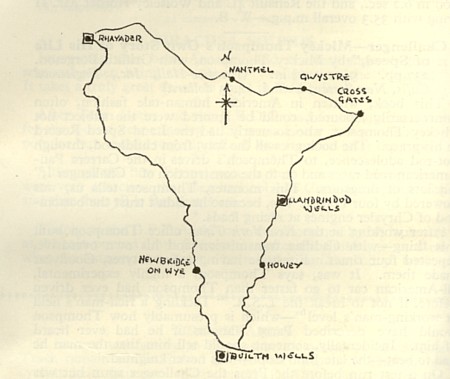
Back in the Mid-Sixties you were more likely to read about Llandrindod Wells than Laguna Seca in Motor Sport magazine. The reason for this was that its editor WB had come to live in the locality, so suddenly features on the town's art-deco Automobile Palace were jostling for space alongside the exploits of Jimmy Clark and Graham Hill.
Given this it was no surprise to find an article in the May 1964 edition entitled "Interview with an Optimist" in which Mr Douglas Jones of Knighton and the Llandrindod Chamber of Trade were pushing the idea of a Welsh Nurburgring. This was to be a 30 mile circuit with race headquarters in Llandrindod and paddock facilities at the Royal Welsh Showground in Llanelwedd. The map above which was published in MS shows the proposed track which would have run in an anti-clockwise direction.
Now even in 1964 such a circuit was a non-starter, after all the RAC had squashed the idea of car racing on the Isle of Man back in the Fifties. WB was fairly enthusiastic describing the circuit as splendid but more suited to GT rather than GP cars. The need for an Act of Parliament to close these public road was of course a major stumbling block, leaving WB to muse "but if Welsh National Rule ever came about?" As a youthful enthusiast for Home Rule I was pleased that my favourite magazine had come up with yet another good reason for escaping the dead hand of London rule.
Sunday, March 05, 2006
Radnorshire Bardic Poems, 9
This is a request poem by Lewis Glyn Cothi addressed to Angharad vz Ieuan, the wife of Ieuan ap Philip, the constable of Cefnllys Castle.
No 172 Request for a Frieze to Angharad vz Ieuan
Good day to the good woman who gave
Me wine at the end of my life,
She is the best from her dominion handing out money in Cefnllys.
Angharad, in manner a Mary,
The daughter of Ieuan, unsullied,
The moon of Hywel ap Madog,
A moon who trusts in the Cross.
As good as the Duke’s payments
The customs of this grandchild of Meurig.
Her custom is to heed the priest,
To make and give her food to the old folk;
Not that Angharad, for all that,
Would allow a young person a moment’s hunger.
Angharad, daughter of a good father,
Is like Anna in Maelienydd.
Anna and her wedded husband
Gave alms to the poor and aged;
She, ‘Ngharad and Ieuan,
Pay well to the poor, the weak.
Philip’s prince, he is a hand and a pillar,
The very post of sweet wine.
He is rooted from the root,
The roots of bardic song.
Angharad has, in the fair country,
The name Angharad Silver Hand.
I was her supplicant,
Since then I’ve been her fond bard;
And for her bard let there be a gift,
A coverlet, protection from the cold snowdrift.
The books of the moon predict
Ice and a world of bitter cold,
At this very moment the fish
Are freezing in the ocean;
With the rod frozen
I’m colder than Llywarch Hen,
And I don’t know, for I’m so weak,
If I’ll live as long as Iolo.
Ieuan’s daughter, to save me from the cold,
Gave me a warm Arras cloth.
Some Lombard with silk brocade and muslin
Embroidered the cloth with a hand loom,
Placing the branches of a woodland
On the green bordered chasuble.
A likeness for the flag of St David’s diocese,
It is the banner of some German,
Groves of marigolds fill up the white sheet,
A multi-coloured picture in cloth.
Like a window upon fair Westminster
With a branch of yew woven above it.
With the golden thread of heaven’s angels
It has been glazed down to the edges,
It is wool from the sheep of Paradise,
Twenty pounds of peacock fleece.
A long life to Angharad,
She gave me a great load of leaf from her estate,
And her wine from a Greek island
I’ve received freely in Cefnllys,
And her tapestry of tiny clover
And a poem for Ieuan’s daughter.
No 172 Request for a Frieze to Angharad vz Ieuan
Good day to the good woman who gave
Me wine at the end of my life,
She is the best from her dominion handing out money in Cefnllys.
Angharad, in manner a Mary,
The daughter of Ieuan, unsullied,
The moon of Hywel ap Madog,
A moon who trusts in the Cross.
As good as the Duke’s payments
The customs of this grandchild of Meurig.
Her custom is to heed the priest,
To make and give her food to the old folk;
Not that Angharad, for all that,
Would allow a young person a moment’s hunger.
Angharad, daughter of a good father,
Is like Anna in Maelienydd.
Anna and her wedded husband
Gave alms to the poor and aged;
She, ‘Ngharad and Ieuan,
Pay well to the poor, the weak.
Philip’s prince, he is a hand and a pillar,
The very post of sweet wine.
He is rooted from the root,
The roots of bardic song.
Angharad has, in the fair country,
The name Angharad Silver Hand.
I was her supplicant,
Since then I’ve been her fond bard;
And for her bard let there be a gift,
A coverlet, protection from the cold snowdrift.
The books of the moon predict
Ice and a world of bitter cold,
At this very moment the fish
Are freezing in the ocean;
With the rod frozen
I’m colder than Llywarch Hen,
And I don’t know, for I’m so weak,
If I’ll live as long as Iolo.
Ieuan’s daughter, to save me from the cold,
Gave me a warm Arras cloth.
Some Lombard with silk brocade and muslin
Embroidered the cloth with a hand loom,
Placing the branches of a woodland
On the green bordered chasuble.
A likeness for the flag of St David’s diocese,
It is the banner of some German,
Groves of marigolds fill up the white sheet,
A multi-coloured picture in cloth.
Like a window upon fair Westminster
With a branch of yew woven above it.
With the golden thread of heaven’s angels
It has been glazed down to the edges,
It is wool from the sheep of Paradise,
Twenty pounds of peacock fleece.
A long life to Angharad,
She gave me a great load of leaf from her estate,
And her wine from a Greek island
I’ve received freely in Cefnllys,
And her tapestry of tiny clover
And a poem for Ieuan’s daughter.
Saturday, March 04, 2006
Grand Prix Wives, 2
Some often photographed wives include Jochen Rindt's wife Nina Lincoln, Patty Broad who was Mrs Bruce McLaren and Louise King the wife of Peter Collins. Not so well known are Innes Ireland's wife Norma Thomas, he later married Edna Humphries and then Jean Howath, the fiancee of Mike Hawthorn at the time of his death. Fenella Warwick-Smith married Tom Pryce and that lesser known Welsh racer Jack Lewis was married to a Pembrokeshire girl called Andrea Larson. More to come but two to finish Sue Hindmarsh, Mrs Roy Salvadori and Marguerite Freddi the wife of Lorenzo Bandini.
Friday, March 03, 2006
Grand Prix Wives, I
It couldn't have been much fun being a Grand Prix driver's wife in Motor racing's dangerous years. Here are a few names:
Ronnie Peterson's wife, the tragic Barbro Edwardson. Bette Shubrook is almost as well known as husband Graham Hill and son Damon. Arleo Bodie was Dan Gurney's wife in his racing days, later he married Evi Butz. Stirling Moss was married to Katie Molson, then American Elaine Barbarino and third wife Suzie Paine is now Lady Moss. Lynn Condon was married to Mike Spence, her sister Gaile Condon was Mrs Tony Maggs. Sally Curzon was married to Piers Courage, Ceril Heycock became Princess Ceril when she married Bira, Guisepina Resegotti is better known as Pina, wife of Tony Brooks. More to come.
Ronnie Peterson's wife, the tragic Barbro Edwardson. Bette Shubrook is almost as well known as husband Graham Hill and son Damon. Arleo Bodie was Dan Gurney's wife in his racing days, later he married Evi Butz. Stirling Moss was married to Katie Molson, then American Elaine Barbarino and third wife Suzie Paine is now Lady Moss. Lynn Condon was married to Mike Spence, her sister Gaile Condon was Mrs Tony Maggs. Sally Curzon was married to Piers Courage, Ceril Heycock became Princess Ceril when she married Bira, Guisepina Resegotti is better known as Pina, wife of Tony Brooks. More to come.
Tuesday, February 21, 2006
Radnorshire bardic Poems, 8
Here is a another praise poem by Lewis Glyn Cothi to Philip ap Rhys and Gwenllian vz Owain Glyn Dwr of Cenarth, St Harmon. A nice image of the drunken bard staggering home to his own wife like a ship afloat on a sea of ale.
No 187 praise to Philip ap Rhys and Gwenllian vz Owain Glyndwr
The man with the four warhorses,
His course was love of office,
Philip son of Rhys, fine and generous,
His body is wise, generous and excellent.
One of the roots of the descent lines
Of Philip Fychan, from his share,
A stag who gives gifts without stop,
The heart of Gwerthrynion and her foot;
He gives full wine, the grandson of Ieuan Llwyd,
The foremost from the glen of Aeron.
It is known that in his majesty
The grandchild of Ieuan Moel shares mead.
Not one of his party was ever weak,
Not his ancestors nor his forefathers,
Not him, not his great grandmother,
Nor his father, nor mother, nor any of his tribe.
A son-in-law, so it is related,
In the sharing of truth, to old Gwyn;
Into his keeping, Gwenllian
Came up from Sycharth.
A laund web from Owain y Glyn
A daughter, too, of Cynfyn,
Molten gold from the body of Llowdden,
A golden thread from Gwen,
From Aron of Merionydd;
She is an Igraine, wise as an elected queen,
A generous daughter of Gruffydd Maelor,
A daughter of Rhodri Mawr,
This is the nobility of our island,
Who is second, Philip ap Rhys?
I dwelt in homely comfort
In his house for a short while.
Now it is high time that I,
As from the houses of Cheapside,
Turned my face toward home.
As is usual with the tribe of Cynfyn,
I am a ship afloat on a sea of ale;
Her head, amidst all the trees
Is a haven, a landfall.
I’m placed like a compass needle
In the box, although I am a grown man,
And her head, which is the diamond,
Is a sure sign of a northerly heading.
The hall of Philip is a rod,
The north of mead and wrought gold,
And my head turns to Gwynedd
And his white walled court.
Gwenllian shares from the court,
Upon her hand there’s gold for Lewis.
In giving wine from the pipe,
Philip will never fail.
Philip will govern every parish,
And so too will Gwenllian.
I sing a prayer for them,
Wine may be my reward.
I am their poet of the cywydd
Who praises Gwen and her husband.
For them let there be two lifetimes,
And after that, a third!
No 187 praise to Philip ap Rhys and Gwenllian vz Owain Glyndwr
The man with the four warhorses,
His course was love of office,
Philip son of Rhys, fine and generous,
His body is wise, generous and excellent.
One of the roots of the descent lines
Of Philip Fychan, from his share,
A stag who gives gifts without stop,
The heart of Gwerthrynion and her foot;
He gives full wine, the grandson of Ieuan Llwyd,
The foremost from the glen of Aeron.
It is known that in his majesty
The grandchild of Ieuan Moel shares mead.
Not one of his party was ever weak,
Not his ancestors nor his forefathers,
Not him, not his great grandmother,
Nor his father, nor mother, nor any of his tribe.
A son-in-law, so it is related,
In the sharing of truth, to old Gwyn;
Into his keeping, Gwenllian
Came up from Sycharth.
A laund web from Owain y Glyn
A daughter, too, of Cynfyn,
Molten gold from the body of Llowdden,
A golden thread from Gwen,
From Aron of Merionydd;
She is an Igraine, wise as an elected queen,
A generous daughter of Gruffydd Maelor,
A daughter of Rhodri Mawr,
This is the nobility of our island,
Who is second, Philip ap Rhys?
I dwelt in homely comfort
In his house for a short while.
Now it is high time that I,
As from the houses of Cheapside,
Turned my face toward home.
As is usual with the tribe of Cynfyn,
I am a ship afloat on a sea of ale;
Her head, amidst all the trees
Is a haven, a landfall.
I’m placed like a compass needle
In the box, although I am a grown man,
And her head, which is the diamond,
Is a sure sign of a northerly heading.
The hall of Philip is a rod,
The north of mead and wrought gold,
And my head turns to Gwynedd
And his white walled court.
Gwenllian shares from the court,
Upon her hand there’s gold for Lewis.
In giving wine from the pipe,
Philip will never fail.
Philip will govern every parish,
And so too will Gwenllian.
I sing a prayer for them,
Wine may be my reward.
I am their poet of the cywydd
Who praises Gwen and her husband.
For them let there be two lifetimes,
And after that, a third!
Motor Racing on the Telly
One of the things about getting older is that what is history for younger people is memory for you. How many times have I read that there wasn't much motor racing on the telly before the age of Murray and James. Now this is just twaddle. Likewise the idea that the sport had a low profile in the 50s and 60s. People just repeat this nonsense and because it is churned out so often, it gets accepted as fact. How on earth do these fools explain how Stirling Moss got to be a household name! Anyway here is a list of live motor racing shown on British TV in 1962:
April 7, Oulton Park (BBC)
April 14, Silverstone (ITV)
April 23, Goodwood (ITV)
April 28, Aintree (BBC)
May 12, Silverstone (ITV)
May 26, Goodwood (ITV)
June 3, Monaco GP (BBC)
June 11, Mallory Park (BBC)
June 11, Goodwood (ITV)
June 23/24, Le Mans (BBC)
June 23, Goodwood (ITV)
June 30, Scotland (BBC)
July 7, French GP (BBC)
July 21, British GP (BBC)
August 4, Silverstone (ITV)
August 6, Brands Hatch (BBC)
August 11, Silverstone (ITV)
August 18, Goodwood (ITV)
September 16, Italian GP (BBC)
September 22, Goodwood (ITV)
October 6, Silverstone (ITV)
December 26, Brands Hatch (BBC)
April 7, Oulton Park (BBC)
April 14, Silverstone (ITV)
April 23, Goodwood (ITV)
April 28, Aintree (BBC)
May 12, Silverstone (ITV)
May 26, Goodwood (ITV)
June 3, Monaco GP (BBC)
June 11, Mallory Park (BBC)
June 11, Goodwood (ITV)
June 23/24, Le Mans (BBC)
June 23, Goodwood (ITV)
June 30, Scotland (BBC)
July 7, French GP (BBC)
July 21, British GP (BBC)
August 4, Silverstone (ITV)
August 6, Brands Hatch (BBC)
August 11, Silverstone (ITV)
August 18, Goodwood (ITV)
September 16, Italian GP (BBC)
September 22, Goodwood (ITV)
October 6, Silverstone (ITV)
December 26, Brands Hatch (BBC)
Subscribe to:
Posts (Atom)