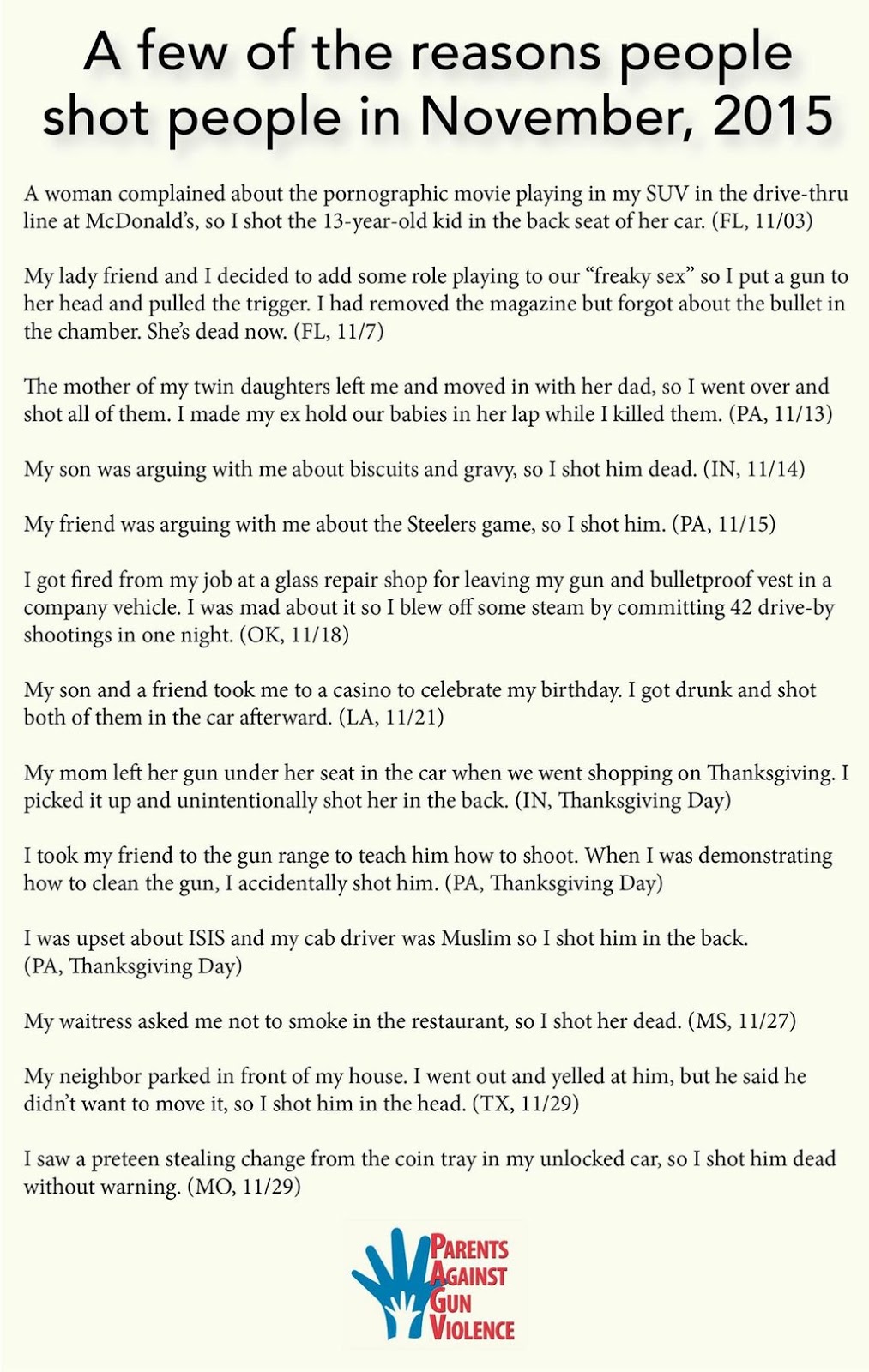
I thought this must be a parody but after googling a few of the crimes listed discovered it was real:
It's a mistake to think this is just about the guns though, it's about a society with more problems than just firearm availibility.
Tuesday, December 08, 2015
Friday, November 20, 2015
Mr Wigley goes to Riga
Dafydd Wigley, who was recently in Latvia, has produced an article extolling the virtues of EU membership for this small Baltic nation, you can read it here.
Around 35%* of the population of Latvia, Mr Wigley tells us, are ethnic Russians, the consequence of "attempts by Stalin to erode their national identity by flooding Latvia with Russian immigrants." I'm not sure if this is completely true. Certainly only around 9% of the pre-war Latvian population were ethnic Russian, rising to 27% by the end of the 1950s; but then 21% of the Welsh population in the 2011 census were born in England and this population movement can't be laid at the door of a Stalin. The Latvian in-migration was the result of the opening of factories in places such as Daugavpils and the higher standard of living found in the Baltic states. No doubt Latvian nationalists would,argue that these factories should not have been sited in the republic. It's also claimed that in the 1980s many released criminals from elsewhere in the Soviet Union found their way to the republic, something which could never happen here in Wales, of course.
Around 12% of the Latvian population, mainly those of Russian descent find themselves in the position of being non-citizens and thus deprived of various rights, including the right to vote. This non-citizenship can apply not only to those born in the old Soviet Union but also to their children born in Latvia itself. Citizenship can be obtained by passing examinations in Latvian language and state-approved history. In the days before the BBC went full Russophobe they even highlighted examples of these second class Latvian citizens.
I wonder if anyone in Wales would welcome following the Latvian example - Welsh as the sole official language and voting rights denied to migrants and their offspring unless they learnt Welsh and passed a government approved history test?
While highlighting the benefits of EU membership the subsequent decline in Latvian population is only hinted at by Mr Wigley - a 10% drop in population since joining in 2004.
Mr Wigley was also in the news this week calling for an end to the character assassination of Saunders Lewis. I certainly agree with Mr Wigley on this. Lewis seemingly foresaw a clash between a Fascist British state and the Welsh working class. In that event, as the Western Mail reported, he was clearly on the side of the Left: "It is possible that there would be bloodshed in South Wales
if there was a Fascist Government. In such a case the Nationalist Party
must take sides with the popular masses of Wales against Fascist
dictatorship."
In Latvia of course this stand point was obviously put to the test, with hundreds of Latvian nationalists participating in the murder of Jews and others. Instead of confronting this past the Latvian government seeks to dilute these killings by claiming that Soviet repressions also constituted a genocide, indeed Latvia has passed a law imposing sentences of five years imprisonment for denial of the Communist's "genocide".
Instead of acting as a crossroads between Russia and Europe, Latvia has chosen to be at the frontline of a new Cold War. Nato mouthpieces continually warn of (wish for?) Russian military intervention in the Baltic states and any unhappiness amongst the Russian speaking minority is blamed on Moscow meddling rather than Riga's own discriminatory policies.
Wednesday, November 11, 2015
Remembrance Day
Every now and then I look at this page. It contains details of the YPJ fighters killed during the last year or so combating the British elite's favourite cult. Sadly, the list grows longer week by week. Every year our own remembrance day seems to get more pervasive and even bigoted. Meanwhile the women of the YPJ really are fighting for liberty and freedom - something that wasn't true for most of Britain's wars.
I do hope that the Syrian Kurds resist American pressure to launch an attack on the ISIS capital of Raqqa. The sensible move would be to link up the cantons of Rojava and Afrin which would cut off the Islamist supply lines from their Turkish allies. Raqqa is overwhelmingly Sunni and Arab, so Kurdish involvement wouldn't be welcomed - it's not as if the Americans have even seen fit to supply the Syrian Kurds with decent weaponry over the last year. There is a largely non-Islamist Sunni Arab force which could eventually take Raqqa, Assad's Syrian Army - of course that wouldn't fit in with Western plans at all.
* * * * *
Ever heard of Kate Evans? In 1921 she was imprisoned for seven years for her part in smuggling explosives from the South Wales coalfield to Ireland. A member of the Dowlais Irish community her Breconshire born husband David Humphrey Evans received a similar sentence. I believe they were quietly released after the signing of the Anglo-Irish treaty, what became of them in later years?
This also led me to looking into the names of members of Cumann na mBan killed during the Easter rising of 1916. According to Wikipedia "A number of Cumann na mBan members died in the Rising" and this gets repeated word for word elsewhere on the net. In fact there is a properly researched list of all those killed in the Rising which can be found here. Although a good number of civilian women were killed during the crossfire, there appear to be no women listed amongst the republican dead. If anyone knows any different please comment below.
Monday, October 26, 2015
Thoughts on Tryweryn
I don't have a television so I missed the various programmes commemorating Tryweryn, I gather it even made it on to that cosy comfort blanket of the British middle classes Countryfile. For a Welsh nation so anxious to be patted on the head by their big brother that must have been sweet indeed.
There was no escape though on my twitter feed, which was flooded with cloying terms such as tragedy, open wound, raw, poignant and the occasional trist and colled. Really? There were quite a few tragedies in 20C Wales - the two wars, the depression, deindustrialisation, Senghennydd, Gresford, Aberfan .... But Tryweryn? Meanwhile the on-going ethnic replacement of the Welsh-speaking heartlands continues with barely a murmur from the tweeting classes.
Of course Tryweryn showed the impotence of the Welsh MPs and Welsh opinion in general, but was anyone in any doubt that Wales counted for, still counts for very little? It certainly didn't change the political landscape, with Welsh folk continuing to vote for the usual Unionist time-wasters. Come to think of it the very real crime of Aberfan didn't produce much of a dent on those Unionist voting habits either.
I don't know if any of the commemorations mentioned the fact that the first physical attack on the Tryweryn site was the work of two English speakers from New Tredegar and Bargoed? One thing I did learn from twitter concerned the Gwent village of Pwlldu which was demolished at around the same time as Capel Celyn.
I already knew about Pantywaun, demolished to make way for open cast - you can spot it at the two minute mark of this youtube showing the last train from Newport to Brecon. All history now.
Finally the brouhaha surrounding Tryweryn and Clywedog is supposed to have ended the process whereby Welsh valleys were drowned to supply English cities with water. Maybe that was more the result of declining demand but it certainly helped scupper Labour's plan for a town of 60000, mainly incomers, between Newtown and Llanidloes. For that we have to thank the dynamiteers.
Caveat Emptor
Some 40 years ago I bought a facsimile copy of John Speed's Welsh maps, it cost a remaindered £2.50. Over the years I've wondered how many of the supposedly original, hand-coloured Welsh county maps you see in antique shops were actually sourced from that book. Anyway caveat emptor.
Here's the town plan of New Radnor taken from the book, the earliest plan of any Radnorshire town dating to around 1610. Nothing much has changed except that the castle masonry has disappeared, the perspicacious Radnorians seeing such monuments as a source of building materials.
New Radnor would have had a population of 500 or so and was at that time a Welsh speaking place. No doubt there was a degree of bilingualism since it lay so close to - what were even then - thoroughly English-speaking parishes within Herefordshire.
Saturday, October 10, 2015
Penn Sardin
Although women in France did not get to vote until 1945, the Breton Joséphine Pencalet (1886-1972) was elected to the town council of Douarnenez in 1925. Included on the Communist list it took a few months for the authorities in Paris to notice this flagrant violation of the constitution and declare her election illegal.
Douarnenez at the start of the 1920s was a leftist stronghold, it had elected the French state's first Communist mayor in 1921 and in 1924 thousands of women working in the sardine canneries came out on strike. This song, illustrated by some superb postcards of the sardinieres, recalls their struggle. It should also be remembered that the language of the strikers would have been Breton not French as their slogan pemp real a vo reminds us - a real was 25 centimes and their wage demand was for 1.25 francs an hour.
Thursday, October 01, 2015
A Half-Opened Door
It’s said that if a publisher wants to guarantee good sales for a Welsh historical book they’ll include the name Owain Glyndwr in the title. Maybe this is why one or two decidedly eccentric publications have seen the light of day; an accusation that certainly can’t be levelled at Lolfa’s latest effort Dyddiau Olaf Owain Glyndwr.
This is an investigation of the various stories surrounding the death and burial of our National Hero from the pen of Professor Gruffydd Aled Williams. As befit’s the author’s academic background it is a work that comes complete with footnotes and an extensive bibliography. At the same time the prose is clear and readable, for which anyone with as shaky second language skills as myself will be grateful.
The author examines the various stories associated with the death and burial of Owain in Herefordshire. A new candidate being Kimbolton or Capel Kimbell. Unlike some of the candidates south of the Wye this was in a thoroughly English-speaking district and might be thought an unsuitable location for a Welsh rebel on the run. But then who would have thought that Bin Laden would turn up in Abbottabad rather than the caves of Tora Bora?
It says something that this is the first book I’ve read about Glyndwr which makes as much of his Radnorshire based (and base) daughter Gwenllian - she lived in the parish of St Harmon - as it does of her half-sisters married into the Herefordshire families, the Mortimers, Crofts, Monningtons and Scudamores. Unlike them Gwenllian left no castle or fine house or any privileged descendants, yet for the bards of the 15C she and her family were of far greater importance: a source of patronage, a centre of resistance and a house of learning.
Gwenllian’s husband Philip ap Rhys was a nephew of Rhydderch ab Ieuan Llwyd - owner of one of the treasures of world literature, the White Book of Rhydderch. Philip was also a first-cousin of such leading supporters of the rebellion such as Rhys Ddu and Rhys ap Gruffudd ap Llywelyn Foethus. Like them he was also a kinsman of the great Rhys Gethin himself. There is some evidence to suggest that Philip continued to fight on after the collapse of the main rebellion, certainly it was to him that Owain’s youngest son Siancyn y Glyn turned for a sword.
The author believes that Gwenllian and Philip have the strongest Welsh claim to have protected Owain in his old age, with nearby Cwm Hir as a possible burial site. Mr Williams also turns to the prophetic literature of the 15C to show how the myth of Owain’s return was linked to the cantref of Maelienydd, his possible burial site. On one aspect of this excursion into vaticination we can help the author to make a better case than he does in the book. Mr Williams quotes Lewis Glyn Cothi’s prophetic poem to Dafydd Goch ap Maredudd, who he describes as being from Presteigne, which the author believes to be part of the commote of Llwythyfnwg and hence linked to Maelienydd:
Fo gyfyd i’r byd o’r bedd
Cnawd Owain cyn y diwedd.
(The flesh of Owain will rise up from the grave into the world before the day of judgement.)
In reality Dafydd Goch was only briefly Lord of Stapleton Castle in the Lordship of Lugharness rather than nearby Presteigne. It’s doubtful if Presteigne itself was in Llwythyfnwg which in any case was connected with the cantref of Elfael rather than Maelienydd.
Dafydd Goch’s links with Maelienydd were far stronger than this attempt to link him with the cantref. His home, apart from the brief sojourn at Stapleton in the aftermath of the battle of Mortimer’s Criss, was in the parish of Llanbadarn Fawr in the heart of the cantref, hardly a mile from another location famed in the prophetic poetry, the red ford on the Ieithon.
Of course there is hardly a place in Wales without some legend connecting the locality with Owain Glyndwr. In this sense the authors of the prophetic poetry were correct in saying that he did not die. Attempts to tie Owain down to a single burial place deprive him of his last unassailable power, the power of myth. For the early 20C poet A G Prys-Jones the hero’s resting place was on Radnor Forest. It’s as good a location as any:
And here men say he vanished in the dawn
Leaving no sign save a half-opened door,
His baldric and his naked sword forlorn
In some lone shepherd’s hut below the moor.
And so he passed, but Radnor Forest still
Hides in her wind swept acres, secret lore
Of him whose heart beat one with moor and ghyll,
The hero-heart of Wales that beats no more.
This is an investigation of the various stories surrounding the death and burial of our National Hero from the pen of Professor Gruffydd Aled Williams. As befit’s the author’s academic background it is a work that comes complete with footnotes and an extensive bibliography. At the same time the prose is clear and readable, for which anyone with as shaky second language skills as myself will be grateful.
The author examines the various stories associated with the death and burial of Owain in Herefordshire. A new candidate being Kimbolton or Capel Kimbell. Unlike some of the candidates south of the Wye this was in a thoroughly English-speaking district and might be thought an unsuitable location for a Welsh rebel on the run. But then who would have thought that Bin Laden would turn up in Abbottabad rather than the caves of Tora Bora?
It says something that this is the first book I’ve read about Glyndwr which makes as much of his Radnorshire based (and base) daughter Gwenllian - she lived in the parish of St Harmon - as it does of her half-sisters married into the Herefordshire families, the Mortimers, Crofts, Monningtons and Scudamores. Unlike them Gwenllian left no castle or fine house or any privileged descendants, yet for the bards of the 15C she and her family were of far greater importance: a source of patronage, a centre of resistance and a house of learning.
Gwenllian’s husband Philip ap Rhys was a nephew of Rhydderch ab Ieuan Llwyd - owner of one of the treasures of world literature, the White Book of Rhydderch. Philip was also a first-cousin of such leading supporters of the rebellion such as Rhys Ddu and Rhys ap Gruffudd ap Llywelyn Foethus. Like them he was also a kinsman of the great Rhys Gethin himself. There is some evidence to suggest that Philip continued to fight on after the collapse of the main rebellion, certainly it was to him that Owain’s youngest son Siancyn y Glyn turned for a sword.
The author believes that Gwenllian and Philip have the strongest Welsh claim to have protected Owain in his old age, with nearby Cwm Hir as a possible burial site. Mr Williams also turns to the prophetic literature of the 15C to show how the myth of Owain’s return was linked to the cantref of Maelienydd, his possible burial site. On one aspect of this excursion into vaticination we can help the author to make a better case than he does in the book. Mr Williams quotes Lewis Glyn Cothi’s prophetic poem to Dafydd Goch ap Maredudd, who he describes as being from Presteigne, which the author believes to be part of the commote of Llwythyfnwg and hence linked to Maelienydd:
Fo gyfyd i’r byd o’r bedd
Cnawd Owain cyn y diwedd.
(The flesh of Owain will rise up from the grave into the world before the day of judgement.)
In reality Dafydd Goch was only briefly Lord of Stapleton Castle in the Lordship of Lugharness rather than nearby Presteigne. It’s doubtful if Presteigne itself was in Llwythyfnwg which in any case was connected with the cantref of Elfael rather than Maelienydd.
Dafydd Goch’s links with Maelienydd were far stronger than this attempt to link him with the cantref. His home, apart from the brief sojourn at Stapleton in the aftermath of the battle of Mortimer’s Criss, was in the parish of Llanbadarn Fawr in the heart of the cantref, hardly a mile from another location famed in the prophetic poetry, the red ford on the Ieithon.
Of course there is hardly a place in Wales without some legend connecting the locality with Owain Glyndwr. In this sense the authors of the prophetic poetry were correct in saying that he did not die. Attempts to tie Owain down to a single burial place deprive him of his last unassailable power, the power of myth. For the early 20C poet A G Prys-Jones the hero’s resting place was on Radnor Forest. It’s as good a location as any:
And here men say he vanished in the dawn
Leaving no sign save a half-opened door,
His baldric and his naked sword forlorn
In some lone shepherd’s hut below the moor.
And so he passed, but Radnor Forest still
Hides in her wind swept acres, secret lore
Of him whose heart beat one with moor and ghyll,
The hero-heart of Wales that beats no more.
Tuesday, September 22, 2015
Funny Joanna from Poland
Back in the late 1950s gentlemen in our Radnorshire village would retire to a private lounge in the local pub to watch one of the first television sets in the district, its aerial directed towards, I believe, far-off Wenvoe. A favourite programme was Grandstand, which in the very early 60s would transmit Fight of the Week supplied by America’s NBC channel. Here Radnorians came face to face with the likes of Hurricane Carter and Davey Moore - both later subjects of Bob Dylan songs - and numerous other black fighters of varying degrees of formidableness.
The viewers would also talk of how in their younger days they’d set up a boxing ring in the village’s old mill. Did Rocky Marciano - allegedly stationed with the American troops on Penybont common - really spar with Glyn Evans? Another favourite story was how a sparring partner of the well-known Merthyr boxer Cuthbert Taylor had once visited, only to have his face cut to ribbons by the cracked-leather blood-caked gloves of his opponent. Perhaps this would have been around the time in April 1937 when Taylor headlined a boxing card at Llandrindod’s Grand Pavilion.
Every now and again I would sneak into this all-male club room, my uncle being the pub’s landlord, to devour the various reading matter available; not just Parade but especially the US fight magazines Boxing Illustrated and Ring. These provided one with a social, historical and geographical education not available in the local schools.
Ring magazine, especially, was a revelation. The publisher stroke editor Nat Fleischer was a legendary journalist who had seen every great fighter since before the war - the First World War. When he compared the likes of Jack Johnson, Joe Louis and Cassius Clay, he’d actually seen them fight in the flesh. Ring was a magazine that covered the past as much as the present, so old Welsh fighters were often featured. Fleischer produced an annual list of the greatest ever boxers in the eight traditional weight categories - none of this junior or super nonsense. High in these lists were the famous Welsh pugilists of the early 20C: Jimmy Wilde at flyweight, Freddie Welsh at lightweight and Jem - it was never Jim - Driscoll at featherweight. It all added to my sense of patriotism; so that within a few years Ring, Boxing News and Welsh Nation were finding their way through my letterbox along with (another obsession) Motor Sport and Motoring News.
Working in London in the early 70s I discovered that television gave no sense of the explosive power of a live fight. The boxers often came across as witty, intelligent and decent, which was more than could be said for some in the crowd or the press seats. Gradually I took less and less of an interest in the fight game, even feeling somewhat repulsed by the lack of respect for its practioners on the part of the gate.
Nowadays even the women fight, with Nicola Adams proving one of the more interesting characters to emerge from the last Olympic Games. Women’s professional boxing is largely moribund with the real interest being focused on the cage-fighting practioners of mixed martial arts. A November card in Melbourne headlined by two female title bouts is expected to draw a crowd of 70000, with millions tuning-in worldwide on pay-per-view.
Should women even fight? Well if that’s what they want, who is to stop them. If women’s fighting is a brutal spectacle so too is that involving the men; redeemed to an extent by the heart exhibited by both sexes. All you can hope for is that the new business is governed by rules that offer some protection to the fighters. This seems to be the case, although there should be more female weight categories to prevent the dangers of ridiculous weight loss. This aside I would be more worried about rugby than cage fighting.
In the old days boxers often ended-up punch drunk. Cuthbert Taylor’s online record shows he competed in at least 250 professional contests. In the six months leading up to his Llandrindod bout he fought 9 times, losing on 6 occasions. Nowadays it is the professional rugby player who receives far too many hits to the head. We are already seeing the results of the long-term damage received in a professional sport which needs some serious rule changes in order to limit the number of head-on tackles that players are expected to make week in week out - 13-a-side might help.
One of the champions involved in the Melbourne card is the Pole Joanna Jedrzejczyk whose outstanding skills and infectious bravado remind me of the young Ali. Another is a former Olympic judo medallist Ronda Rousey and here is a problem that the MMA world will have to solve. If the undefeated Rousey can grapple her opponents to the floor she will apply an armbar and win the contest by submission. The fighter best equipped to defeat Rousey will likely be a fellow judoka and how many people would actually pay to watch a judo bout?
Wednesday, September 16, 2015
A Tale of Two Days
It seems that yesterday was Battle of Britain Day, an occasion to celebrate the Few - that happy crew of public school boys, Tories to a man - who saved Britain from Hitler's tyranny. The new Labour leader, it's widely reported, committed sacrilege by attending the cathedral service in a scruffy shirt collar and by failing to sing God Save the Queen, sacrilege in cathedrals only being permissible if carried out in Moscow by feminist punks attacking Putin.
I suppose I should be more supportive of Battle of Britain Day since the 15th of September 1940 would have found my late mother, a few days past her 20th birthday and already a one year veteran in the WAAF. Faced, as a regular, with signing on for a further seven years, she left the airforce in 1942 to work in a factory at Cox's Corner near Watford. Who is to say which service was the more valuable, the mythologised Few - the majority of whom were not public schoolboys by the way - or the Many, including the millions of factory workers who actually won the war. As one expert claims, more people were killed building Spitfires than flying them, although the uniforms were certainly much smarter in the WAAF.
What started out as Civil Defence Day in 1942 was soon hijacked by the RAF and the Beaverbrook press and abandoned in favour of a day that celebrated the elitist Few rather than the proletarian Many:
Which brings us to Owain Glyndwr Day, again not an occasion that is going to get me pumped up with national pride, it being increasingly doubtful if the Welsh will ever get to celebrate a success rather than a glorious failure. Perhaps it would be useful though to mention some Radnorshire connections with the great prince.
Foremost among them was the battle of Bryn Glas when the men of Maelienydd switched sides to win a victory for the Welsh. Our last?
Less well known is the fact that Owain's daughter Gwenllian was the wife of Philip ap Rhys of Cenarth, St Harmon. The couple were the subject of many praise poems by the likes of Lewis Glyn Cothi (some of his finest), Llawdden and one by Ieuan Gyfannedd, which Ffransis Payne considered the best of those composed to the family.
I think it's beyond argument that, Owain's general, Rhys Gethin was from Buellt - a cantref that fits a lot better with those of Radnorshire than half-French Brycheiniog - but less accepted is the claim that his kinsman Philip ap Rhys of Cenarth continued the fight after Owain's son Maredudd called it a day and begged forgiveness from the English king. This reminds me that I should attempt a translation of Llawdden's poem to Philip requesting a sword on behalf of Siancyn y Glyn, another of Owain's sons.
Just the Ticket
I thought that the Celts had been abolished by order of the archaeologists and geneticists, but seemingly not, since next week sees the opening of a great exhibition at the British Museum, see here.
The exhibition promises to dwell not only on the iron age past but also to cover the Celts up to the present day. I wonder if it will be as bold as to reference the claims to Celtic kinship by pro-Confederacy supporters in the US and the use of Celtic crosses by Neo-Nazis in Eastern Europe? Was I wrong to think that the Slavonic interest in Irish music was purely innocent?
I'm also wondering if the exhibition will make as much use of the Welsh language as a similar exhibition in Austria in 1980? There the exhibition catalogue had a Welsh foreword and even the ticket had some Cymraeg, yes really.
Saturday, September 05, 2015
A Radnorshire Pageant
I've seen pictures of the Builth Pageant before and not taken much notice of this Edwardian extravaganza (1909) performed by a cast of 1000. An album covering the event is available online, see here, and it seems I was wrong to dismiss the event as an example of Breconian eccentricity. Actually it seems to have been more of a Radnorshire effort, performed at Llanelwedd Hall with the local vicar as pageant director and the Reverend and Mrs J L Herbert of Diserth receiving second billing in the pageant programme. It says something that when I was a young lad Jimmy Herbert was still spoken of with fondness by the older residents of Howey village.
It seems that pageants were all the rage in the 1900s, there's even a website covering their history and a recent article on the four nations history site outlines Welsh and Scottish variations on the theme.
The Builth pageant tells us little we didn't already know about Edwardian views of Welsh history - Ancient Britons in animal skins, Romans, Normans etc etc. There were certainly plenty of Welsh references and songs - Druids, Saint Cewydd, Lord and Lady Llechryd (an interesting recognition of a barely recognized local historical site - perhaps it was included since it was said to be the original home of the local Vaughan clans and the Chairman of the Finance Committee was a Vaughan)
Like old copies of the Encyclopedia Britannica Welsh history seems to have ended in 1282 but the real ommision were the common folk, just a couple of labourers in agricultural smocks who naturally ended up in the stocks.
One highlight was a recreation of the old Diserth feast with dancing, a Mari Llwyd and Hen Wlad Fy Nhadau. No wonder Jimmy Herbert was still remembered fondly in the parish some sixty years later and, of course, we were hardly past the era when the Society for the Suppression of Parish Feasts and Wakes rooted out such human excesses.
Friday, September 04, 2015
A World Apart
I recently watched the excellent 1988 film A World Apart, the directing debut of Radnorshire based cinematographer Chris Menges. The film covers a few months in the life of a character, based on the South African Communist Ruth First, as seen through the eyes of her 12 year old daughter played by Jodhi May. As I say a fine film and readily available to view from the usual sites.
Could such a film be made today, given the total victory of neoliberalism and its neoconservative twin in the mainstream Western media? I remember how shocked some commentators were at the sight of communist flags at Mandela's funeral - the younger ones being perhaps unaware of the West's support for the most reactionary regimes in South Africa and Latin America in the late 20C. A time when, for all its internal sclerosis, the Soviet world did support progressive forces from Chile to Afghanistan.
The fall of the Soviet Union now means that we are expected to regard heroes like Ruth First as no better, or even worse, than Nazis. The most ridiculous Cold War propaganda, which would have been laughed at in the 1980s, is nowadays treated as fact by readers who have been exposed to nothing else; opposing viewpoints going unanswered and exiled to the obscurer corners of the net.
Thursday, August 06, 2015
Nuclear Option
I'm currently reading the book Treachery by the indefatigable journalist and ancient - it was written in his 90s - cold war warrior Chapman Pincher. One thing which is clear from the book is the author's grudging admiration for the Soviet agent code named Sonia, who he describes as the most successful female agent in the history of espionage.
One of Sonia's greatest known achievements was to obtain and transmit to Moscow the above top secret Quebec Agreement between Churchill and Roosevelt in 1943. The agreement pooled UK and US research efforts into producing a nuclear bomb, described euphemistically as Tube Alloys, and laid down the following conditions for its use:
First, that we will never use this agency against each other.
Secondly, that we will not use it against third parties without each others consent.
Thirdly, that we will not either of us communicate any information about Tube Alloys to third parties except by mutual consent.
Now when we read that the United States is the only country to have used a nuclear bomb we should remember that second clause. Hiroshima and Nagasaki could only have been destroyed with British consent and I suppose that means the consent of Britain's Labour government.
The United States should not stand in the dock/ receive the plaudits* alone, it was a joint venture of the two great Anglo-Saxon regimes, never mind who flew the planes.
* delete as appropriate - my own view is that the bombing was more about thwarting the Soviets after their stunning victories in Manchuria rather than about saving allied lives, and that the Japanese surrender was motivated by that defeat more than anything else.
Wednesday, July 08, 2015
Matters Arising
I was expecting more online interest in Simon Brooks' new book Pam Na Fu Cymru; perhaps there was some confusion as to whether the book should be treated as an academic essay or a political polemic, or perhaps like me some readers just struggled with the vocabulary.
Mr Brooks poses the question why isn't Wales a Welsh speaking country and why isn't it independent. Looking back to 1850 he points out that we were then in a stronger position, linguistically and culturally, than some present day independent European states, especially those in Central and Eastern Europe. The failure to develop a successful national movement is laid at the door of 19C Welsh liberalism and the subsequent 20C radical movements in particular the Labour Party - a radicalism that puts wider interests ahead of those of its own community. I suppose you could say that Wales is a conservative country whose intelligentsia pretend to be radical and that pretence holds us back.
I don't disagree with this analysis, indeed it was true of the Civil War and the earlier stripping of the altars. The English are the radical iconoclasts and the Welsh are the conservative traditionalists and the failure to recognize this fact accounts for the present day failure of our national movement to make an impact.
I'm not going to comment directly about the book but rather note down some points that crossed my mind, especially regarding Radnorshire, which arose from an initial reading.
Mr Brooks poses the question why isn't Wales a Welsh speaking country and why isn't it independent. Looking back to 1850 he points out that we were then in a stronger position, linguistically and culturally, than some present day independent European states, especially those in Central and Eastern Europe. The failure to develop a successful national movement is laid at the door of 19C Welsh liberalism and the subsequent 20C radical movements in particular the Labour Party - a radicalism that puts wider interests ahead of those of its own community. I suppose you could say that Wales is a conservative country whose intelligentsia pretend to be radical and that pretence holds us back.
I don't disagree with this analysis, indeed it was true of the Civil War and the earlier stripping of the altars. The English are the radical iconoclasts and the Welsh are the conservative traditionalists and the failure to recognize this fact accounts for the present day failure of our national movement to make an impact.
I'm not going to comment directly about the book but rather note down some points that crossed my mind, especially regarding Radnorshire, which arose from an initial reading.
Borderlands
There's a trend in modern history which sees the study of the borderland or periphery as being particularly useful in understanding processes affecting the heartland, I was reminded of this frequently while reading SB's book. Radnorshire history receives little attention and yet it surely has something to offer in understanding the broader picture.
SB points out that in 1850 Welsh was the language of some 90% of the people, with English monoglotism found mainly in the long established "Englishries" of Gower and South Pembrokeshire; the more recent advance of Welsh into the Vale of Glamorgan being a reminder that language shift doesn't have to be all one way. In Radnorshire however the language was already in retreat. In 1827 a report discusing the dialect of the Llandrindod district stated that the language had retreated 20 miles in living memory, this ties in with reports that in New Radnor there was nothing but Welsh in 1742 or that in 1744 there was little English between Bleddfa and Llanfihangel Rhydieithon.
Here's Jonathan Williams writing in the early 19C to explain the process of language shift in Bugeildy, a border parish on the river Teme - the 17th longest river in the UK which flows 81 miles into the heart of England to join the Severn below Worcester:
"An increased intercourse with England, a more general interchange of
the commodities and produce of these two countries respectively, and, above all,
the introduction of that jurisprudence with which the inhabitants of
Wales found it necessary to be familiarized, as well as the diction in
which all legal pleadings, deeds, conveyances, processes, &c., are
executed, soon undermined that predilection for their mother tongue
which was before their distinguishing character, and rendered the study
and acquisition of the English language necessary, not only as an
accomplishment, but also as a matter of indispensable interest."
This statement suggests two important facts, firstly that bilingualism and subsequently language shift are made possible by everyday contact with the English language. This was possible in eastern Radnorshire in a way that was impossible for the common folk in counties further west. Language shift was not then a matter of national sentiment but of opportunity. Secondly the adoption of English was seen as a legal necessity. Obviously this had been the case for the gentry class but why lower down the social scale? The support for Welsh that Mr Brooks notes amongst conservative landed circles surely had much to do with the language being seen as a barrier to the hoi polloi getting above themselves. Yet in Radnorshire there was a tradition of the generality using the law, as here for example. I put this down to a not unsizeable class of small landowners, descendants perhaps of the querulous manwyr noted in the 16C bardic poetry.
Physical Force
Another stick to beat 19C Radnorians, especially those in the west of the county was it's physical force tradition, exemplified by the open flouting of the fishery laws - here's an example - but also participation in the Toll gate riots, resistance to squatter evictions and action against landlords and shopkeepers, especially those newcomers who stepped on people's toes. Even Ireland took note of the Radnorian example. It's interesting that these actions occurred in districts where language shift was proceeding apace with bilingualism allowing young couples to abandon the teaching Welsh to their children. The more monoglot districts on the Irfon, by contrast, were far more peaceful.
Radnorshire was often slandered by Welsh non-conformity for its immorality and English tongue, so there is some satisfaction in SB's unmasking of this class as the sell-outs they appear to have been.
The relative success of UKIP in seats like Merthyr, Blaenau Gwent etc has revived something a prejudice against the inhabitants of what was once known as the Black Domain. The rural traditions of violent community action transplanted to the area in the form of the Scotch Cattle, the anti-Irish riots of the 19C and the Tredegar riots of the early 20C are condemned as, perhaps, proto-fascist in nature, harbingers of the 21C UKIP vote - oh well it's a theory.
Radnorshire was often slandered by Welsh non-conformity for its immorality and English tongue, so there is some satisfaction in SB's unmasking of this class as the sell-outs they appear to have been.
The relative success of UKIP in seats like Merthyr, Blaenau Gwent etc has revived something a prejudice against the inhabitants of what was once known as the Black Domain. The rural traditions of violent community action transplanted to the area in the form of the Scotch Cattle, the anti-Irish riots of the 19C and the Tredegar riots of the early 20C are condemned as, perhaps, proto-fascist in nature, harbingers of the 21C UKIP vote - oh well it's a theory.
Looking back to the 1960s you sometimes wonder if Cayo Evans was responsible for more advances than Gwynfor? Certainly the threat of MAC - whose activists seem to have often been English speakers from the South East - must have been partly responsible for the abandonment of Labour's plan to build a new town of 60000 souls in Mid Wales.
So here we have another long-standing contradiction, a "radical" national intelligensia who wouldn't say boo to a goose - does no-one in Cardiff currently own a spade for example - and who seek the approval of their betters across the border, contrasting with a more rough and ready tradition of essentially conservative reaction to unwelcome and unasked for change.
Landespatriotismus
So here we have another long-standing contradiction, a "radical" national intelligensia who wouldn't say boo to a goose - does no-one in Cardiff currently own a spade for example - and who seek the approval of their betters across the border, contrasting with a more rough and ready tradition of essentially conservative reaction to unwelcome and unasked for change.
Landespatriotismus
Now here's a term I'd never heard before, seemingly the first stage in building a national movement. Radnorshire had its fair share of such folk: William Probert of Painscastle - a translator of the Gododdin and Edward "Celtic" Davies* of Llanfaredd come to mind as does Ffransis Paine in more recent times.
I've never been a member of the Radnorshire Society but how its membership must have had their Anglo prejudices shaken in the years before and after the Second War by the articles of Mr Cole, detailing local wills with their numerous APs and VCHs.
Iorwerth Peate decribed Radnorshire as ""a deracine society, a people fallen between two stools, a community of half-things." Perhaps that has been a common prejudice amongst Welsh speaking intellectuals, who have sometimes given the impression that this great chunk of Central Wales should be handed over to the West Midlands.
Radnorshire's Welsh history has largely been recovered by Radnorians themselves, which is as it should be. Does Wales consist of two indigenous communities - the English speaking Welsh and the bilingual Welsh? Perhaps it does, although I like to think that it is one community, although at different stages of a single historical process. If only that bilingual community were a little more aggressively Cymraeg in its outlook.
* It's interesting that the Dictionary of Welsh Biography says that Celtic Davies had an imperfect knowledge of Welsh, yet he grew-up on a farm just five miles from, and a generation before, the childhood home of Carnhuanawc, although on the opposite side of the Wye.
Saturday, July 04, 2015
Hillbilly Nationalists*
"Simpering, self-serving, holier-than-thou bullshit" so says the heading of a sidebar on Jac's blog. A pretty controversial statement in a Wales that seems to have more than its fair share of simpering, self-servers.
It was a very clever move for the elite to take over the original rainbow coalition idea in order to isolate those who might actually pose a threat to their hegemony - like poor southern whites for example. Obama is OK because he's black, Hillary Clinton will make a fine president because she's a woman and in 2020 we'll probably be due a gay president and anyone who opposes will be branded a homophobe. Let's forget about their actual policies, identification with a right-on minority is all that matters - they may be warmongers, neo-liberal thieves, perverters of the constitution and servants of the 1%, but, hey, they're the new radicals.
This confederate flag business seems to fit right-in, you can tweet your outrage and tick-a-box. You might think you're a rebel but really you're a pussy, you salivate when someone rings the bell. Don't get me wrong, I'm all for a young woman shinning-up a flagpole to pull down a version of St Andrew's cross, but not as an attack on the flag itself but rather as a stunt to embarrass those who use it to divide ordinary folks.
It wasn't always like this.
Here's a snap from Chicago in the late 1960s featuring a Black Panther and an activist of the Young Patriots Organisation, a group of white working class youth of mainly Appalachian origin who allied themselves to the Panthers and to the Puerto Rican Young Lords. You'll note that the Young Patriots used the Confederate flag as their symbol and this caused no friction between them and the Panthers. Of course the Panthers were a real threat to the interests of the ruling-class, which is why so many of them ended-up on a mortuary slab.
Together these Chicago groups opposed Mayor Daley's corrupt political machine, they failed, indeed the Daley machine's most recent graduate now occupy's the Oval Office.
*Hillbilly Nationalists @amazon.com
Sunday, June 07, 2015
Party Poopers
The 150th anniversary of the Welsh settlement of Patagonia is not, we are told, an occasion for celebration. Indeed it something to be regretted, an example of Welsh colonialism.
I agree that the Patagonian enterprise deserves serious historical attention - rather than sentimentalism - as does Welsh participation in the British Empire. For example this Radnorian well wisher of the Welsh language was able to pursue his philanthropic endeavours because of a fortune earned in India and the Windward Islands.
The Welsh Colony does not fit well with the establishment of a Zionist state in Palestine, rather it should be seen as part of the 10000 year old process whereby farmers occupy land previously the preserve of hunter/gatherer societies. Herzl may have considered Patagonia a suitable location for a Jewish state, but as he wasn't born until 1860 it was hardly contemporaneous with the Welsh project. Indeed the remarkable thing about YWladfa was its early date and its absolute remoteness from any other settlement.
Revisionists dismiss the good relations between the Tehuelche and the Welsh but present little evidence to the contrary. One author cannot believe that only three settlers were killed by natives, he cannot believe it so it can't be true. Others claim that because of the similarity to familiar tales of "good injuns" then it must be another such tale. Yet another author will report the views of present-day Mapuche speakers without reference to their history.
At the time of the establishment of the Welsh colony the Chubut river was something of a border between the nomadic northern Tehuelche who had recently adopted the language of the more technologically advanced Mapuche. The southern Tehuelche still spoke their own Aonikenk tongue, a language which is now virtually extinct. It's worth reading about the Mapuche who were certainly not the helpless natives of the contemporary imagination. If Calfucura, the Napoleon of the Pampas, had not been operating hundreds of miles to the north then Y Wladfa would not have survived for long.
Of course the friendly relationship between early settlers and original inhabitants does not usually long survive population influx and a thirst for land. The Welsh in Patagonia, as a de facto independent state power, lasted only a decade or so before Argentina asserted its rule over the colony. From that time on the Welsh in Patagonia, like the Welsh in North America and Australia, were just one immigrant community among many. Unlike them the Patagonians are of great significance to contemporary Wales, a proof that - even at the height of its power - some at least were able to resist Britishness. Little wonder that others might seek to undermine their naive but heroic adventure.
The Welsh Colony does not fit well with the establishment of a Zionist state in Palestine, rather it should be seen as part of the 10000 year old process whereby farmers occupy land previously the preserve of hunter/gatherer societies. Herzl may have considered Patagonia a suitable location for a Jewish state, but as he wasn't born until 1860 it was hardly contemporaneous with the Welsh project. Indeed the remarkable thing about YWladfa was its early date and its absolute remoteness from any other settlement.
Revisionists dismiss the good relations between the Tehuelche and the Welsh but present little evidence to the contrary. One author cannot believe that only three settlers were killed by natives, he cannot believe it so it can't be true. Others claim that because of the similarity to familiar tales of "good injuns" then it must be another such tale. Yet another author will report the views of present-day Mapuche speakers without reference to their history.
At the time of the establishment of the Welsh colony the Chubut river was something of a border between the nomadic northern Tehuelche who had recently adopted the language of the more technologically advanced Mapuche. The southern Tehuelche still spoke their own Aonikenk tongue, a language which is now virtually extinct. It's worth reading about the Mapuche who were certainly not the helpless natives of the contemporary imagination. If Calfucura, the Napoleon of the Pampas, had not been operating hundreds of miles to the north then Y Wladfa would not have survived for long.
Of course the friendly relationship between early settlers and original inhabitants does not usually long survive population influx and a thirst for land. The Welsh in Patagonia, as a de facto independent state power, lasted only a decade or so before Argentina asserted its rule over the colony. From that time on the Welsh in Patagonia, like the Welsh in North America and Australia, were just one immigrant community among many. Unlike them the Patagonians are of great significance to contemporary Wales, a proof that - even at the height of its power - some at least were able to resist Britishness. Little wonder that others might seek to undermine their naive but heroic adventure.
On July 27th the president of Argentina along with other state dignitaries will be in the Chubut province to celebrate the arrival of the Mimosa in Patagonia. Ms Kirchner will be representing a state that is mainly comprised of the descendants of European immigrants, although with a substantial admixture of native American genes. Should she apologise for the existence of her state and its people because it offends the recently acquired sensibilities of US and European intellectuals?
The question radical Wales - if it ever existed - needs to answer is not to apologise for the past but to decide where it stands on the great questions of today. Even something as banal as the recent Fifa vote illustrates the battlelines being drawn up in the modern world. On one side we have the anglosphere (USA, UK, Canada, Australia, New Zealand) together with their European Union and Pacific Rim allies; on the other the Brics (Brazil, Russia, India, China, South Africa) together with most of South America, Africa and much of Asia
The self-styled "international community" sees these opponents of their unipolar worldview as essentially murderous and corrupt, savages who need to be colonised by Western values. The West itself is obviously a white hat committed to freedom, democracy and the virtues of neo-liberalism. Conveniently the millions of victims of the West have been flushed down the memory hole. There's little evidence of radical Wales being willing to question these "western values."
Sunday, May 10, 2015
Localism, the Left, UKIP and B&R
Localism
The new localist parties didn't have much of an election, for example Yorkshire First, a party which was able to field some well-qualified candidates, only managed to top a thousand votes in just one constituency. This was predictable given the tight nature of the campaign and the lack of coverage for these regional parties in the mainstream media.
The county council route would seem to be the way ahead for the new parties, the Lincolnshire Independents, for example, winning 8 seats and 10.3% of the vote last Thursday. Most successful of all was the Herefordshire party It's Our County who ignored the general election and fought 41 of the 53 Hereford seats, winning 12. They ended up as the second largest party gathering close to 25000 votes.
Next year's Assembly election would seem tailor-made for a localist party to undermine both Labour and UKIP on the South Wales regional lists.
The Left
There was a time when the Left wanted to win power for the working class. Nowadays as far as the mainstream left-wing parties are concerned, and I include Plaid Cymru in this, its more like charity for the poor. A handful of far-left parties still battle on and around half the voters in Wales had an opportunity to support them. The Scargillite Socialist Labour Party's best performance was 697 votes in Torfaen while the late Bob Crow's TUSC fought 12 seats and averaged a measly 148 votes per lost deposit. Trade Union, Socialist you'd think it would ring a bell with voters in a country whose intellectuals claim it to be inherently radical? Finally what about the successor to the old CPGB, it even has the backing of a daily newspaper, well Rob Griffiths gained just 186 votes in Merthyr Tydfil.
UKIP
Paul Mason hit the nail on the head in his Channel 4 blog where he acknowledged that working class voters in Wales and the English north are unconvinced by the benefits of the free movement of labour. I'd throw in globalisation and global warming.
While tweeters generally blamed elderly English incomers for the UKIP vote or said they were ashamed to be Welsh, few seemed to bother with the facts - not many retired blimps in Blaenau Gwent (17.9% UKIP vote), or Merthyr (18.7%) or Caerphilly (19.3%) or Islwyn (19.6%). These voters weren't racists they were more likely to be concerned with the economic realities affecting their lives. Even here in rural Radnorshire we've seen low-paid factory jobs move to Eastern Europe, local care work wages depressed by a ready supply of immigrant labour and middle-class home after middle-class home sporting solar panels. Panels which advertise to the poor that although you can't afford to install them yourself, you're still going to have to pay-out to subsidise the energy bills of those who can.
Who were these disaffected voters going to vote for? Plaid Cymru, which continually boasts its pro-EU, pro-free movement, pro-wind farm sentiments? Now as it happens I can't see UKIP surviving for long, by the next election it will be as forgotten as the Referendum party of 1997. The question is who will step-up to address these working-class concerns and pick-up their votes. The neo-liberal answer which many in Plaid and Labour support - even if they don't know it - is essentially to get on your bike and find a job in London.
Brecon and Radnor
One tweeter, no doubt annoyed by the Tory victory in B&R, suggested that Powys be sold off to England. While enjoying this faint echo of the anti-Radnorshire feeling which was once so apparent in Welsh-speaking circles let's look at Plaid's performance in the two counties.
Plaid first stood in Brecon and Radnor in 1964, achieving its highest vote to date in 1966 when the candidate Trefor Morgan, garnered 2410 votes (6.05%). Morgan was a type which seems to have disappeared from Wales, a successful businessman who, if the rumours are true, wasn't averse to a little direct action. In those days the Liberals didn't stand in B&R, so the best ever performance was in 1970 when W G Jenkins gained 2349 votes despite the fact that it was a four-cornered fight with Geraint Howells representing the Liberal cause.
Youthful chwysgi entrepreneur Dafydd Gittins maintained the share of the vote in the two 1974 elections before Jan Power stood in 1979 and saw her vote more than halved. I continued to vote for the party, without any enthusiasm, well it was the only Welsh based choice, throughout the 80s and 90s, when the vote never touched 2%.
Freddie Greaves managed a respectable 4.4% in this year's tight general election, hopefully he'll hang around to stand again and not end-up in the Tory party like the last Assembly candidate. Meanwhile a party official complained of folk who criticised while never stuffing an envelope on the party's behalf. It's certainly a problem for those of us who support an independent Wales while not going along with a good many of the party's policies. Perhaps we need a national movement rather than a national party?
So the Tories won the seat, as they do on occasions, and, truth to tell, Plaid Cymru were as far away from making a breakthrough as they were in 1964.
And
make no mistake, a significant section of working class labour voters
are still not convinced on freedom of movement. That – not
Euroscepticism – is what is driving the Ukip vote in the north and in
Wales. - See more at:
http://blogs.channel4.com/paul-mason-blog/labour-failed-win-worse/3671#more-3671
And
make no mistake, a significant section of working class labour voters
are still not convinced on freedom of movement. That – not
Euroscepticism – is what is driving the Ukip vote in the north and in
Wales. - See more at:
http://blogs.channel4.com/paul-mason-blog/labour-failed-win-worse/3671#more-3671
And
make no mistake, a significant section of working class labour voters
are still not convinced on freedom of movement. That – not
Euroscepticism – is what is driving the Ukip vote in the north and in
Wales. - See more at:
http://blogs.channel4.com/paul-mason-blog/labour-failed-win-worse/3671#more-3671
Wednesday, April 29, 2015
American Exceptionalism
It's one of those ironies of history that the phrase "American Exceptionalism" was coined by Joe Stalin. Similarly the concept's cleverest disciples are the neoconservatives whose intellectual roots can be traced back to the Trotskyite Max Schachtman. For permanent revolution read the endless chaos of America's wars, oh and throw in a little Gramsci - the capturing of newspapers like the New York Times, the Washington Post and the Guardian for the war party. With the neocon approved Hillary Clinton - her granny was from Merthyr* - a shoo-in for the Presidency, a $2.5 billion war chest should see to that, the world can look forward to interesting times.
Meanwhile let's enjoy some real American Exceptionalism:
* The family had actually arrived in the US a few months before mam-gu's birth.
Wednesday, April 15, 2015
England was on red alert
Having a bit of difficulty finding a picture of Idi Amin, her man in Kampala, meeting Betty Battenburg on one of his state visits to Engerland. Surely HM hasn't taken advantage of those new European data protection laws to get them flushed down the memory hole?
Anyway will have to make-do with this fine piece of 20th century poetry from the Mighty Sparrow.
Tuesday, April 14, 2015
Army Tweeters
One thing you're not going to hear very much about during the election campaign is foreign affairs. After all the main parties are broadly in agreement on membership of NATO and the EU and the necessity for British nuclear weapons. Even the SNP wants an independent Scotland to be part of NATO and while Trident is said to be a redline would that matter given Tory support for any Miliband government vote on renewal.
Of course foreign affairs do matter and it's not as if we are living in uninteresting times. The US seeks to destabilise Russia as a first step to destabilising China. A lesser understood imperative being perhaps to isolate Germany from the Eurasian landmass - see the neo-con George Friedman's recent press conference in Chicago. Meanwhile the UK takes the lead in dispatching troops to Mykolaiv, a strategic southern Ukrainian city with a large Russian speaking minority. Who knows how this will end? At best a frozen conflict, at worst a nuclear war?
Listen to the American journalist Robert Parry discussing the near total journalistic groupthink about Ukraine in the US:
In the UK things are even worse, with only one or two mainstream journalists not caught up in a black hat/white hat narrative, much of it based on downright lies and distortions.
How naive we are to think that this corruption of journalism doesn't affect us? Do we really think that the UK will go down before Nicola Sturgeon without putting up a dirty fight? Already we've had that weird story about a battalion of British soldiers being recruited to fight on the social media front. Politicians who can't be bought or intimidated will be smeared, incidents will occur, ballots will be mislaid, a public that thinks Putin is the new Hitler will swallow something similar about Salmond.
Subscribe to:
Posts (Atom)