This is a praise poem by Lewis Glyn Cothi for Llywelyn ap Rhys of New Radnor. It makes some interesting points about buying and selling land - an alien concept under Welsh law - Y Draethen seems to have been some kind of administrative district in the Vale of Radnor.
No 164 Praise to Llywelyn ap Rhys
In a feast Llywelyn is an angel,
If a man can be an angel;
He has given his bards Rasbi wine,
The hawk of Rhys ap John,
The grandson of Einion, from the men of old,
Son of Hywel Fain with the fir stake;
Captain of the fair town and its wall,
A constable who beautifies any regiment.
The man’s nature, an ash through the rock,
Who loves land and fair words.
Land inherited through descent
Is the fourth gift to mankind;
Lewis is a second Elias of old
Belonging to the earth.
Whosoever sells land about the house,
In the end he will fail.
He who buys land will be honoured,
Who never sells back the smallest copse.
He has and will have profit;
Are there a hundred men with such profit?
His great store of money is no less
Than that of a thousand from Anglesey and Maelor,
Nor his estate than the two fair lands of Gwent,
Nor his taxes in Y Draethen.
Llywelyn is one member
Of Y Dref Wen, it vexes me that he is;
Namely what he has made in Maesyfaidd,
Laying a foundation and sealing a root,
Desiring a feast and watching over all
On the commons against transgression,
Keeping the franchise more like
Great Cedewain than Windsor Fair,
Breaking down the kindred hatreds,
Every day treating for peace,
Yet if there is war, Llywelyn’s
Hand is not less than any man’s.
Edward, when he came home
Through the sea to the land of mead,
The lion Rhys, by giving many gifts
To every quarter, received him.
And his ready task to create Easter work
In the early morning in Barnet,
And in the Tewkesbury to lay out the day
And win it with his ash spear.
It would be only proper for a very generous lion
To have reward for the work of his blade point.
It will be known before the feast of Mariaith,
The lion from Rouen will benefit our nation.
King Edward will share land with his men
And two kinds of wine.
When the head shares out the island
He will save a share for the son of Rhys.
Saturday, July 29, 2006

Philip Turner, Welsh Racing Driver

Plenty of Welsh born racers starred on the pre-war Brooklands banking. Most famously of course there was Parry Thomas, but also the Eccles brothers, Rose-Richards, Charley Martin, Captain Marendaz, Penn-Hughes and racing as "Tim D. Davies" Dudley Folland.
Now, due to the researches of some of the guys on the TNF forum, we can add another name to that distinguished list, Philip Turner. Turner, who was also an accomplished power-boat racer and point-to-point rider, appeared at Brooklands between 1924 and 1933. Mysteriously he often raced using a nom de course such as "J. Taylor", "S. Bird", "R. Wilson", J. Sinclair" and "J. Philip". His great successes came in the major event of the year the Brooklands 500 races, retiring while in second place in 1931, finishing second in the following year's race as "J. Philip" and third in 1933 using his own name.
Born Joshua Philip Tanchan in Abergavenny in 1897, he changed his name to Turner in 1919. The Tanchans were a Jewish family who came into South Wales from Prussia via America in the middle years of the nineteenth century. Turner's family were originally in the clothing trade but young Philip was soon to become one of the leading car dealers in London, specialising in Rolls Royce and other top of the range motors. In 1935 Turner's businesses ran into financial trouble and he was declared bankrupt with liabilities of £30000 (at least a million in modern terms) and assets of only £10. Turner blamed his demise on share dealing and heavy racing expenses, the court's verdict was "rash and hazardous speculations and unjustifiable extravagance in living." Like so many of the racing crowd Turner was above all else a risk-taker.
Tuesday, July 25, 2006
Courts of Great Sessions
The Welsh media are reporting that today's Government of Wales Act will give birth to the first separate Welsh legal system since the time Henry VIII. The truth is that the Courts of Great Sessions, which were finally abolished in 1830, were the last independent Welsh courts. It's said that these courts were ended because of their popularity with Welsh litigants and because the English lawyers wanted to get their hands on the fees.
Saturday, July 22, 2006
Innes Ireland Memorabilia
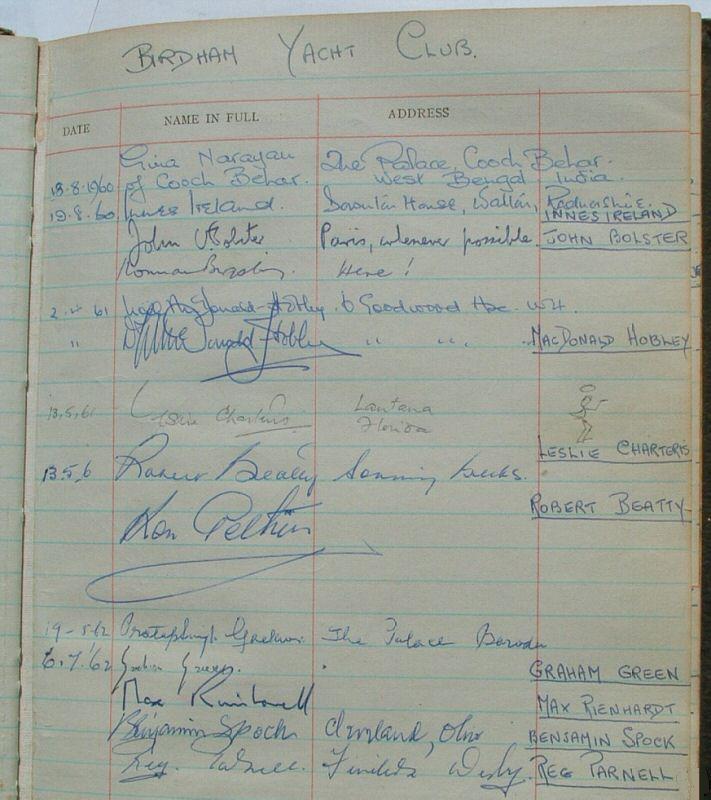
An interesting item for sale on ebay at the moment is a visitors book from a Goodwood hotel, signed by various celebrities of the 1950s and 60s. From the date we can see that Innes Ireland stayed the night before the 1960 Tourist Trophy race. Starting price £1100, happy bidding! Oh and Innes finished third in the race driving an Aston Martin
Thursday, July 13, 2006
Attack on the Birmingham Water Pipeline, 1952
Many people are aware of the bomb attacks in Wales during the 1960s, far less well known is an earlier incident which occured in Radnorshire on Sunday 19th October 1952.
The explosion at the Fron aquaduct near Crossgates caused a good deal of damage but failed to destroy the pipeline itself. Happening as it did just a few days before the Queen was due to open the new Claerwen reservoir on Thursday 23rd October, the explosion led to increased police activity against the Welsh Republican Movement, a small but influential group of left-wing nationalists. In May 1953, a 29 year old machine operator from Bangor, Peter Lewis, was convicted of sentenced to 18 months in jail for possesing explosives but no-one was ever convicted of the attack..
The explosion at the Fron aquaduct near Crossgates caused a good deal of damage but failed to destroy the pipeline itself. Happening as it did just a few days before the Queen was due to open the new Claerwen reservoir on Thursday 23rd October, the explosion led to increased police activity against the Welsh Republican Movement, a small but influential group of left-wing nationalists. In May 1953, a 29 year old machine operator from Bangor, Peter Lewis, was convicted of sentenced to 18 months in jail for possesing explosives but no-one was ever convicted of the attack..
Spannerman
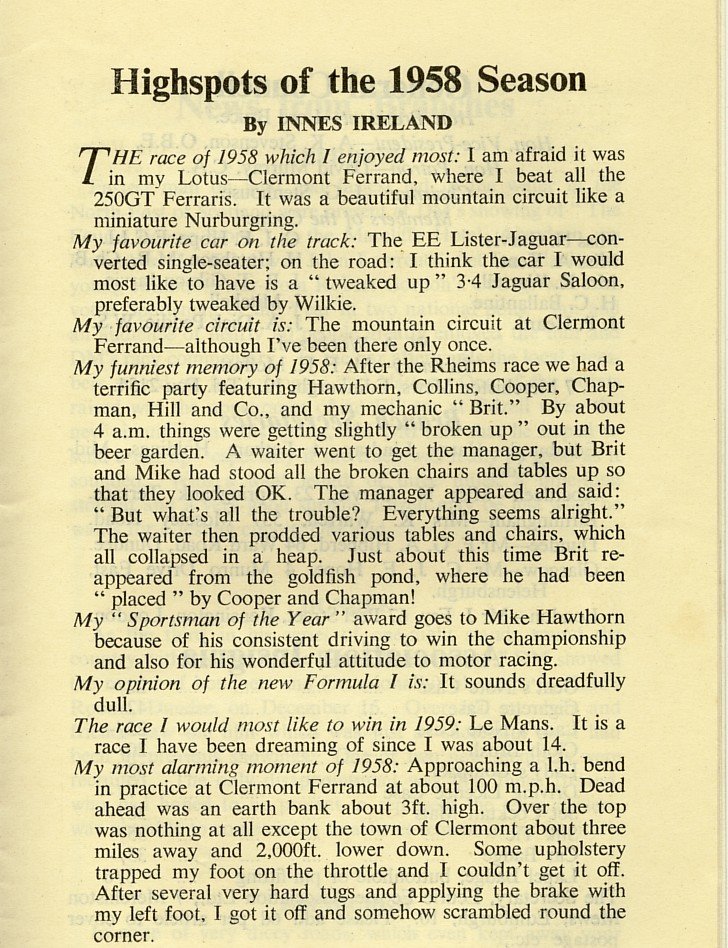
This little article from the January 1959 edition of the Ecurie Ecosse magazine "News From The Mews" must have been one of Innes's first journalistic assignments. It's fitting that it should mention three of the more influential characters in the Scotsman's life. Chapman and Lotus, of course, gave Innes his break into Grand Prix racing while Ireland eventually ended up married to Hawthorn's girlfriend.
The third of the trio is legendary spannerman Brit Pearce. Pearce originally worked as racing mechanic for the Hawthorns at their TT Garage in Farnham. With Leslie Hawthorn dead and Mike driving full time for Ferrari, Brit moved on to work for Innes at his Golden Acres establishment near Elstead, Surrey. By 1957 this had developed into a team that maintained Lotus Elevens for a variety of private owner-drivers.
When Innes joined Lotus in 1959, Brit was taken on by one of these privateers, Mike Taylor who crashed disasterously in the 1960 Belgian Grand Prix when the steering wheel of his Lotus came off in his hands. Brit Pearce was none too pleased with Chapman who had a reputation for slap-dash work where driver safety was concerned. Grasping Chapman by the throat, it took several on-lookers to pull Pearce away and allow the purple faced Team Lotus boss to catch breath. Brit's accusation "You've killed my f.....g driver!" turned out to be untrue as Taylor survived the crash, although he never drove again. Was Chapman to blame? Well he paid Mike Taylor substantial damages for negligence, a reported £10000.
Saturday, July 01, 2006
Radnorshire Bardic Poems, 18
This request poem by Lewis Glyn Cothi is no doubt addressed to the Men of Elfael. This seems to have been some sort of assembly or council, perhaps similar to the type of government found in some Swiss cantons - a body comprised of all the free men of the cantref. The cross of Tyfaelog can still be seen in Llowes Church.
No 143, To Request a stallion from the Men of Elfael
Blessed God, ‘til my last day,
To the generous land that chases a stag.
Once, long ago, I was young and cheerful,
That was then, today I’m old,
And with age comes bad temper,
I’m an unwelcome pedestrian.
Although I’ve had the gold of the fair lands of Elfael,
Now I desire something more.
I desire a stallion,
One with a coat as black as charcoal.
From the manor to the van, I’m not interested
In some wild-tempered bay,
A slim lion is what I desire,
A strong giant or a rounded stag,
As fair as that great stallion, his sire,
As tame towards me as a sheep.
Today it’s easy work to find him
In the pound of the two Elfaels;
And then like swan feathers,
A smooth saddle to cover the horse,
And a short bit in his nostril
To stop him from jumping.
I am as gentle as a swan,
My stallion is gentle on my backside.
Up top, my saddle is smooth,
Like the van, I’m bald.
The two best lands in all the world,
The cultivated lands of Elfael,
Idnerth Hir and Elystan turned them
Into a land of fields,
And then, full of riches,
They were Einion Clud’s yard.
Elfael has never lent her shoulder,
Like so many lands, to an English tune.
Elfael is greater than a thousand myriad,
More than the fair of Man and her roads.
Troy was broader than Greece,
Wide in one fair whorl,
Yet the Greeks and their turmoil
Broke through the walls of Troy;
The men of Elfael also go
Through the wide lands of the earth.
If there is a musician without
A share of silver or mead,
Let him drop his prices, let him search the Wye
For silver, as far as Clyro;
From Clyro, calling for strength
In his heels, back to Diserth;
From Diserth, and being honoured,
Let him come to the land of Aberedw.
In strength he will have cattle,
In minted gold, in kind words,
In corn, on the banks of the Edw,
In great stallions, in greater happiness.
Over Elfael, the Cross of Tyfaelog,
And the Virgin, and the Cross and the Holy Rood,
Let Dwynwen extend her cross
Over the land of Mael, over fair Elfael,
God’s will be done, below the land of Mael,
And Sulfedd bless Elfael!
No 143, To Request a stallion from the Men of Elfael
Blessed God, ‘til my last day,
To the generous land that chases a stag.
Once, long ago, I was young and cheerful,
That was then, today I’m old,
And with age comes bad temper,
I’m an unwelcome pedestrian.
Although I’ve had the gold of the fair lands of Elfael,
Now I desire something more.
I desire a stallion,
One with a coat as black as charcoal.
From the manor to the van, I’m not interested
In some wild-tempered bay,
A slim lion is what I desire,
A strong giant or a rounded stag,
As fair as that great stallion, his sire,
As tame towards me as a sheep.
Today it’s easy work to find him
In the pound of the two Elfaels;
And then like swan feathers,
A smooth saddle to cover the horse,
And a short bit in his nostril
To stop him from jumping.
I am as gentle as a swan,
My stallion is gentle on my backside.
Up top, my saddle is smooth,
Like the van, I’m bald.
The two best lands in all the world,
The cultivated lands of Elfael,
Idnerth Hir and Elystan turned them
Into a land of fields,
And then, full of riches,
They were Einion Clud’s yard.
Elfael has never lent her shoulder,
Like so many lands, to an English tune.
Elfael is greater than a thousand myriad,
More than the fair of Man and her roads.
Troy was broader than Greece,
Wide in one fair whorl,
Yet the Greeks and their turmoil
Broke through the walls of Troy;
The men of Elfael also go
Through the wide lands of the earth.
If there is a musician without
A share of silver or mead,
Let him drop his prices, let him search the Wye
For silver, as far as Clyro;
From Clyro, calling for strength
In his heels, back to Diserth;
From Diserth, and being honoured,
Let him come to the land of Aberedw.
In strength he will have cattle,
In minted gold, in kind words,
In corn, on the banks of the Edw,
In great stallions, in greater happiness.
Over Elfael, the Cross of Tyfaelog,
And the Virgin, and the Cross and the Holy Rood,
Let Dwynwen extend her cross
Over the land of Mael, over fair Elfael,
God’s will be done, below the land of Mael,
And Sulfedd bless Elfael!
Friday, June 30, 2006
That Gallant Little Lady, Gwenda Hawkes, 1894-1990
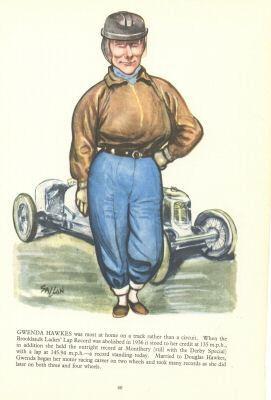 Gwenda Glubb's motoring exploits are well known - she raced variously as Janson, Stewart and perhaps most famously as Gwenda Hawkes in the pre-war period, a time when women competed against men at the highest levels of the sport.
The daughter of a general, the much decorated Sir Frederick Manley Glubb, her brother John, still remembered as Glubb Pasha the commanding general of Jordan's Arab Legion.
Better known as a record breaker than as a racer Gwenda was the fastest woman at Brooklands, 135.95 mph and the outright record holder at Montlhery, ( she lived in Paris for many years ) with a lap of 145.94 mph in husband Douglas Hawkes' Derby Special.
Adventure was in her genes and Gwenda's motoring skills had been honed in the First World War where she served as an ambulance driver with the Scottish Women's Hopsitals on the Russian front and the Balkans.
What the motoring historians seem to have missed is the central part played by Miss Glubb in what has been described as Britain's Dreyfus case, the public inquiry set up in 1919 by Churchill into the dismissal of, and perhaps also to publically discredit Violet Douglas-Pennant, head of the Women's Royal Air Force. Miss Douglas-Pennant had taken over a service of 14000 young women supervised by only 75 officers scattered over 500 camps. Correctly diagnosing that the training of a new officer corps was a priority, Douglas-Pennant was frustrated at every turn by what she perceived as an alliance of lesbian female and chauvinistic male subordinates. Despite bringing some order to the chaos and training-up 450 new officers, Miss Douglas-Pennant was sacked in 1918 because of her unpopularity with the service. The enemies of the Liberal Government saw that an inquiry would be an opportunity for trouble-making, while the Government realised that such an inquiry could be turned to its own advantage by destroying Douglas-Pennant's reputation. Enter Miss Glubb.
What the motoring historians seem to have missed is the central part played by Miss Glubb in what has been described as Britain's Dreyfus case, the public inquiry set up in 1919 by Churchill into the dismissal of, and perhaps also to publically discredit Violet Douglas-Pennant, head of the Women's Royal Air Force. Miss Douglas-Pennant had taken over a service of 14000 young women supervised by only 75 officers scattered over 500 camps. Correctly diagnosing that the training of a new officer corps was a priority, Douglas-Pennant was frustrated at every turn by what she perceived as an alliance of lesbian female and chauvinistic male subordinates. Despite bringing some order to the chaos and training-up 450 new officers, Miss Douglas-Pennant was sacked in 1918 because of her unpopularity with the service. The enemies of the Liberal Government saw that an inquiry would be an opportunity for trouble-making, while the Government realised that such an inquiry could be turned to its own advantage by destroying Douglas-Pennant's reputation. Enter Miss Glubb.
Miss Douglas-Pennant had made various allegations in a private letter to Churchill which he immediately published in the form of a White Paper. It was alleged for example that there was a good deal of sexual immorality at Hurst Park Camp involving the Camp Commander and a young air woman, Miss Gwenda Glubb. The 14 day inquiry - the salacious details were published in a Government Blue paper and lapped up by the press - found that there had been no impropriety between the officer and Miss Glubb, medical evidence was presented that showed that the "gallant little lady" was virgo intacta. Miss Douglas-Pennant was clearly a snob, a prim and vindictive primadonna.
The affair dragged on for 20 years being periodically raised in the courts and in Parliament by friends of Miss Douglas-Pennant who, it was said, had been driven somewhat mad by the whole business. As for Gwenda Glubb, she was indeed briefly married to the commanding officer accused of seducing her, Sam Janson.
A Radnorshire connection? A government report into the living conditions of girls in camps had been written by Lady Rhondda whose mother came from Pen Ithon, Llanbadarn Fynydd. Her evidence to the inquiry was not favourable to Miss Douglas-Pennant.
Saturday, June 24, 2006
Radnorshire Bardic Poems, 17
No 147 A Request for Cattle to Annes Aubrey and Isbel vz Rhys
Two women more kindly bred
Than any two alive, as God is a surety.
Annes Aubrey, without flattery,
Daughter of Morgan, the vineyard of our nation;
The noble blood of Isbel, daughter of Rhys Fychan
From Is-Mynydd, Good day!
You are good, two Llywys for the land,
And good, too, your two fathers.
In terms of bloodline, you excel,
You are higher than the high woodland.
Your nobility grows Annes
From Aubrey, as pure as mead,
From Gwallter Sais and Rhosier Hen,
From the deer herd of Moreiddig Warwyn.
Isbel, your descent has been high,
Its place at the summit of pedigrees,
The descent of Ifor, supreme,
From Y Tanwr, no lesser man.
Two lands, your ancient tribe’s inheritance,
These are the two lands of your two tribes:
The two banks of the Wye as far as Monmouth,
The two well-cultivated lands of Elfael.
And your two husbands are placed
In the front rank as far as the land of Emlyn:
Fluent Hywel of the race of Rhydderch,
Brought to the affection of Siôn ap Phelpod.
Neither of your two husbands would begrudge
Your honouring a bard or a musician.
I do not demand from anyone good,
But only for your two faces.
Two barrels of white ferment,
As dark as Weobley ale;
Not the nation’s wooden barrels,
But barrels that refill.
I shall ordain for the two
A house of straw and two torques.
Behold, two vineyards of Hirddywel,
Their liquor is like honey,
If the new Gascon wine is white,
Then their wine will be pure white.
And there were great portents
Upon them, like upon the cattle of Anglesey;
Bent like drinking horns
And marked on their foreheads.
Eight feet of the same age
Running with medicine from eight faucets.
It has the property to restore a hundred fellows
Who’ve been on the beer.
It does not cause an untimely mass,
Nor mess up my clothes or my head;
It does not make me tipsy, a sozzled weakling,
Nor drunk, nor deaf.
When I go on a journey
It saves me from giddiness.
It improves my muse,
And is the point that keeps my mind in time.
You both could, were my request greater,
Reward me twice over from your store of cattle.
You shall have while a vine grows
my wine from a green shoot.
I shall have, Isbel and Annes,
Your wine and more of your profit.
To you two, and to your two husbands
A life twice as long as an oak in water.
To me your good cattle without condition,
To you the blessings of your bard.
Two women more kindly bred
Than any two alive, as God is a surety.
Annes Aubrey, without flattery,
Daughter of Morgan, the vineyard of our nation;
The noble blood of Isbel, daughter of Rhys Fychan
From Is-Mynydd, Good day!
You are good, two Llywys for the land,
And good, too, your two fathers.
In terms of bloodline, you excel,
You are higher than the high woodland.
Your nobility grows Annes
From Aubrey, as pure as mead,
From Gwallter Sais and Rhosier Hen,
From the deer herd of Moreiddig Warwyn.
Isbel, your descent has been high,
Its place at the summit of pedigrees,
The descent of Ifor, supreme,
From Y Tanwr, no lesser man.
Two lands, your ancient tribe’s inheritance,
These are the two lands of your two tribes:
The two banks of the Wye as far as Monmouth,
The two well-cultivated lands of Elfael.
And your two husbands are placed
In the front rank as far as the land of Emlyn:
Fluent Hywel of the race of Rhydderch,
Brought to the affection of Siôn ap Phelpod.
Neither of your two husbands would begrudge
Your honouring a bard or a musician.
I do not demand from anyone good,
But only for your two faces.
Two barrels of white ferment,
As dark as Weobley ale;
Not the nation’s wooden barrels,
But barrels that refill.
I shall ordain for the two
A house of straw and two torques.
Behold, two vineyards of Hirddywel,
Their liquor is like honey,
If the new Gascon wine is white,
Then their wine will be pure white.
And there were great portents
Upon them, like upon the cattle of Anglesey;
Bent like drinking horns
And marked on their foreheads.
Eight feet of the same age
Running with medicine from eight faucets.
It has the property to restore a hundred fellows
Who’ve been on the beer.
It does not cause an untimely mass,
Nor mess up my clothes or my head;
It does not make me tipsy, a sozzled weakling,
Nor drunk, nor deaf.
When I go on a journey
It saves me from giddiness.
It improves my muse,
And is the point that keeps my mind in time.
You both could, were my request greater,
Reward me twice over from your store of cattle.
You shall have while a vine grows
my wine from a green shoot.
I shall have, Isbel and Annes,
Your wine and more of your profit.
To you two, and to your two husbands
A life twice as long as an oak in water.
To me your good cattle without condition,
To you the blessings of your bard.
Sunday, June 18, 2006
The Lewis Formula One Car
Welsh constructor Cyril Kieft's Formula One car could have been a world championship challenger in the 1950s. The project came to a halt when Coventry-Climax took fright at the power outputs claimed by its Continental rivals and ceased develpment of the FPE V-8 engine. We now know that the bhp figures claimed by the European manufacturers were fictitious, the Kieft project has been completed and the car is running with great success in present-day historic races.
Another "Welsh" car that never made it to the track was built for Jack Lewis's H&L Motors team. In 1960/61Ted Jeffs, the Lewis team mechanic built a straight-tube chassis designed for Formula One, reaching the stage where it stood on its wheels in the Lewis team's Stroud workshop. The project was then abandoned and the chassis sold on for completion as a hill climb special.
Saturday, June 17, 2006
Right Stuff?
 I guess everyone knows that Max Mosley, president of FIA, is the son of Sir Oswald Mosley, leader of the pre-war British Union of Fascists and National Socialists, that's National Socialists as in Nazis by the way. This isn't the only link between the party and the world of motor sport.
The BUF had a number of prominent motor racers in its ranks. It's said - on what evidence I know not - that the Brooklands car park was packed with vehicles bearing the flash and circle symbol of the party (see picture). Certainly Sir Malcolm Campbell, best known for his land speed record breaking, is still celebrated on Mosleyite web sites as being a prominent member of the BUF and again with the claim that the flash and circle adorned his famous Bluebird cars.
At least four individuals with motor racing connections were amongst the thousand or so British fascists imprisoned under regulation 18b. Welshman Captain Douglas Marendaz was a leading Brooklands racer and constructor of the Marendaz Specials, cars which were driven amongst others by Stirling Moss's father Alfred. The Irishwoman Fay Taylour was amongst the most famous of the pre-war lady drivers, originally a speedway rider she turned to motor racing when the speedway authorities banned women riders for safety reasons, in reality because Fabulous Fay was winning too often. An out and out fascist, Fay's wartime file has recently been released by MI5. Here is an extract from the autobiography of Mosley's secretary Hamm which confirms Miss Taylour's continued allegiance to the cause, he is describing the old fascist leader's 80th birthday party in 1976:
“I had placed Lady Mosley on his right, and beside her two 'old girls' of her Holloway Prison days, class of 1940. One was my old friend Fay Taylour, former star of speedway and motor racing. (In the early, pre-war days of speedway women had been allowed to compete, and Fay had beaten all the leading male riders, breaking a number of track records). When I last saw her she was still a very attractive woman. She told me that a journalist once asked why such a beautiful girl had never married, but had taken up such a rough sport as speedway. She replied: "I was engaged once, but he broke off the engagement and asked me if I wanted to buy his motorbike!"
During 'The Battle of Ridley Road' Fay used to drive me home after the meetings in a rather magnificent Jaguar car.“I never experienced the slightest fear at these meetings, however many bricks were flying, but I used to be terrified by Fay's driving, and would clutch the seat with both hands, as she took every corner on two wheels. Years later (when she had returned from selling sports cars to film stars in Hollywood) I was talking to her about this magnificent car, and I was surprised to learn that it had not been hers. She told me that in Holloway she had met among the prisoners a rather high-class call-girl, and when they were released she had given her friend driving lessons in return for the occasional use of her Jaguar. “The Special Branch must have been quietly amused when they first noted its number and checked on its owner”.
Incidently the "Battle of Ridley Road" were a series of fascist street fights in 1946 and 1947. It's remarkable how quickly the fascists reorganized in England so soon after the war.
The last two detainees were W. G. Barlow, who raced Bentleys in the 1920s, and Dorothea Duff of whom I know nothing.
Friday, June 16, 2006

Old News

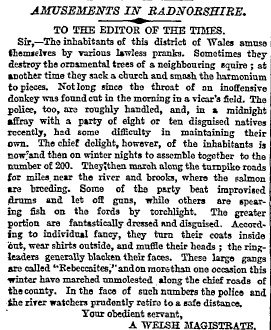
The County Times failed to recognize a former Grand Prix driver and Radnorshire resident in this story from the back end of 2004.
Thursday, June 15, 2006
Saturday, June 10, 2006
Radnorshire Bardic Poems, 16
 This a praise poem by Lewis Glyn Cothi addressed to Bedo Chwith of Bryn Pennardd, Cregrina. You can see the site of Bryn Pennardd in the photograph on the left. All over Wales you can find these old halls of the uchelwyr, the English historians and their followers think they are motte and bailey castles.
No. 150 Praise to Bedo Chwith and Gwenllian vz Gwilym
This man whose home is above the fair meadow,
And the quiet, excellent wife:
Bedo Chwith, there his six fold payment
Will be given to me;
Next there is Gwilym’s daughter
Wearing the gold of the south upon two dresses,
Good natured Gwenllian
From Caio, from the line of a fair knight.
From Gwilym and from Meilyr,
A beautiful vine and earth’s increase.
God and the Church have rolled
Two names into one under their protection:
The strong, dark man of Glasgwm,
The sun of Cil y Cwm.
Being daily found wandering on the van
From yonder Roman town;
Bryn Pennardd is so beautiful,
The dinner that awaits us.
It seems to me that the Edw
Flows with Weobley ale and
That the Tywi pours with mead,
They placed it there on the river gorge;
As if the gold of the Bishop of Durham
Was in this court above the church,
And the silver of ancient Cyrys
Was placed there in Rhys’s grandson’s house;
As if the wheat of the Golden Vale or more
Were there in the house of fair Elfael,
Repaired to in one night,
Then spent the second night.
Let the lad out of love of drinking mead
Go along to Llwyn Hoeddliw and its dwelling.
There I’ll climb the bank,
Climbing to the home of an angel,
To Rhiw, to the house of Hywel’s grandson,
To the spot where honey is brought.
The world swarms about his head,
He and the moon of Mallaen.
A river grows bigger as it goes to the sea
And then is no more;I go, like a river,
To their house upon the breast of the hill.
There are children, good blessings,
To the round margin of Cregrina;
To Bedo they come in pairs,
From the fair woman they spring.
Come Powys and the South
As far as Gwent, to the house of these two.
Good Gwenllian invites them,
Her husband hands them gifts,
Her husband tunes the bards
With gold each day, the lord of Pennardd.
Great the seas about Anglesey,
More are the talents of my people.
Great is the seed of Britain,
More is the rent of these Welsh folk.
Mary, guard them on the shore of the Edw,
Amen! For as long as they wish.
The Mysterious Mr O'Brien
Considering that he was the first statesider to compete in a World Championship Grand Prix (Belgium 1952) precious little seems to be known about Robert O'Brien. Lacking the barest biographical detail or even a photograph most encyclopedias ignore him. Theories abound, he was a more famous American racing under an assumed name or, as some claim, a CIA agent taking time off from the day job of crossing into East Germany.
There certainly appears to have been an American racer called Robert O'Brien who appeared briefly in SCCA events in 1951 and 1952 racing his own Jaguar XK120. Bob hired a Ferrari 166MM to take 4th place in the first Sebring 12 Hour race and also drove a Connaught at Bridgehampton where he was photographed, a picture that confirms that the gentleman (shown left) observing Bira at the 1952 Spa race is indeed the mysterious Mr O'Brien.
It's strange that more is not known about O'Brien. He seems to have been a run of the mill SCCA racer and one would have thought that there would be many people from that era who would remember the man. There is also some confusion with Bill O'Brien, a Frazer-Nash owner, who entered but did not compete in the 1952 Targa.
A final mystery, on the last day of August 1952, O'Brien competed in the Grenzlandringrennen F2 race in a Simca-Gordini entered by the Viscomtesse de Walckiers, a lady who does not seem to exist except on motoring web-sites.
Tuesday, June 06, 2006
Brynfan Tyddyn
Brynfan Tyddyn, great 1950s road racing circuit, lot of big names raced there.
Like who?
Carroll Shelby, Phil Hill
So it was an old airfield track?
No, a proper road racing circuit, three and a half miles long, Hill called it a mini-Nurburgring. It was on an estate owned by a local politician, big breeder of trotting ponies, name of State Senator Woods.
State Senator? This track wasn't in Cardiganshire then?
Brynfan Tyddyn? No, it was near Wilkes-Barre, Pennsylvania
Like who?
Carroll Shelby, Phil Hill
So it was an old airfield track?
No, a proper road racing circuit, three and a half miles long, Hill called it a mini-Nurburgring. It was on an estate owned by a local politician, big breeder of trotting ponies, name of State Senator Woods.
State Senator? This track wasn't in Cardiganshire then?
Brynfan Tyddyn? No, it was near Wilkes-Barre, Pennsylvania
Saturday, June 03, 2006
Llanidloes, a typical Welsh town?
DNA, archaeogenetics - all exciting stuff for those of us with an interest in Welsh history - a chance to discover lost origins and population movements from the information locked within our own genes. It would help though if the scientists conducting the research had a little more understanding of old fashioned document based history when designing their tests.
Take studies in Welsh DNA, much of it based on three market towns tested for the BBC's Viking project, Llangefni, Llanidloes and Haverfordwest. Leaving aside Haverfordwest, which being in South Pembrokeshire is hardly typical of Welsh Wales, what about Llanidloes? Llani, as the locals call it, is slap bang in the middle of the ancient Welsh cantref of Arwystli, and in the sixteenth century this area was the scene of an Ulster style plantation organised by Robert Dudley, Earl of Leicester. Large numbers of tenants from Derbyshire and Lancashire were settled in the area at the expense of the local Welsh population.
Now as it happens, and mainly because both locals and incomers shared a common religious faith, this English plantation became integrated into the local population, indeed became thoroughly Welsh in speech and sentiment. The only trace left today of this is in common local surnames such as Ashton, Woosnam, Wigley, Jarman, Hamer, Breeze, Chapman, Cleaton, Bumford etc.
I wonder if the scientists were aware of this unique genetic background when they picked Llanidloes as one of their centres to test? More likely they just looked at the map and found what they assumed was a typical market town in the middle of Wales.
Take studies in Welsh DNA, much of it based on three market towns tested for the BBC's Viking project, Llangefni, Llanidloes and Haverfordwest. Leaving aside Haverfordwest, which being in South Pembrokeshire is hardly typical of Welsh Wales, what about Llanidloes? Llani, as the locals call it, is slap bang in the middle of the ancient Welsh cantref of Arwystli, and in the sixteenth century this area was the scene of an Ulster style plantation organised by Robert Dudley, Earl of Leicester. Large numbers of tenants from Derbyshire and Lancashire were settled in the area at the expense of the local Welsh population.
Now as it happens, and mainly because both locals and incomers shared a common religious faith, this English plantation became integrated into the local population, indeed became thoroughly Welsh in speech and sentiment. The only trace left today of this is in common local surnames such as Ashton, Woosnam, Wigley, Jarman, Hamer, Breeze, Chapman, Cleaton, Bumford etc.
I wonder if the scientists were aware of this unique genetic background when they picked Llanidloes as one of their centres to test? More likely they just looked at the map and found what they assumed was a typical market town in the middle of Wales.
Friday, June 02, 2006
Another Mid Wales Road Racing Circuit
At the back end of 1968 the Royal Welsh Agricultural Society submitted plans to the local authority for the provision of a road racing circuit on the Llanelwedd showground site. Approval was also sought from the RAC and the ACU, the plans including a mile long spectator gallery. This was all reported in the December 30th 1968 edition of the Times newspaper. Great idea, what a shame it came to nought.
Wednesday, May 31, 2006
Violette Morris
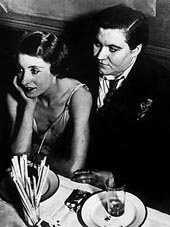
How many people realise that the young lady with the necktie in Brassai's famous picture "Lesbian Couple at Le Monocle" is the French racing driver Violette Morris. A sporting all-rounder: world shot put and discus record holder, soccer and water-polo international, champion weightlifter, boxer, racing cyclist, feminist icon, German spy and Gestapo torturer.
This winner, in 1927, of the 24 Hour Bol d'Or race was assassinated by the Resistance in 1944.
Tuesday, May 30, 2006
Major Rupert Robinson
A reader enquires who was Major Rupert Robinson who helped Innes Ireland purchase his first Lotus XI at the tail end of the 1956 season?
Innes's brother Allan was at that time a captain in the Royal Artillery. I've read a contemporary report in Autosport, which gives the Major's initials as R. C. Robinson. If that is the case then this was probably Major Rupert Chater Robinson R. A., an Old Marlburian, something of a sportsman - Squash and Cricket. I'm not aware that he had any motor sport connections other than his friendship with the Irelands?
In his Autosport profile of 21/10/1960 Innes has this to say about Major Robinson, who is described as being in the "Airborne Artillery":
One day he offered to buy me a car and run it for me. I just couldn't believe it. He finally convinced me that he meant what he had said and bought me a Series I Mk II Lotus. I had my first race in it in September (1956) at Goodwood where I came fourth in one event and second in another. The next week we went to Aintree, where I gained two seconds and broke the club lap record.
"This, of course, was a tremendous break for me and I just cannot find the words to express my gratitude to Major Robinson. However at the time I promised him that should the day ever come when I found myself making money out of racing, I would repay every penny he spent in giving me that golden opportunity. Now I am reaching the position where I can fulfil that promise."
Innes's brother Allan was at that time a captain in the Royal Artillery. I've read a contemporary report in Autosport, which gives the Major's initials as R. C. Robinson. If that is the case then this was probably Major Rupert Chater Robinson R. A., an Old Marlburian, something of a sportsman - Squash and Cricket. I'm not aware that he had any motor sport connections other than his friendship with the Irelands?
In his Autosport profile of 21/10/1960 Innes has this to say about Major Robinson, who is described as being in the "Airborne Artillery":
One day he offered to buy me a car and run it for me. I just couldn't believe it. He finally convinced me that he meant what he had said and bought me a Series I Mk II Lotus. I had my first race in it in September (1956) at Goodwood where I came fourth in one event and second in another. The next week we went to Aintree, where I gained two seconds and broke the club lap record.
"This, of course, was a tremendous break for me and I just cannot find the words to express my gratitude to Major Robinson. However at the time I promised him that should the day ever come when I found myself making money out of racing, I would repay every penny he spent in giving me that golden opportunity. Now I am reaching the position where I can fulfil that promise."
Radnorshire Bardic Poems, 15
This Wedding Ode was composed for the marriage of Robert Whitney of the tiny Marcher lordship of Whitney, now just across the English border in Herefordshire, and Elis, the daughter of Tomas Fychan and Elen Gethin of Hergest, Kington. The neithior, wedding feast held before the marriage was an important element in the bardic tradition, for it was here that the apprentice bard graduated. This long and perhaps, for the casual reader, tedious awdl is full of historical interest.
123. Wedding Ode to Robert Whitney and Elis vz Tomas Fychan
Oh God, who on the Wye bank has wit?
Master Robert of Whitney,
Staunch eagles from the houses of the cross,
From the line of Trussell, with no lesser blood.
The line of marriage causes no more worry,
The daughter of Tomas ap Rhosier,
Mistress Elis, is chosen,
It is like choosing a sun from a company of stars.
Every courser of their court is a star
Food and drink fill the table,
I feel a chill when I see his ward,
Strange to be without Robert’s tower.
In his father’s tower, Robert
Is surrounded by money, more than in Newgate,
By stallions and spearmen in the embrace of battle,
More numerous than parishes, in their plate armour.
In her curtained tower, Mistress Elis
Has money and treasure, jewels and dresses;
On Monday she’ll wear clothes of damask silk,
Matching chamlet and velvet,
With a train of gold over her head and cheek,
She’ll wear garlands and scarlet,
And pray to Jesus for a fruitful life,
Nine lives she’ll bring to estate.
Generous Master Robert calls Elfael his country,
A master who shares his wealth freely with me.
Here he is a fair and equitable magistrate,
He sits on many councils of escheat,
No treachery may be proved against him,
None ever will be, no case would stand,
While there is a boat or a ship anchored at sea,
While the sky has colour, while the moon exists.
In the lord’s court everyone has their place,
Henchmen and yeomen are not refused,
Golden coursers whinnying,
Trumpets, bowmen, stags bleating,
The greyhounds of Whitney, a hundred hunting dogs,
A host of huntsmen in uniform,
The Epiphany kitchen busy with cooks, butler, cellar men, chattering carpenters,
And outside the court laughing peasants,
And outside the tower a minstrel without an invitation;
And from the bride, progeny and a supreme lineage,
And from the groom issue and lineage and seed.
Amen! Seed and lineage as she would desire
From the Lord of Whitney;
In their court a place of Alsace wine,
In their white towers and their houses.
The contracted court of my lady,
The courts of my lord like sunshine,
Her saintly tower is a sanctuary.
The tower of Master Robert, an ash,
A better tower than the White Tower,
A brilliant-white square storybook tower.
What house is that in the shape of five dice
Yonder, like Sandwich?
Is it not Elis’s court upon a headland?
A citadel on the Wye bank,
With her it is greater than
The tower of Joshua, than Caesar’s tower.
Set on a beach it is no less,
This Nudd’s house in fair Whitney,
Than the houses of charity that Lazarus built.
These two are no less,
With their wine for me,
Than the flowers of the south through all the earth.
More free the gifts
From his hand, as hers,
Than the flow of a river, to a guileless scholar.
Fair the gifting
Of gold given to Mary,
Like snow for Jesus from Balthasar.
From their mine of gold and their mead,
From their goods in like manner,
From their feats, the two friends would not refuse me.
The rents of their lands
I’d have and gowns,
Various vegetables, food on a spit.
A variety of sea food,
The wealth of vale and mountain,
More spirits, various birds.
An Arthur will not refuse me,
As tall as an ash tree,
And she, too, is Gwenhwyfar.
Ugh! To the Saxon up
From their stronghold which he hates,
A cold life to him who loves not the Welshman.
Deiniol, St Denis,
Cedwyn has protected them,
Dewi, Non, Elis, Dwynwen, Ilar.
To them the life of Moses,
As long as Old Noah,
Two lives of two trees, an oak tree and an oak wood.
A start in good health
Mary, grant them,
Long their conquest and a distant parting.
Let their parting be distant, let their lifetime
Be longer than the oldest unto Monmouth,
To scatter gold upon the Arrow,
To fill the banks of the Wye with wine!
Saturday, May 27, 2006
Jack Lewis in Formula Three
After a couple of lessons with the Cooper Racing Drivers' School, 21 year-old Jack bought the ex-Ivor Bueb Formula 3, Cooper-Norton for the 1958 season. During the year he competed in 13 meetings:
18thMay, Brands Hatch, Junior F3 race, 2nd
24thMay, Full Sutton, F3 race, 1st
7thJune, Oulton Park, F3 race, 1st
5thJuly, Crystal Palace, F3 race, 8th
26thJuly, Oulton Park, F3 race, 1st
27thJuly, Snetterton, F3 race, ?5th
4thAug, Brands Hatch, World Sports Trophy, 2nd (won heat)
9thAug, Silverstone, Commander Yorke Trophy, 2nd
30thAug, Brands Hatch, Lewis-Evans Trophy, 4th
7thSept, Snetterton, F3 race, 3rd
20thSept, Oulton Park, F3 race, ?retired
5thOct, Brands Hatch, World Sports Trophy, ?
Any corrections or additions to the record welcomed.
18thMay, Brands Hatch, Junior F3 race, 2nd
24thMay, Full Sutton, F3 race, 1st
7thJune, Oulton Park, F3 race, 1st
5thJuly, Crystal Palace, F3 race, 8th
26thJuly, Oulton Park, F3 race, 1st
27thJuly, Snetterton, F3 race, ?5th
4thAug, Brands Hatch, World Sports Trophy, 2nd (won heat)
9thAug, Silverstone, Commander Yorke Trophy, 2nd
30thAug, Brands Hatch, Lewis-Evans Trophy, 4th
7thSept, Snetterton, F3 race, 3rd
20thSept, Oulton Park, F3 race, ?retired
5thOct, Brands Hatch, World Sports Trophy, ?
Highlights of the year included a 2nd place to established Grand Prix ace Stuart Lewis-Evans at the World Sports Trophy race at Brands and another 2nd in the 100 mile Commander Yorke Trophy at Silverstone, a race won by Trevor Taylor. Jack had some bad luck in this race as he had fitted an extra fuel tank, considering that the extra weight would be more than compensated for by not having to refuel. Unfortunately the tank split and the car was forced into the pits.
Any corrections or additions to the record welcomed.
Sunday, May 21, 2006
When they Burnt the Union Jack in Middleton Street
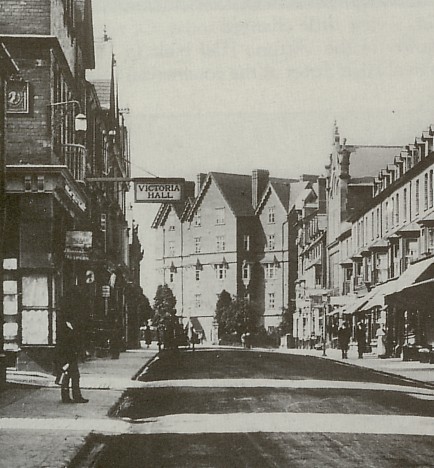
The small balcony where Sir Francis Edwards spoke can just be seen by the pole holding the Victoria Hall sign.
Here's a taste of life in Llandrindod at the start of the last century which seems a million miles from the somewhat staid gentility portrayed during the town's annual Victorian Festival. It comes from G. W. Gibson's memoir "Llandrindod in the 'Nineties" published in the 1945 RadnorshireSociety Transactions:
...political feelings ran high in Radnorshire in the late 'nineties and the early nineteen-hundreds, and practically everybody in Llandrindod was either a keen Tory or Radical. I well remember the Parliamentary Election of 1902, when Sir Francis Edwards was returned as Member for the county. He came to Llandrindod on the evening of the day after the election, and was met at the station by a crowd of his supporters with an open carriage, to which ropes were attached, and pulled up to the Victoria Hall. An equally big crowd of Conservatives was waiting in Middleton Street, and as soon as the carriage stopped it was assailed with a shower of eggs. Sir Francis, who was sitting inside the carriage, immediately hopped out and up the steps into the Victoria Arcade, but Alderman Evan Bufton, who was on the box-seat, could not get down so quickly, and he became the target for most of the eggs. It was said afterwards that when he got home to Brynteg he had to be soaked in the bath before he could get his shirt off.
As soon as the egg throwers had got rid of their missiles, Sir Francis tried to address the crowd from the little balcony that used to stick out in front of the Victoria Hall, but a group of Tories hoisted a Union Jack and started singing a patriotic song. Among them Mr Jack Lewis, the butcher, then living at Gordon House, one or two of the Swettenham boys, and a very tall man who was working in the town at the time. A party of Radicals, led by Mr. John Williams, then residing at "Craig-y-Nos," Craig Road, made a dash for the flag, and there was a fierce melee in which many blows were struck. Eventually, the flag-staff was broken, the flag hauled down and set on fire in the middle of the street. Next day, the Conservative newspapers of South Wales carried big headlines: "Radicals Burn the Union Jack at Llandrindod Wells."
Thanks to Domhnall Ó Murchadha for bringing this to my attention.
Thursday, May 18, 2006
Flying the Flag for Wales, Jack Lewis
After a race long struggle with Rodriguez in the works Ferrari Jack Lewis, at the wheel of his Ecurie Gallois BRM, settles for third place in the 1962 Pau Grand Prix. The red dragon is clearly visible by the car number (see photo)
Today Lewis is one of the forgotten men of Formula One, but in the early Sixties his driving of the privately entered Coopers marked him as one of the smoothest and most promising racers on the grid.
A fourth place in the 1961 Italian Grand Prix encouraged Lewis to purchase an ex-works BRM for the 1962 season. Disillusion set in as the car was suspiciously underpowered. At the Monaco Grand Prix young Jack equalled the practice time of the works BRM driver Ginther, only to be excluded from the race to make way for slower but better known competitors. The car was returned to BRM who reimbursed the £7000 selling price and Lewis had to compete for the rest of the season in his tired old 1960 Cooper.
At the end of the 1962 season Lewis retired from the sport to farm near Llandovery, he was still only 25 years old.
Today Lewis is one of the forgotten men of Formula One, but in the early Sixties his driving of the privately entered Coopers marked him as one of the smoothest and most promising racers on the grid.
A fourth place in the 1961 Italian Grand Prix encouraged Lewis to purchase an ex-works BRM for the 1962 season. Disillusion set in as the car was suspiciously underpowered. At the Monaco Grand Prix young Jack equalled the practice time of the works BRM driver Ginther, only to be excluded from the race to make way for slower but better known competitors. The car was returned to BRM who reimbursed the £7000 selling price and Lewis had to compete for the rest of the season in his tired old 1960 Cooper.
At the end of the 1962 season Lewis retired from the sport to farm near Llandovery, he was still only 25 years old.
Jack Lewis's F1 and F2 record
1959
Lavant Cup, Cooper T45-Climax (F2), 11thBritish Empire Trophy, Cooper T45-Climax (F2), 14th
Aintree 200, Cooper T45-Climax (F2), 7th
Prix de Paris, Cooper T45-Climax (F2), 1st
GP de Pau, Cooper T45-Climax (F2), 7th
Coupe de Vitesse, Cooper T45-Climax (F2), 10th
GP de Rouen, Cooper T45-Climax (F2), accident
Trophee d'Auvergne, Cooper T45-Climax (F2), 8th
Kentish 100, Cooper T45-Climax (F2), did not qualify
Coupe de Salon, Cooper T45-Climax (F2), 2nd
1960
Oulton Park Trophy, Cooper T45-Climax (F2), accident
GP de Bruxelles, Cooper T45-Climax (F2), 8th
GP de Pau, Cooper T45-Climax (F2), not classified
Aintree 200, Cooper T45-Climax (F2), 12th
Prix de Paris, Cooper T45-Climax (F2), 2nd
GP des Frontieres, Cooper T45-Climax (F2), 1st
Solituderennen, Cooper T45-Climax (F2), retired
German GP, Cooper T45-Climax (F2), disqualified
Vanwall Trophy, Cooper T45-Climax (F2), 2nd
Kentish 100, Cooper T45-Climax (F2), 7th
Lombank Trophy, Cooper T45-Climax (F2), 1st in class (6th overall)
Coupe de Salon, Cooper T45-Climax (F2), 1st
Lewis Evans Trophy, Cooper T45-Climax (F2), 2nd
1961
GP de Pau, Cooper T53-Climax (F1), 5th
GP de Bruxelles,Cooper T53-Climax (F1), excluded
Aintree 200, Cooper T53-Climax (F1), 8th
London Trophy, Cooper T53-Climax (F1), 7th
Silver City Trophy, Cooper T53-Climax (F1), retired
Belgian GP, Cooper T53-Climax (F1), 9th
French GP, Cooper T53-Climax (F1), retired
British GP, Cooper T53-Climax (F1), retired
German GP, Cooper T53-Climax (F1), 9th
Modena GP, Cooper T53-Climax (F1), did not qualify
Italian GP, Cooper T53-Climax (F1), 4th
Oulton Park Gold Cup, Cooper T53-Climax (F1), retired
1962
GP de Pau, BRM (F1), 3rd
International Trophy, BRM (F1), 9th
Dutch GP, Cooper T53-Climax (F1), 8th
Monaco GP, BRM (F1), excluded
GP de Reims, Cooper T53-Climax (F1), 10th
French GP, Cooper T53-Climax (F1), accident
British GP, Cooper T53-Climax (F1), 10th
German GP, Cooper T53-Climax (F1), 10th
Oulton Park Gold Cup, Cooper T53-Climax (F1), retired
Wednesday, May 17, 2006
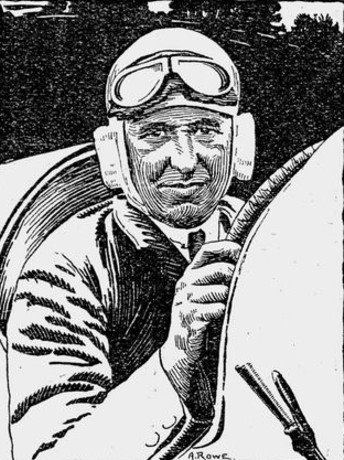

Welsh Success at Le Mans, 1931

Tim Rose-Richards and Owen Saunders-Davies (right), celebrate their third place at the 1931 Le Mans Twenty Four Hour race.
Sunday, May 07, 2006
Radnorshire Bardic Poems, 14
This poem illustrates some of the social functions of the bard: as genealogist, herald, soothsayer and political agitator. The academics, who don't know much about Radnorshire, place Dafydd's home in the parish of Llanbadarn Fynydd although it is obvious from this poem that he lived in the Fron district of Llanbadarn Fawr. Dafydd held the castle of Stapleton near Presteigne after the battle of Mortimer's Cross in 1461.
No. 174 Praise to Dafydd Goch
You are privileged and of noble blood,
Baron of Stapleton, good evening!
Dafydd Goch, God protects
And James creates calm about you.
You are a son of Maredudd
Who brings me profit, a grandson of Adam,
Son of Madog, from his dwelling,
Son of Adam, hawk of the wide earth,
Son of Rhys, that generous apple of paradise,
Son of Ifor, his inheritance still lives,
Son of Gruffydd, with his ruddle stallions,
Son of Ieuan you are, none better,
Son of Ifor, songster of the sweet wine,
Son of Philip, with the five war colts,
Son of Einion, the heart of the Wye shore,
From a kindred from Uwch Conwy,
Son of Llywarch, respected to the grave,
Son of Bran, an emperor of Gwynedd,
Son of Dinawal of the province,
Son of Einudd, a high earl of the nation,
Son of Aelaw, who was in Aberffraw,
Son of Alser the unrefused,
Son of Tudwal, like the men of Maelor,
From the land of Anglesey, son of Rhodri Mawr.
From the highest nobility, Dafydd,
You are a shoot, as talented as Nudd.
You are the finest in terms of pedigree
From Anglesey to the land of Menevia.
And I am over Cymaron
In your house, high on the Fron,
Calculating, by the little clock,
Your hours and your four lines of descent.
I prophesied an Englishman without office
And an evident castle for you, lord,
And a fair tower and houses,
And a barony and its privileges.
A Taliesin to an Elphin
I’ve become, as I grow, for you Dafydd;
Like Adda Fras to the realm
Of Llywelyn, protector of our nation;
Like Meugant, when he played on his pipes
A fine speech for Gwrtheyrn;
When I divine, I’m like Myrddin,
You are an Emrys in the March.
At two feasts, Iolo said,
He was his lord’s bard,
“Good teeth without a tongue, the day will come,
A clumsiness in the recess of the mouth.”
You have good teeth without a tongue,
So I would be it with my lip.
Dafydd the talent will be reflective,
It will be a remembrancer, it will be just,
It will be silent and do much,
Hurry to all to give a spur.
Raise your banner Dafydd,
For Mary, carry the day for Wales!
A lion with the three ravens of
Llywarch Ap Bran, respected by all,
Your three ravens have a silver field
And a black chevron like the chapel of Dewi.
Your ancestors had a privileged place,
The privilege of the holding of three ravens,
The most loved birds
In all of prophesy are the ravens.
It will go well for you, no worse,
For three ravens, to turn into a barony.
You are the baron of the ravens,
You’ll have an ancient earldom from a fair man.
No. 174 Praise to Dafydd Goch
You are privileged and of noble blood,
Baron of Stapleton, good evening!
Dafydd Goch, God protects
And James creates calm about you.
You are a son of Maredudd
Who brings me profit, a grandson of Adam,
Son of Madog, from his dwelling,
Son of Adam, hawk of the wide earth,
Son of Rhys, that generous apple of paradise,
Son of Ifor, his inheritance still lives,
Son of Gruffydd, with his ruddle stallions,
Son of Ieuan you are, none better,
Son of Ifor, songster of the sweet wine,
Son of Philip, with the five war colts,
Son of Einion, the heart of the Wye shore,
From a kindred from Uwch Conwy,
Son of Llywarch, respected to the grave,
Son of Bran, an emperor of Gwynedd,
Son of Dinawal of the province,
Son of Einudd, a high earl of the nation,
Son of Aelaw, who was in Aberffraw,
Son of Alser the unrefused,
Son of Tudwal, like the men of Maelor,
From the land of Anglesey, son of Rhodri Mawr.
From the highest nobility, Dafydd,
You are a shoot, as talented as Nudd.
You are the finest in terms of pedigree
From Anglesey to the land of Menevia.
And I am over Cymaron
In your house, high on the Fron,
Calculating, by the little clock,
Your hours and your four lines of descent.
I prophesied an Englishman without office
And an evident castle for you, lord,
And a fair tower and houses,
And a barony and its privileges.
A Taliesin to an Elphin
I’ve become, as I grow, for you Dafydd;
Like Adda Fras to the realm
Of Llywelyn, protector of our nation;
Like Meugant, when he played on his pipes
A fine speech for Gwrtheyrn;
When I divine, I’m like Myrddin,
You are an Emrys in the March.
At two feasts, Iolo said,
He was his lord’s bard,
“Good teeth without a tongue, the day will come,
A clumsiness in the recess of the mouth.”
You have good teeth without a tongue,
So I would be it with my lip.
Dafydd the talent will be reflective,
It will be a remembrancer, it will be just,
It will be silent and do much,
Hurry to all to give a spur.
Raise your banner Dafydd,
For Mary, carry the day for Wales!
A lion with the three ravens of
Llywarch Ap Bran, respected by all,
Your three ravens have a silver field
And a black chevron like the chapel of Dewi.
Your ancestors had a privileged place,
The privilege of the holding of three ravens,
The most loved birds
In all of prophesy are the ravens.
It will go well for you, no worse,
For three ravens, to turn into a barony.
You are the baron of the ravens,
You’ll have an ancient earldom from a fair man.
Sunday, April 30, 2006
Radnorshire News
Three lady members of the Llandrindod Golf Club were killed when the omnibus bringing them back from a match in Aberystwyth was in collision with a lorry between Rhayader and Llangurig. - June 25th 1936
The German contingent at the International Six Days Trial prize-giving ceremony at Llandrindod walked out when the German National Anthem was not played after the German Maico team collected their awards. The Czech and Dutch anthems had been played for their winners. - 25th September 1954
Judge Eifion Evans was banned for a year after being found guilty of driving while under the influence on the road between Llandrindod and Builth. - 14th November 1961
Schools in the neighbourhood were closed after a tiger, which escaped from a travelling menagerie about ten days previously, was spotted prowling the countryside between Builth and Llandrindod. The beast attacked a flock of sheep in the locality and also killed a number of sheepdogs. - 17th November 1900
The German contingent at the International Six Days Trial prize-giving ceremony at Llandrindod walked out when the German National Anthem was not played after the German Maico team collected their awards. The Czech and Dutch anthems had been played for their winners. - 25th September 1954
Judge Eifion Evans was banned for a year after being found guilty of driving while under the influence on the road between Llandrindod and Builth. - 14th November 1961
Schools in the neighbourhood were closed after a tiger, which escaped from a travelling menagerie about ten days previously, was spotted prowling the countryside between Builth and Llandrindod. The beast attacked a flock of sheep in the locality and also killed a number of sheepdogs. - 17th November 1900
Tuesday, April 25, 2006
Radnorshire Bardic Poems, 13
No 142 To Seek the Support of St David for Elfael
The archbishop over every tribe,
Your three tongues are swift;
Holy Dewi, of unignoble birth,
You are a wizard…….
Son of Sant, no wrathful child,
And grandson of Ceredig.
You were descended from Cunedda Wledig,
Wise, wealthy and good.
Your miracles for your people began
Even before you were born:
When Gildas came, he was able
To preach in every language,
Although he did not speak or write a word,
With holy Non there in his presence.
From the corn you drove the birds
To a house of the night greatly tamed,
And the warm spring of the black brook
You crossed through the true Jesus.
You ate, you did not take offence,
Dry white bread and poison;
Despite the wickedness of the poison,
Holy Dewi, you were not ill.
For their treachery you struck dead
Boea and his wife for their pains.
After this you movedUp to Llandewi Brefi;
Under your feet the One God caused
A fair hill to grow for eternity;
So that they could hear your ready sermon
In a true place, in Enlli
You came, my generous royal prop,
To Colfa and to Elfael.
You built with lead, two palaces,
Angel of a bishop, in Glasgwm,
A bishop’s palace for Wales and for her men,
For God and for those who pray.
To our lives you brought
Wine and nine kinds of expense.
Your tenants worship you,
Dewi and Christ, come you are needed.
It is proper that there should be no revenge
Like that in Elfael of the mead.
To your parishes, far Dewi,
To six more domains,
A great evil and pestilence has come,
God and his candle, between kinsfolk!
Dewi, eagle of the east,
Put them at Peace.
From the love of the ten lands that follow you,
Make Glasgwm hold a school,
Empower Elfael with good for two ages,
Mark Cregrina with your cross,
Enchant all of the fair, broad country,
And rule the land of Rhiwlen.
Cold to have, from most, only complaint,
A kindred full of poison.
Don’t allow it, Dewi, from your goodness,
This poison between those of one blood,
Nor any blood feud, nor enslaving temper,
Nor rekindled enmity.
The land of Elfael is generous,
It is your land, Dewi.Oh Dewi, guide the land
Until there be no more sickness or anger.
The archbishop over every tribe,
Your three tongues are swift;
Holy Dewi, of unignoble birth,
You are a wizard…….
Son of Sant, no wrathful child,
And grandson of Ceredig.
You were descended from Cunedda Wledig,
Wise, wealthy and good.
Your miracles for your people began
Even before you were born:
When Gildas came, he was able
To preach in every language,
Although he did not speak or write a word,
With holy Non there in his presence.
From the corn you drove the birds
To a house of the night greatly tamed,
And the warm spring of the black brook
You crossed through the true Jesus.
You ate, you did not take offence,
Dry white bread and poison;
Despite the wickedness of the poison,
Holy Dewi, you were not ill.
For their treachery you struck dead
Boea and his wife for their pains.
After this you movedUp to Llandewi Brefi;
Under your feet the One God caused
A fair hill to grow for eternity;
So that they could hear your ready sermon
In a true place, in Enlli
You came, my generous royal prop,
To Colfa and to Elfael.
You built with lead, two palaces,
Angel of a bishop, in Glasgwm,
A bishop’s palace for Wales and for her men,
For God and for those who pray.
To our lives you brought
Wine and nine kinds of expense.
Your tenants worship you,
Dewi and Christ, come you are needed.
It is proper that there should be no revenge
Like that in Elfael of the mead.
To your parishes, far Dewi,
To six more domains,
A great evil and pestilence has come,
God and his candle, between kinsfolk!
Dewi, eagle of the east,
Put them at Peace.
From the love of the ten lands that follow you,
Make Glasgwm hold a school,
Empower Elfael with good for two ages,
Mark Cregrina with your cross,
Enchant all of the fair, broad country,
And rule the land of Rhiwlen.
Cold to have, from most, only complaint,
A kindred full of poison.
Don’t allow it, Dewi, from your goodness,
This poison between those of one blood,
Nor any blood feud, nor enslaving temper,
Nor rekindled enmity.
The land of Elfael is generous,
It is your land, Dewi.Oh Dewi, guide the land
Until there be no more sickness or anger.
Sunday, April 23, 2006
Grand Prix Wives, 3
A few more Grand Prix wives from Motor Racing's dangerous years. A German girl Ricarda Hirtes was Mrs Peter Arundell, Jack Brabham's wife was Betty Beresford, Audrey Parkin was married to Trevor Taylor, while Mabel Dowson was Mrs Cliff Allison. One to finish, Margaret Harriss, the wife of Stuart Lewis Evans. More to come I'm sure.
Monday, April 17, 2006
Help!!

Innes's son Jamie made his race debut at Lydden in 1990 - see the press cutting above. Now I don't have any magazines covering the 1990s and I don't particularly want to buy any (having spent far too much on other periods), so can anyone tell me if he raced again? If someone could supply further details of his racing career that would be very useful.
Jacqueline Evans de Lopez
 It has been suggested that the Carrera Panamericana driver Jacqueline Evans de Lopez was Welsh. If this were true, then she would have to rank as one of the most colourful Welsh motorsport characters - even more colourful than her 1954 Porsche 356 (pictured model). Jacqueline Evans was an actress, often playing gringas in Spanish language Mexican films and soaps, a career spiced with the occasional Hollywood outing; she had a small role in the Costa-Gavras movie "Missing" for example. Jacqueline Evans is also remembered for her help in establishing and funding the archive of Mexican and foreign magazines and newspapers, "La Torre del Papel" in Mexico City. Jacqueline died in Acapulco in 1989.
Now some of the information on the internet movie databases is wrong. She was born in 1915 not 1914 and her real name was Grace Alice Evans not Grace Alice Evans Antibus - her mother's surname was infact Antrobus. Was Ms Evans de Lopez Welsh? Well Jacqueline was born in Islington, London and her mother Maud was a Tottenham grocer's daughter. However, her father's name was Stephen W. Evans and the only person of this name in London at the time of the 1901 Census was a Welsh born dairyman. So more research needs to be done before a Welsh connection can be ruled out. Can anyone help? Has anyone seen a copy of her Canadian published biography "Coming Out Trumps" by Luz Evans - her daughter perhaps?
Thursday, April 13, 2006
Radnorshire Bardic Poems, 12
This poem by Lewis Glyn Cothi is addressed to Dafydd ap Rhys of Harpton and is notable for a mention of the Book of Taliesin which had made it's way to this part of Radnorshire. Interestingly just a couple of miles away from Harpton was Hergest where that other important medieval manuscript, the Red Book was to be found. In a reversal of roles it is the patron Dafydd who explains the meaning of the verses of Gwion (Taliesin) to his bard. Perchentyaeth - propriety - is the obligation placed upon the ruler to those he rules.
No. 157 Praise to Dafydd ap Rhys of Harpton
A St Michael of Harpton
Mary keep him, a fair Welshman;
Dafydd ap Rhys ap Meurig,
A saint for sowing silver.
Who do I love but Dafydd?
Who loves us? The good body of Old Radnor.
I am a poet who’ll always
Bring him nightly prayers.
Tomorrow night I’ll make a song
For the strong bough of Ifor and Bran.
He has made the perchentyaeth of our land
A living form, it is not broken.
His white house, be it Friday
Or Thursday, is the best under the stars;
On a Saturday it is better
Than a Sunday in countless wine houses.
In this man’s house I’ve had,
Although it was deep into winter:
Fish, birds cooked in bread,
Pasties, fine vintage wines,
Eight tables full of sustenance,
A supper of shop vegetables,
A serving of every herb,
Frequent courses, and white sugar,
Mead to intoxicate my breast with song,
Such rare delicacies and nourishment.
My office, throughout the year,
With the lion, should he leave the wine:
To read together through every book,
Discussing sense, arguing meaning;
If there might be a verse that one fails to understand
Then the other will surely explain it.
Dafydd took the verses of Gwion,
And helped me to understand them correctly.
He is chieftain to the Traethen,
For me let him be a leader..
From here to Anglesey he is a lamb,
A furious dragon with the crown.
Edward trusts this man
Who has a fist upon his dart.
Oh protect the land, there was no peace,
And the barriers and the river estuaries.
King Edward’s ash spearmen
Break the doorway towards the threat,
And a Derfel from Harpton
Goes before them like Owain Wyn.
When the Irishmen come
And the aliens, unruly ones,
Dafydd’s office, two days work,
Is to defeat them and drive them away.
Every hour I’m Dafydd’s bard,
If I am, then my world is blessed for the day;
A gift from the floor of Harpton
Is in my purse for this;
Of the gifts that I may expect in two lives,
Dafydd gives them and has given them;
And as he gave, like one from Greece,
Let Mary give unto Meurig’s grandson.
No. 157 Praise to Dafydd ap Rhys of Harpton
A St Michael of Harpton
Mary keep him, a fair Welshman;
Dafydd ap Rhys ap Meurig,
A saint for sowing silver.
Who do I love but Dafydd?
Who loves us? The good body of Old Radnor.
I am a poet who’ll always
Bring him nightly prayers.
Tomorrow night I’ll make a song
For the strong bough of Ifor and Bran.
He has made the perchentyaeth of our land
A living form, it is not broken.
His white house, be it Friday
Or Thursday, is the best under the stars;
On a Saturday it is better
Than a Sunday in countless wine houses.
In this man’s house I’ve had,
Although it was deep into winter:
Fish, birds cooked in bread,
Pasties, fine vintage wines,
Eight tables full of sustenance,
A supper of shop vegetables,
A serving of every herb,
Frequent courses, and white sugar,
Mead to intoxicate my breast with song,
Such rare delicacies and nourishment.
My office, throughout the year,
With the lion, should he leave the wine:
To read together through every book,
Discussing sense, arguing meaning;
If there might be a verse that one fails to understand
Then the other will surely explain it.
Dafydd took the verses of Gwion,
And helped me to understand them correctly.
He is chieftain to the Traethen,
For me let him be a leader..
From here to Anglesey he is a lamb,
A furious dragon with the crown.
Edward trusts this man
Who has a fist upon his dart.
Oh protect the land, there was no peace,
And the barriers and the river estuaries.
King Edward’s ash spearmen
Break the doorway towards the threat,
And a Derfel from Harpton
Goes before them like Owain Wyn.
When the Irishmen come
And the aliens, unruly ones,
Dafydd’s office, two days work,
Is to defeat them and drive them away.
Every hour I’m Dafydd’s bard,
If I am, then my world is blessed for the day;
A gift from the floor of Harpton
Is in my purse for this;
Of the gifts that I may expect in two lives,
Dafydd gives them and has given them;
And as he gave, like one from Greece,
Let Mary give unto Meurig’s grandson.
Wednesday, April 12, 2006
Motor Sport Wills
While we are on the subject of wills ( see the post on Tony David below ) here are some details of amounts left by various Motor Sport personalities: David Purley left £670427; Graham Hill £41726; Alfred Moss - Stirling's father - left £218963 in 1972; while Ron Flockhart left a modest £7669 ten years earlier. Those two Mon Ami Mates.......well Hawthorn left £57457 and Peter Collins just £4972.
Some Welsh wills: pre-war racer Roy Eccles left £68275; while Parry Thomas left £6251. Perhaps the most interesting motor sport related will was that left by the mother of Humphrey Cook of ERA fame, it consisted of four bound leather books, a total of 2216 pages, the longest will on record at the time. Cook was of course the stepfather of David Blakely, the race driver gunned down by Ruth Ellis.
Some Welsh wills: pre-war racer Roy Eccles left £68275; while Parry Thomas left £6251. Perhaps the most interesting motor sport related will was that left by the mother of Humphrey Cook of ERA fame, it consisted of four bound leather books, a total of 2216 pages, the longest will on record at the time. Cook was of course the stepfather of David Blakely, the race driver gunned down by Ruth Ellis.
Tony David
Not much seems to be known about Tony David, other than the fact that he was a Welsh driver killed when his Lotus 22 crashed into a telegraph pole during the Leinster Trophy race held at the Dunboyne circuit on 17th July 1965.
Here are a couple more facts, his full name was Anthony Nicholas David, born in Cardiganshire in 1937. At the time of his death he was living in Mumbles and was sufficiently well-off to leave what was a tidy sum in the mid-sixties, £21394.
Does anyone have any more information about this Welsh driver?
Some more information to hand about Tony David, including this photograph of him competing at Dunboyne, just before his fatal crash on lap 17 of the Formula Libre race. The car is the 1.6 litre ex-Jack Pearse Lotus 22, the winning car in the previous year's Leinster Trophy race. It seems that Tony David was taken to hospital after the incident where he later died.
Here are a couple more facts, his full name was Anthony Nicholas David, born in Cardiganshire in 1937. At the time of his death he was living in Mumbles and was sufficiently well-off to leave what was a tidy sum in the mid-sixties, £21394.
Does anyone have any more information about this Welsh driver?
Some more information to hand about Tony David, including this photograph of him competing at Dunboyne, just before his fatal crash on lap 17 of the Formula Libre race. The car is the 1.6 litre ex-Jack Pearse Lotus 22, the winning car in the previous year's Leinster Trophy race. It seems that Tony David was taken to hospital after the incident where he later died.
Sunday, April 09, 2006
Sir Clive Edwards
A tenuous link exists between that “cathedral of Welsh nonconformity”, Tabernacle in Morriston, and the world of motor racing. Built in 1872 at a cost of £15000 by local tinplate manufacturer Daniel Edwards, it was this same fortune that enabled his great-grandson Sir John Clive Leighton Edwards to pursue a motor racing career which, although undistinguished, earned him WB’s plaudit as being “the best type of amateur competitor“.
Clive Edwards was born at Hendrefoilan, Sketty on 11th October 1916 and by his sixth birthday had already inherited both a title and great wealth. Before the war he competed in an R-type MG and afterwards in two HRGs, the best remembered of which was a 1767cc Lea-Francis engined 1100-type single seater with twin rear-wheels. He also competed in the London-Brighton run in his 1900 New Orleans.
Edwards moved to the Isle of Man where he lived with his great friend Bob Thomas, his Milntown estate being situated next to the TT circuit on the outskirts of Ramsey. Sir Clive died on 19th February 1999, the house and grounds being left in trust for the benefit of the Manx public.
Clive Edwards was born at Hendrefoilan, Sketty on 11th October 1916 and by his sixth birthday had already inherited both a title and great wealth. Before the war he competed in an R-type MG and afterwards in two HRGs, the best remembered of which was a 1767cc Lea-Francis engined 1100-type single seater with twin rear-wheels. He also competed in the London-Brighton run in his 1900 New Orleans.
Edwards moved to the Isle of Man where he lived with his great friend Bob Thomas, his Milntown estate being situated next to the TT circuit on the outskirts of Ramsey. Sir Clive died on 19th February 1999, the house and grounds being left in trust for the benefit of the Manx public.
Sunday, April 02, 2006
Radnorshire Bardic Poems, 11
This poem, a request for a mantle addressed to Elis Hol of Gladestry, is full of interest. The mantle is for Lewis Glyn Cothi's wife Gwenllian, a pair for the Arras cloth he had already received from Angharad vz Ieuan of Cefnllys Castle. The poem mixes classical mythology ( the Golden Fleece) with Celtic tradition (Tegau Eurfron). By the way Elis's name Hol (derived from Hywel) developed into the fixed surname Hole or Holl. Some lines are missing from the surviving manuscript and are marked ......... here.
No. 163 Request for a Mantle to Elis Hol
The best woman of twenty
With a proud dress on a slim waist.
Elis Hol, the saints call
That old age should come to her brow;
Daughter of John, of high nobility,
The best girl for beer and mead,
The maid is a grandchild of Hywel,
From his power she wears gold and precious stones;
The bright dawn of fair Maelienydd,
The colour of a nun’s gown,
Of the race of wealthy Madog,
A sun of generous Adam.
From these generous folk…………
Elis Hol…………..
And the praise of every confident tongue
Should go unto Elis.
Elis gives drink from her hand,
And then gifts with both hands.
In Maelor, Elis has a great name,
Yes, for her giving of mead.
May Derfel keep Elis
To pay out gold fleur d’lis.
Elis Hol has a summer jewel
That was woven in the winter;
A round mantle like a sail,
Furry from a fond cheek.
Bringing it to her with a dress,
To the beloved, why did I not request it?
The chasuble comes from a city,
The fairest between heaven and Knill.
About Gwenllian it will be the colour
Of God’s gown, or a deer’s coat;
A pair for the Arras cloth,
A hurdle of sunshine’s harsh fire.
A spear of gold like a cloak,
A shaggy web of fire;
Coloured with coral and water,
A forest of candles in a hidden veil,
An all encompassing shield,
A gules curtain in a bright glade.
Compare, with praise and approbation,
Her frieze, to the winding sheet of a saint,
To the bonfires of St John’s Eve,
To golden flames and pretty feathers.
Blessed was the fair weaver
Who gathered wool in Dublin,
Weaving tightly and trimly,
Setting it out like a priest’s vestment.
In Colcos they found
A lamb with a fleece of gold;
This is just as wondrous,
Its wool, its colour, its design.
A mantle of Tegau in the hall,
In all of Egypt there is none so fine;
They’re second, by Mary, to Elis,
With a coarser weave for the same price.
The mantle of Dewi in Caerleon
Was loved by the men of the Round Table;
I construct praise to the mantle
Of Elis Hol, which is better.
And to fetch it send a servant,
Order him to the city,
In haste to wear the woven frieze,
And pay its debt to Elis.
No. 163 Request for a Mantle to Elis Hol
The best woman of twenty
With a proud dress on a slim waist.
Elis Hol, the saints call
That old age should come to her brow;
Daughter of John, of high nobility,
The best girl for beer and mead,
The maid is a grandchild of Hywel,
From his power she wears gold and precious stones;
The bright dawn of fair Maelienydd,
The colour of a nun’s gown,
Of the race of wealthy Madog,
A sun of generous Adam.
From these generous folk…………
Elis Hol…………..
And the praise of every confident tongue
Should go unto Elis.
Elis gives drink from her hand,
And then gifts with both hands.
In Maelor, Elis has a great name,
Yes, for her giving of mead.
May Derfel keep Elis
To pay out gold fleur d’lis.
Elis Hol has a summer jewel
That was woven in the winter;
A round mantle like a sail,
Furry from a fond cheek.
Bringing it to her with a dress,
To the beloved, why did I not request it?
The chasuble comes from a city,
The fairest between heaven and Knill.
About Gwenllian it will be the colour
Of God’s gown, or a deer’s coat;
A pair for the Arras cloth,
A hurdle of sunshine’s harsh fire.
A spear of gold like a cloak,
A shaggy web of fire;
Coloured with coral and water,
A forest of candles in a hidden veil,
An all encompassing shield,
A gules curtain in a bright glade.
Compare, with praise and approbation,
Her frieze, to the winding sheet of a saint,
To the bonfires of St John’s Eve,
To golden flames and pretty feathers.
Blessed was the fair weaver
Who gathered wool in Dublin,
Weaving tightly and trimly,
Setting it out like a priest’s vestment.
In Colcos they found
A lamb with a fleece of gold;
This is just as wondrous,
Its wool, its colour, its design.
A mantle of Tegau in the hall,
In all of Egypt there is none so fine;
They’re second, by Mary, to Elis,
With a coarser weave for the same price.
The mantle of Dewi in Caerleon
Was loved by the men of the Round Table;
I construct praise to the mantle
Of Elis Hol, which is better.
And to fetch it send a servant,
Order him to the city,
In haste to wear the woven frieze,
And pay its debt to Elis.
Shane Summers
Enter a World Championship Grand Prix and you enter the realm of the "encyclopedias" and record books, you also get to feature on the large number of websites which copy their data from such sources. If your career was cut short before you actually made a Championship race then you're very much a non-person as far as the average motor sport historian is concerned, even if you did make it to Formula One in the Non-Championship races of the Golden Era.
One such non-person is Shane Lister Summers, born at Darland Hall, Rossett, Denbighshire on June 23rd 1936. Summers was a member of a family whose wealth was derived from the John Summers Steelworks at Shotton, his father was the Conservative MP Sir Spencer Summers.
Shane's career had hardly started when he was entering the 1961 Non-Championship races in a Cooper T53. An 8th place at Snetterton in the season opener, Continental outings at the Brussels Grand Prix and the Preis von Wien (where he started second on a small grid behind Moss), and a best finish in the early season British races of 4th at the Crystal Palace.
On June 1st 1961 Summers went out to practice in the rain for the Silver City Trophy race at Brands Hatch. He left the track at Paddock Bend, crashing through fencing and demolishing a wall before the Cooper was finally destroyed against a concrete buttress. A Welsh born driver who, like the talented Gary Hocking, did not live long enough to bother the compilers of books that claim to tell the story of Formula One,
One such non-person is Shane Lister Summers, born at Darland Hall, Rossett, Denbighshire on June 23rd 1936. Summers was a member of a family whose wealth was derived from the John Summers Steelworks at Shotton, his father was the Conservative MP Sir Spencer Summers.
Shane's career had hardly started when he was entering the 1961 Non-Championship races in a Cooper T53. An 8th place at Snetterton in the season opener, Continental outings at the Brussels Grand Prix and the Preis von Wien (where he started second on a small grid behind Moss), and a best finish in the early season British races of 4th at the Crystal Palace.
On June 1st 1961 Summers went out to practice in the rain for the Silver City Trophy race at Brands Hatch. He left the track at Paddock Bend, crashing through fencing and demolishing a wall before the Cooper was finally destroyed against a concrete buttress. A Welsh born driver who, like the talented Gary Hocking, did not live long enough to bother the compilers of books that claim to tell the story of Formula One,
Sunday, March 19, 2006
Radnorshire Bardic Poems, 10
This poem by Lewis Glyn Cothi to Lewis ap Gwatcyn of Painscastle uses the popular medieval device of a discussion between the body and the soul.
No 133 Praise to Lewis ap Gwatcyn of Painscastle
I live to receive more,
Without stop, in this big world.
There is a tiresome argument
Within my body, for my soul:
The soul cares not a jot for what
The body loves, the great emptiness of lust;
If my little body had his way, he would
Allow nothing the soul desired;
My soul, if he had his wish
Would have heavenly food;
While the body desires,
Without restraint, wine and feasting.
My soul is more innocent,
Yet they both exist like two little men.
The body desires , when full of ale,
Something more than innocence;
The lively little body is eager
For drunkenness and carousel,
He demands bragget and wassail,
At dead of night, and gets them,
He asks for feasting,
He asks for more mead,
There are dice? Cheapside chequers?
There are cards? There is friendship?
There are dances and games of chance?
There are carols? There is more beer?
Is there a single spot in Is Mynydd
From which you cannot walk before nightfall?
The rasbi wine is famed throughout Spain,
Well things are twice as good in Painscastle.
Lewis ap Gwatcyn, the tower of Bredwardine,
Is kind to the court poet,
A Roland of Llanbedr and Rhiwlen,
A champion of the race of Rhosier Hen.
For ages he’s had a pennant,
The shoulder and the height of Gwallter Sais,
A chieftain for Warwick’s seal,
The province of Gruffudd ap Hywel,
A brave emblem from his grandfather’s root,
The silver arms of the Iforites.
Upon Elfael, Lewis is
The lion’s claw, and a leader.
There’s no profit for a man, come what may,
To test him for the wages of war.
He wears about his rib cage
The royal hawk’s harness.
He is made on the banks of the Edw,
A leader, captain of the Wye bank,A
nd if aliens with a hundred guns
Should venture into our land,
Lewis, a second Eli and Joab,
Will turn them away like Trollope.
I turn, without entering below,
To call the muse to Lewis,
Until my cheerful body returns
From Lewis’s court and his white hall,
When it be fair summer
I’ll send my soul to the corporation.
No 133 Praise to Lewis ap Gwatcyn of Painscastle
I live to receive more,
Without stop, in this big world.
There is a tiresome argument
Within my body, for my soul:
The soul cares not a jot for what
The body loves, the great emptiness of lust;
If my little body had his way, he would
Allow nothing the soul desired;
My soul, if he had his wish
Would have heavenly food;
While the body desires,
Without restraint, wine and feasting.
My soul is more innocent,
Yet they both exist like two little men.
The body desires , when full of ale,
Something more than innocence;
The lively little body is eager
For drunkenness and carousel,
He demands bragget and wassail,
At dead of night, and gets them,
He asks for feasting,
He asks for more mead,
There are dice? Cheapside chequers?
There are cards? There is friendship?
There are dances and games of chance?
There are carols? There is more beer?
Is there a single spot in Is Mynydd
From which you cannot walk before nightfall?
The rasbi wine is famed throughout Spain,
Well things are twice as good in Painscastle.
Lewis ap Gwatcyn, the tower of Bredwardine,
Is kind to the court poet,
A Roland of Llanbedr and Rhiwlen,
A champion of the race of Rhosier Hen.
For ages he’s had a pennant,
The shoulder and the height of Gwallter Sais,
A chieftain for Warwick’s seal,
The province of Gruffudd ap Hywel,
A brave emblem from his grandfather’s root,
The silver arms of the Iforites.
Upon Elfael, Lewis is
The lion’s claw, and a leader.
There’s no profit for a man, come what may,
To test him for the wages of war.
He wears about his rib cage
The royal hawk’s harness.
He is made on the banks of the Edw,
A leader, captain of the Wye bank,A
nd if aliens with a hundred guns
Should venture into our land,
Lewis, a second Eli and Joab,
Will turn them away like Trollope.
I turn, without entering below,
To call the muse to Lewis,
Until my cheerful body returns
From Lewis’s court and his white hall,
When it be fair summer
I’ll send my soul to the corporation.
Tom Pryce
Every source you ever read says that Tom Pryce was born and raised in Ruthin, but is this just another case of an error being repeated without anyone bothering to check the facts?
The GRO Index shows Pryce born in the Wrexham registration district and seemingly this was in the village of Rossett - a place just on the right side of the border. Some more interesting information from a childhood friend of Tom's on the BBC's North East Wales site informs us that the great man was brought up at Nantglyn, a tiny village on a backroad some way outside the town of Denbigh.
I wonder what David Tremayne's soon to be published biography "The Lost Generation" will say?
The GRO Index shows Pryce born in the Wrexham registration district and seemingly this was in the village of Rossett - a place just on the right side of the border. Some more interesting information from a childhood friend of Tom's on the BBC's North East Wales site informs us that the great man was brought up at Nantglyn, a tiny village on a backroad some way outside the town of Denbigh.
I wonder what David Tremayne's soon to be published biography "The Lost Generation" will say?
Monday, March 13, 2006
Charles Jarrott, Welshman?
The Dictionary of National Biography is quite clear that Charles Jarrott, the famous racing motorist and winner of the very first circuit race - the 1902 Circuit des Ardennes, was born in Pimlico, London. The GRO index for 1877 confirms the fact. His mother Martha Rosser was born in Newport, Monmouthshire and his elder sisters were born in Newbridge. His blacksmith father seems to have moved to Wales, married a local girl, started a family and then moved on to London.
Now we come to a intriguing entry in the Census of 1901, where we find Selwyn Edge and his wife living in Tavistock Chambers, London. Edge, described as the 33 year old Managing Director of an Automobile Company, had a visitor staying on census night, none other than the 25 year old Charles Jarrott. His birthplace is given as Wales, Newport. One wonders why?
Another interesting fact about Jarrott, he was born the son of a blacksmith's labourer and he married the wife of an Earl.
Now we come to a intriguing entry in the Census of 1901, where we find Selwyn Edge and his wife living in Tavistock Chambers, London. Edge, described as the 33 year old Managing Director of an Automobile Company, had a visitor staying on census night, none other than the 25 year old Charles Jarrott. His birthplace is given as Wales, Newport. One wonders why?
Another interesting fact about Jarrott, he was born the son of a blacksmith's labourer and he married the wife of an Earl.
Thursday, March 09, 2006
The Welsh Nurburgring
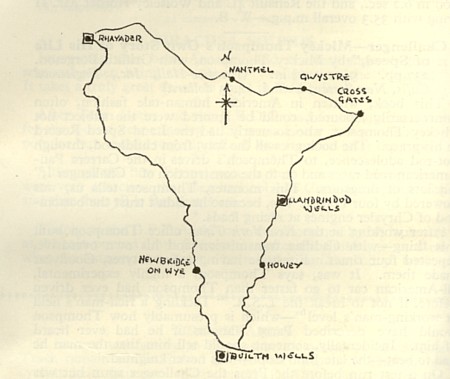
Back in the Mid-Sixties you were more likely to read about Llandrindod Wells than Laguna Seca in Motor Sport magazine. The reason for this was that its editor WB had come to live in the locality, so suddenly features on the town's art-deco Automobile Palace were jostling for space alongside the exploits of Jimmy Clark and Graham Hill.
Given this it was no surprise to find an article in the May 1964 edition entitled "Interview with an Optimist" in which Mr Douglas Jones of Knighton and the Llandrindod Chamber of Trade were pushing the idea of a Welsh Nurburgring. This was to be a 30 mile circuit with race headquarters in Llandrindod and paddock facilities at the Royal Welsh Showground in Llanelwedd. The map above which was published in MS shows the proposed track which would have run in an anti-clockwise direction.
Now even in 1964 such a circuit was a non-starter, after all the RAC had squashed the idea of car racing on the Isle of Man back in the Fifties. WB was fairly enthusiastic describing the circuit as splendid but more suited to GT rather than GP cars. The need for an Act of Parliament to close these public road was of course a major stumbling block, leaving WB to muse "but if Welsh National Rule ever came about?" As a youthful enthusiast for Home Rule I was pleased that my favourite magazine had come up with yet another good reason for escaping the dead hand of London rule.
Sunday, March 05, 2006
Radnorshire Bardic Poems, 9
This is a request poem by Lewis Glyn Cothi addressed to Angharad vz Ieuan, the wife of Ieuan ap Philip, the constable of Cefnllys Castle.
No 172 Request for a Frieze to Angharad vz Ieuan
Good day to the good woman who gave
Me wine at the end of my life,
She is the best from her dominion handing out money in Cefnllys.
Angharad, in manner a Mary,
The daughter of Ieuan, unsullied,
The moon of Hywel ap Madog,
A moon who trusts in the Cross.
As good as the Duke’s payments
The customs of this grandchild of Meurig.
Her custom is to heed the priest,
To make and give her food to the old folk;
Not that Angharad, for all that,
Would allow a young person a moment’s hunger.
Angharad, daughter of a good father,
Is like Anna in Maelienydd.
Anna and her wedded husband
Gave alms to the poor and aged;
She, ‘Ngharad and Ieuan,
Pay well to the poor, the weak.
Philip’s prince, he is a hand and a pillar,
The very post of sweet wine.
He is rooted from the root,
The roots of bardic song.
Angharad has, in the fair country,
The name Angharad Silver Hand.
I was her supplicant,
Since then I’ve been her fond bard;
And for her bard let there be a gift,
A coverlet, protection from the cold snowdrift.
The books of the moon predict
Ice and a world of bitter cold,
At this very moment the fish
Are freezing in the ocean;
With the rod frozen
I’m colder than Llywarch Hen,
And I don’t know, for I’m so weak,
If I’ll live as long as Iolo.
Ieuan’s daughter, to save me from the cold,
Gave me a warm Arras cloth.
Some Lombard with silk brocade and muslin
Embroidered the cloth with a hand loom,
Placing the branches of a woodland
On the green bordered chasuble.
A likeness for the flag of St David’s diocese,
It is the banner of some German,
Groves of marigolds fill up the white sheet,
A multi-coloured picture in cloth.
Like a window upon fair Westminster
With a branch of yew woven above it.
With the golden thread of heaven’s angels
It has been glazed down to the edges,
It is wool from the sheep of Paradise,
Twenty pounds of peacock fleece.
A long life to Angharad,
She gave me a great load of leaf from her estate,
And her wine from a Greek island
I’ve received freely in Cefnllys,
And her tapestry of tiny clover
And a poem for Ieuan’s daughter.
No 172 Request for a Frieze to Angharad vz Ieuan
Good day to the good woman who gave
Me wine at the end of my life,
She is the best from her dominion handing out money in Cefnllys.
Angharad, in manner a Mary,
The daughter of Ieuan, unsullied,
The moon of Hywel ap Madog,
A moon who trusts in the Cross.
As good as the Duke’s payments
The customs of this grandchild of Meurig.
Her custom is to heed the priest,
To make and give her food to the old folk;
Not that Angharad, for all that,
Would allow a young person a moment’s hunger.
Angharad, daughter of a good father,
Is like Anna in Maelienydd.
Anna and her wedded husband
Gave alms to the poor and aged;
She, ‘Ngharad and Ieuan,
Pay well to the poor, the weak.
Philip’s prince, he is a hand and a pillar,
The very post of sweet wine.
He is rooted from the root,
The roots of bardic song.
Angharad has, in the fair country,
The name Angharad Silver Hand.
I was her supplicant,
Since then I’ve been her fond bard;
And for her bard let there be a gift,
A coverlet, protection from the cold snowdrift.
The books of the moon predict
Ice and a world of bitter cold,
At this very moment the fish
Are freezing in the ocean;
With the rod frozen
I’m colder than Llywarch Hen,
And I don’t know, for I’m so weak,
If I’ll live as long as Iolo.
Ieuan’s daughter, to save me from the cold,
Gave me a warm Arras cloth.
Some Lombard with silk brocade and muslin
Embroidered the cloth with a hand loom,
Placing the branches of a woodland
On the green bordered chasuble.
A likeness for the flag of St David’s diocese,
It is the banner of some German,
Groves of marigolds fill up the white sheet,
A multi-coloured picture in cloth.
Like a window upon fair Westminster
With a branch of yew woven above it.
With the golden thread of heaven’s angels
It has been glazed down to the edges,
It is wool from the sheep of Paradise,
Twenty pounds of peacock fleece.
A long life to Angharad,
She gave me a great load of leaf from her estate,
And her wine from a Greek island
I’ve received freely in Cefnllys,
And her tapestry of tiny clover
And a poem for Ieuan’s daughter.
Saturday, March 04, 2006
Grand Prix Wives, 2
Some often photographed wives include Jochen Rindt's wife Nina Lincoln, Patty Broad who was Mrs Bruce McLaren and Louise King the wife of Peter Collins. Not so well known are Innes Ireland's wife Norma Thomas, he later married Edna Humphries and then Jean Howath, the fiancee of Mike Hawthorn at the time of his death. Fenella Warwick-Smith married Tom Pryce and that lesser known Welsh racer Jack Lewis was married to a Pembrokeshire girl called Andrea Larson. More to come but two to finish Sue Hindmarsh, Mrs Roy Salvadori and Marguerite Freddi the wife of Lorenzo Bandini.
Friday, March 03, 2006
Grand Prix Wives, I
It couldn't have been much fun being a Grand Prix driver's wife in Motor racing's dangerous years. Here are a few names:
Ronnie Peterson's wife, the tragic Barbro Edwardson. Bette Shubrook is almost as well known as husband Graham Hill and son Damon. Arleo Bodie was Dan Gurney's wife in his racing days, later he married Evi Butz. Stirling Moss was married to Katie Molson, then American Elaine Barbarino and third wife Suzie Paine is now Lady Moss. Lynn Condon was married to Mike Spence, her sister Gaile Condon was Mrs Tony Maggs. Sally Curzon was married to Piers Courage, Ceril Heycock became Princess Ceril when she married Bira, Guisepina Resegotti is better known as Pina, wife of Tony Brooks. More to come.
Ronnie Peterson's wife, the tragic Barbro Edwardson. Bette Shubrook is almost as well known as husband Graham Hill and son Damon. Arleo Bodie was Dan Gurney's wife in his racing days, later he married Evi Butz. Stirling Moss was married to Katie Molson, then American Elaine Barbarino and third wife Suzie Paine is now Lady Moss. Lynn Condon was married to Mike Spence, her sister Gaile Condon was Mrs Tony Maggs. Sally Curzon was married to Piers Courage, Ceril Heycock became Princess Ceril when she married Bira, Guisepina Resegotti is better known as Pina, wife of Tony Brooks. More to come.
Subscribe to:
Posts (Atom)